ALCOHOL / HYPOBARIC
Lighter than spinal fluid.
Alcohol is generally less dense than cerebrospinal fluid. It can cause burning when injected.
TARGETED NERVE TREATMENT / CONSIDERED CARE
A targeted approach to selected pain pathways.
A decision built around the whole person.
Explore chemical, heat and cold treatments for carefully selected cancer pain and other specialist indications.
IBAP Clinics·Banjara Hills & Madeenaguda
01UNDERSTANDING NEUROLYSIS
When pain or medicine side effects are difficult to manage, a specialist can assess whether a targeted procedure belongs in your care plan.
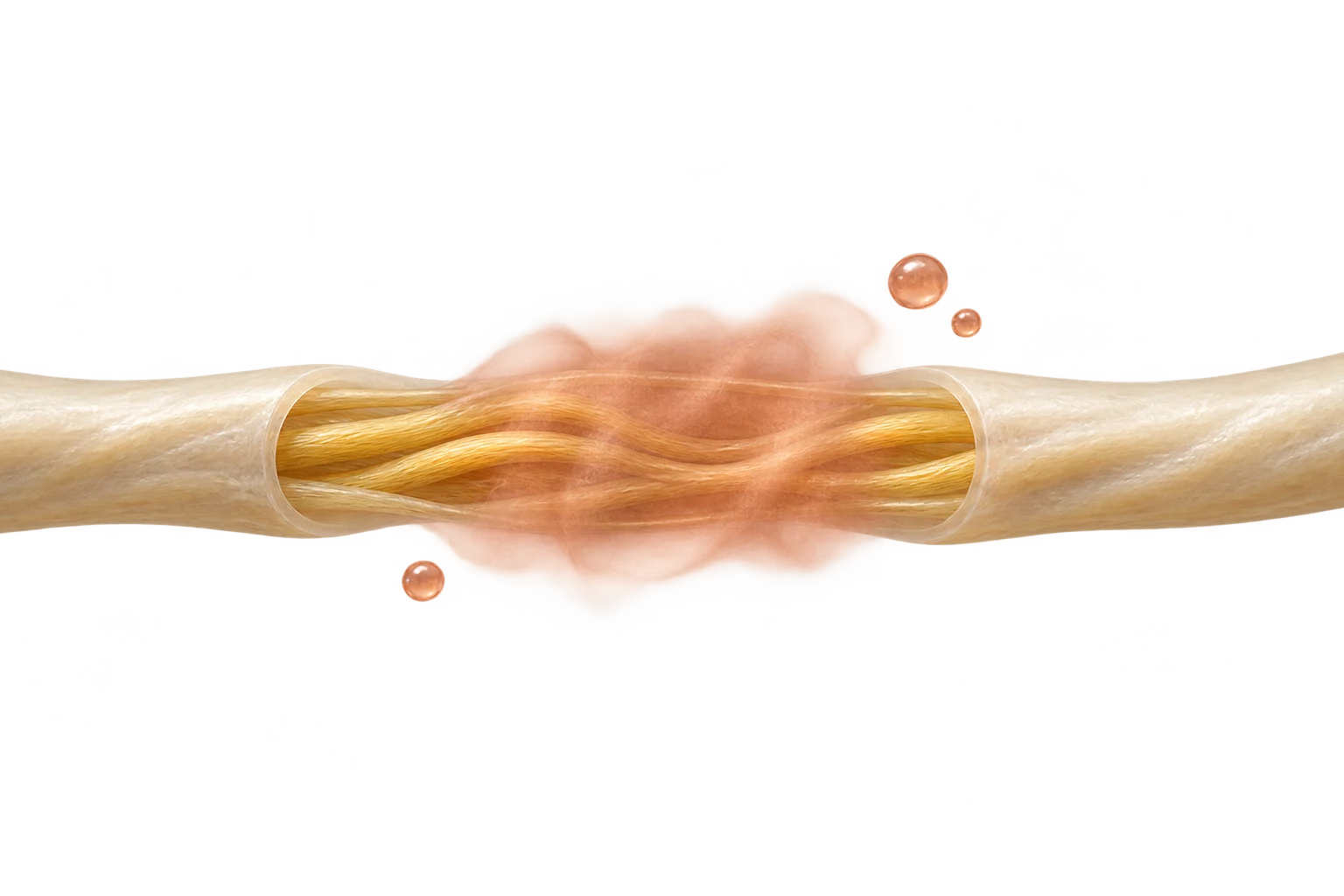
“Neuro” refers to nerves. “Lytic” refers to breaking down or damaging tissue. Neurolysis deliberately injures selected nerve fibres to reduce the messages they carry.
That is different from a temporary local-anaesthetic block. The aim is longer-lasting symptom control, but relief can be incomplete, absent or temporary. Unwanted nerve effects can be permanent.
Original IBAP articleCancer pain may be visceral, somatic, neuropathic or mixed. One procedure cannot address every mechanism.
The nerve network, nearby structures, health conditions and previous treatment guide the discussion.
Comfort, sleep, eating, movement and medicine side effects can matter alongside a pain score.
Pain medicines, cancer treatment, rehabilitation and palliative support may continue together.
“The goal is not cure; it is the restoration of quality of life.”
From the original article by Dr Vijay Bandikatla · IBAP Clinics
A block is one part of care. Discuss options before pain becomes overwhelming; an assessment does not commit you to a procedure.
Explore Cancer PainNCI · cancer pain and nerve blocks02CHEMICAL / HEAT / COLD
Different mechanisms, equipment and trade-offs. The best fit depends on the target and clinical situation, rather than a universal ranking.
THE VISUAL EXPLANATION
ALCOHOL / PHENOL / GLYCEROL
A selected agent is placed near the intended nerve or nerve network to damage fibres and interrupt signalling. Alcohol affects nerve membranes; phenol changes tissue proteins. Glycerol is used for selected trigeminal procedures.
Guy’s and St Thomas’ · phenol injectionsColour shows a conceptual treatment area, not an exact lesion boundary, temperature scale, scan or predicted result. Imaging guidance does not remove every risk.
A selected agent is placed near the intended nerve or nerve network to damage fibres and interrupt signalling. Alcohol affects nerve membranes; phenol changes tissue proteins. Glycerol is used for selected trigeminal procedures.
Chemical spread depends on anatomy, formulation and technique. Once injected, the agent cannot simply be retrieved. Nearby nerves and tissues can be injured.
A radiofrequency probe creates heat in tissue near its active tip. The team selects the target and monitors treatment settings. The effect depends on the nerve, probe position and technique.
Thermal RF damages nerve tissue. Pulsed RF is a different approach intended to modulate signalling; it should not be treated as equivalent to destructive thermal neurolysis.
A cryoprobe cools a local area to disrupt nerve fibres. Supporting connective structures may remain, allowing fibres to regrow. The response and duration depend on the target and technique.
Regrowth is one reason pain may return. Cryoneurolysis still carries risks, including altered sensation, weakness and injury to nearby tissue; it is not automatically the safest option for every nerve.
| Discussion point | Chemical | Thermal RF | Cryoneurolysis |
|---|---|---|---|
| How it acts | A neurolytic agent changes nerve tissue. | Heat is produced near the active probe tip. | Local cooling disrupts nerve fibres. |
| How it is controlled | Agent spread depends on tissue, formulation and technique. | Probe position and treatment settings influence the local effect. | Probe position, cooling and the surrounding anatomy matter. |
| What may happen later | Pain can return; permanent unwanted effects are possible. | Pain may return as nerves recover or the condition changes. | Nerve fibres may regrow along preserved supporting structures. |
| Choosing a method | Often considered for selected sympathetic plexus targets. | Used for selected nerve targets; evidence differs by condition. | Used for selected peripheral nerves; availability and evidence vary. |
| Repeat treatment & cost | Reassessment is needed. Agent cost is only part of the total cost. | Repeat treatment needs a fresh risk–benefit discussion. | Equipment, access and repeat-treatment risks need discussion. |
Duration, comparative safety and repeatability cannot be reduced to one reliable range for every nerve or condition. Discuss the evidence for the proposed target.
ALCOHOL & PHENOL / A CLOSER LOOK
Alcohol, phenol and glycerol are not interchangeable. Agent choice and handling belong with a trained specialist in an appropriately equipped facility.
ALCOHOL / HYPOBARIC
Alcohol is generally less dense than cerebrospinal fluid. It can cause burning when injected.
PHENOL IN GLYCEROL / HYPERBARIC
Phenol in glycerol is generally denser. The formulation affects its behaviour and initial sensation.
| Property | Alcohol | Phenol |
|---|---|---|
| Mechanism | Primarily affects nerve membranes. | Primarily changes proteins and tissue structure. |
| Injection sensation | May cause burning; local anaesthetic may be used. | Can have an initial local anaesthetic effect; discomfort is still possible. |
| Behaviour in spinal fluid | Alcohol is generally lighter than cerebrospinal fluid (hypobaric). | Phenol in glycerol is generally heavier (hyperbaric). Behaviour depends on formulation. |
| Duration & choice | Variable; selected for the individual target and clinical situation. | Variable; no agent is universally better for every patient. |
03ANATOMY / SELECTED INDICATIONS
The original article describes four main nerve targets, plus intrathecal treatment and spasticity care. Each needs its own assessment and evidence.
FOUR TARGETS / FOUR CONTEXTS
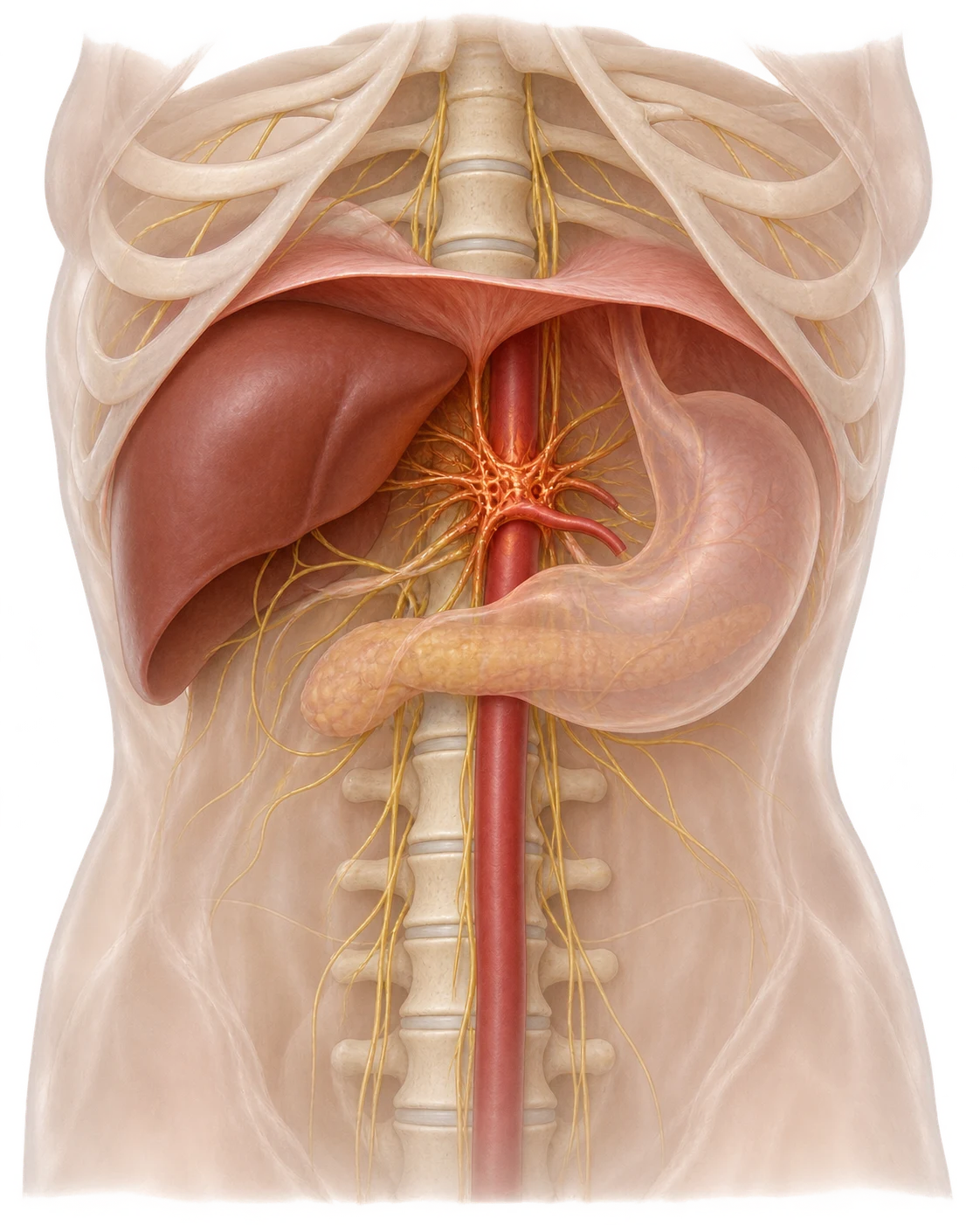
Deep upper abdomen, near the coeliac arterial origin.
01 / UPPER ABDOMEN
The coeliac plexus is a network of nerves deep in the upper abdomen, around the origin of the coeliac artery. It carries pain messages from several abdominal organs. Neurolysis may be considered for selected pancreatic and other upper abdominal cancer pain.
Similar pain locations can have different causes. These regions explain the article’s targets; they cannot identify your diagnosis or determine a procedure.
The coeliac plexus is a network of nerves deep in the upper abdomen, around the origin of the coeliac artery. It carries pain messages from several abdominal organs. Neurolysis may be considered for selected pancreatic and other upper abdominal cancer pain.
Diarrhoea and low blood pressure can occur. Bleeding, infection and rare serious nerve injury, including paralysis, must also be discussed.
Royal Marsden · neurolytic coeliac plexus blockThe superior hypogastric plexus lies in front of the lower lumbar spine and sacral promontory. It is involved in pelvic visceral pain. A specialist may consider a block or neurolysis for selected pain associated with pelvic cancers, including cervical, uterine, bladder or rectal cancer.
Potential risks include bleeding, infection, low blood pressure, nerve injury and bladder or bowel effects. A temporary test block may inform the discussion but does not guarantee a result.
ISSP · interventional cancer pain guidanceThe ganglion of impar is an unpaired sympathetic ganglion in front of the sacrococcygeal region. It is associated with pain from the perineal and anorectal region. Neurolysis is sometimes considered for selected cancer pain; a non-destructive block may be considered in other conditions, such as tailbone pain.
Discuss altered sensation, bleeding, infection and injury to nearby structures, including the rectum. Evidence from small series cannot predict an individual response.
ISSP · interventional cancer pain guidanceGlycerol rhizolysis is one procedure used for trigeminal neuralgia when medicines are ineffective or poorly tolerated. It acts on the trigeminal nerve system, which carries facial sensation. It is a different indication from cancer-related abdominal or pelvic pain.
Facial numbness can persist. Eye sensation may be affected, and rare painful numbness (anaesthesia dolorosa) can occur. Anaesthesia, recovery and recurrence should be discussed individually.
NHS · trigeminal neuralgia proceduresAN UNCOMMON SPECIALIST OPTION
In selected, well-localised cancer pain, an agent may be introduced into the fluid around spinal nerve roots. This is distinct from a coeliac or pelvic plexus block and from an intrathecal medicine infusion.
Evidence is limited and the potential consequences include motor weakness, paralysis, and bladder or bowel dysfunction. Specialist centres weigh these risks against other approaches, including catheter or pump-delivered medicines.
ISSP · interventional cancer pain guidanceA DIFFERENT GOAL / MUSCLE OVERACTIVITY
The article also discusses phenol or alcohol treatment directed at selected motor nerves or motor points to reduce excessive muscle activity after conditions such as stroke, spinal cord injury or cerebral palsy.
The goal is an agreed functional or care benefit within rehabilitation. Strength, sensation, positioning and other options — including physiotherapy, medicines or botulinum toxin — need individual review.
UCLH · spasticity management04BEFORE / DURING / AFTER
The approach, imaging, sedation and observation period vary. Your own team’s instructions take priority over general information.

BEFORE A DECISION
Discuss the pain source, alternatives, specific risks and consent.
The team selects imaging and technique for the intended target.
Monitor symptoms, blood pressure and recovery from sedation or anaesthesia.
Track pain, everyday function and side effects; adjust the wider care plan.
AFTERWARDS / YOUR INDIVIDUAL PLAN
Pain medicines may still be needed. Any reduction should be agreed with your prescribing team.
Ask for help if you feel dizzy, particularly when first standing. Follow your team’s driving and activity advice.
Note pain, sleep, eating, movement and new symptoms. Bring this to your follow-up discussion.
Contact your team about persistent diarrhoea, worsening pain, fever, marked swelling, new numbness or other concerning symptoms.
RISKS / A NECESSARY CONVERSATION
Risks include pain during or after treatment, bleeding, infection, altered sensation, weakness and injury to nearby nerves or organs. Coeliac procedures can cause diarrhoea and low blood pressure. Spinal procedures can affect movement or bladder and bowel function. Trigeminal procedures can affect facial and eye sensation; rarely, pain develops in an area that feels numb.
Permanent effects, failure to relieve pain and recurrence are possible. Discuss your specific risks and alternatives before deciding.
Royal Marsden · neurolytic coeliac plexus blockNHS · trigeminal neuralgia procedures05THE EVIDENCE / SHARED DECISIONS
A result from one nerve target or cancer type cannot be applied to every procedure. Historical results are context, not a personal forecast.
THE OUTCOME THAT MATTERS
Ask about the likelihood of a worthwhile change in your situation, the possibility of no benefit, and how pain, function and medicine side effects will be reviewed.
1995 / HISTORICAL META-ANALYSIS
Eisenberg and colleagues reviewed 24 reports of coeliac plexus neurolysis for cancer pain. Most were retrospective. The reported early relief is part of the historical evidence, not a success rate that applies to every patient or target.
Eisenberg et al. · meta-analysis, 1995DOI: 10.1097/00000539-199502000-000152011 / COCHRANE REVIEW
Six studies involving 358 people compared coeliac plexus block with standard analgesic care in unresectable pancreatic cancer. The review found lower pain scores at four weeks and lower opioid use, while noting limited statistical evidence for superiority in pain relief.
Cochrane · pancreatic cancer pain review, 20112020 / ISSP GUIDANCE
The guidance supports considering coeliac neurolysis for pancreatic cancer pain. Evidence for some other interventions, including ganglion impar and intrathecal neurolysis, is more limited. These should not share one blanket evidence grade.
ISSP · interventional cancer pain guidance| Procedure | Context | Question to discuss |
|---|---|---|
| Coeliac plexus neurolysis | Selected pancreatic or upper abdominal cancer pain. | Which part of my pain is visceral, and what benefit is realistic? |
| Superior hypogastric plexus block | Selected pelvic visceral pain, including cancer pain. | Is this nerve network likely to carry the pain being treated? |
| Ganglion of impar block | Selected perineal or anorectal pain; separate assessment for tailbone pain. | Are we discussing a temporary block or destructive neurolysis? |
| Intrathecal neurolysis | Uncommon specialist option for selected localised cancer pain. | What are the motor and bladder/bowel risks and alternatives? |
| Thermal RF | Selected targets, with evidence specific to each condition. | Why thermal RF for this target, and how will risk be managed? |
| Cryoneurolysis | Selected peripheral nerve pain problems. | What evidence supports this target and what happens if pain returns? |
| Intramuscular / motor-point neurolysis | Spasticity care with functional or care goals. | How might strength, sensation and rehabilitation be affected? |
| Trigeminal glycerol rhizolysis | Selected trigeminal neuralgia. | How do facial numbness, eye risks and recurrence compare with alternatives? |
YOUR QUESTIONS / ANSWERED
Seven questions from the original article, with patient-focused answers and supporting sources.
Discuss your questionsIt deliberately damages selected nerve tissue to reduce pain signalling. It may be discussed for certain cancer pain problems or other carefully selected conditions. It is a specialist decision based on the pain source, the alternatives and the balance of possible benefit and harm.
Neither is universally better. Their tissue effects, initial sensation and spread differ. The target, formulation, technique and your health all influence the choice. The baricity discussion concerns behaviour in spinal fluid; it is not a positioning instruction for patients.
The response varies. Relief may last weeks or months, may be incomplete, or may not occur. Pain can also change as the underlying condition changes. Published percentages and time ranges come from particular groups; ask what is realistic for your situation and how the response will be reviewed.
It is a small sympathetic nerve junction in front of the sacrococcygeal region. A block may be considered for selected perineal or tailbone pain. A temporary local-anaesthetic block and destructive neurolysis are different procedures; cancer-related and non-cancer pain need their own assessment.
Because treatment is close to spinal nerve roots, serious effects can include weakness or paralysis and bladder or bowel dysfunction. This is an uncommon specialist intervention for carefully selected situations. Alternatives, including medicines delivered through a catheter or pump, should form part of the discussion.
Glycerol acts chemically around the trigeminal ganglion. Other options include thermal radiofrequency, balloon compression, radiosurgery and microvascular decompression. These differ in how they work, their suitability and risks. Facial numbness, eye-sensation changes, recurrence and rare painful numbness need discussion; no procedure guarantees relief.
The original IBAP article describes imaging-guided neurolytic care at Banjara Hills and Madeenaguda. Ask the clinic to confirm availability of the particular procedure and provide an individual estimate covering assessment, imaging, medicines, the facility and follow-up. No fixed price or cost saving is promised here.
CARE IN INDIA / PRACTICAL SUPPORT
The original article highlights the burden of uncontrolled pain, medicine side effects and access to specialist care. Treatment planning should consider travel, support at home, follow-up and the person’s priorities.
Ask for an individual estimate that includes assessment, imaging, the procedure and aftercare. The least expensive agent does not necessarily mean the lowest overall cost or the right treatment.
The author recounts a retired teacher from Secunderabad who described being able to eat a meal after a coeliac plexus procedure. This is an attributed anecdote from the original article, not independently verified outcome evidence or a prediction for another patient.
Original IBAP articleYOUR NEXT STEP
Discuss your pain, treatments so far and the options that deserve consideration. An assessment helps clarify suitability before a procedure is planned.
SOURCE / AUTHORSHIP / FURTHER READING
Adapted from When Pain Refuses to Leave: The Science of Neurolytic Blocks, attributed on the original website to Dr Vijay Bandikatla. This page reorganises the article’s topics for patient reading, with additional primary guidance linked beside the relevant sections.
Meet Dr Vijay Bhaskar BandikatlaOriginal IBAP articleThe original article supplies the topics and seven FAQ questions. This is an attributed adaptation, not a verbatim reproduction. Outcome percentages, fixed duration ranges, blanket cost savings and universal safety rankings are not presented as personal predictions. Technical doses and positioning instructions are omitted from this patient guide.
All new illustrations and people are generated educational imagery, not real scans, a procedural map or patient evidence.
The original bibliography is retained below for traceability. Some entries concern other pain procedures and do not directly establish benefit for neurolytic blocks.
Transcribed from the original article. Inclusion here does not verify each citation or imply that every reference supports every procedure.
General patient education, not individual medical advice. Neurolytic procedures carry significant risks and require assessment by trained specialists in appropriately equipped facilities. Individual results vary. Decisions should be made with your pain specialist and wider care team.