Helpline :
9807 55 6789
-
Call Us Now: 9807 55 6789Call Us Now: 9807 55 6789
Alcohol, phenol, glycerol, radiofrequency ablation, cryoablation — the tools that can silence nerve pain for months. A plain-English guide to coeliac plexus blocks, hypogastric plexus blocks, ganglion of impar, trigeminal neurolysis, and thermal nerve destruction techniques, by Dr Vijay Bandikatla.
I have sat across from patients who have tried everything. Every tablet, every patch, every injection that promises relief. And yet the pain persists — relentless, consuming, stealing sleep and dignity and the simple joy of eating a meal without wincing. These are often patients with advanced cancer, or those with severe chronic pain conditions for which standard treatments have simply run out of road.
For these patients, there exists a category of intervention that most people have never heard of — and that even many doctors rarely discuss. Neurolytic blocks. The word sounds alarming, I know. "Neuro" — nerves. "Lytic" — destruction. And yes, that is precisely what we are doing. We are deliberately, carefully, and precisely destroying nerve tissue. Not as an act of desperation, but as an act of compassion grounded in decades of evidence.
Think of it this way. When a city's traffic is paralysed by a perpetually malfunctioning signal — one that never turns green and keeps everything gridlocked — sometimes the only solution is to take that faulty signal offline entirely. The traffic of pain signals in a patient with pancreatic cancer or pelvic malignancy is not going to be fixed by re-routing. The signal itself must be silenced.
Neurolytic blocks are not a last resort born of failure. They are a deliberate, evidence-based choice — often the most appropriate choice — for patients with cancer-related visceral pain, refractory sympathetically maintained pain, or severe spasticity. The goal is not cure; it is the restoration of quality of life.
In a standard nerve block, a local anaesthetic is injected near a nerve. The effect lasts hours. In a neurolytic block, we inject a chemical agent — alcohol, phenol, or glycerol — that causes permanent or semi-permanent damage to nerve fibres. The nerve stops transmitting pain signals, sometimes for months, sometimes indefinitely.
The agents work differently at a microscopic level. Alcohol causes Wallerian degeneration — it extracts cholesterol and phospholipids from nerve membranes, essentially dissolving the structural integrity of the nerve. Phenol causes protein coagulation and vascular changes, similar to what happens when egg white meets heat. Glycerol, used specifically for trigeminal neurolysis, works through a still-debated mechanism — likely through osmotic damage and selective demyelination of pain-carrying A-delta and C fibres.
What unites them is this: they all do something irreversible, which is precisely why we must be precise.
But chemical agents are only part of the story. The same goal — silencing a nerve permanently — can also be achieved with heat or with cold. These are the thermal neurolytic techniques: radiofrequency (RF) ablation and cryoablation. And in many situations, they offer advantages that chemical neurolysis simply cannot match.
Think of it like three different ways to put out a flame. You can douse it with a solvent — that is chemical neurolysis, fast and cheap but the spread is unpredictable. You can melt the wick with a controlled heat source — that is radiofrequency ablation, precise and measurable. Or you can freeze the whole candle solid — that is cryoablation, which destroys the nerve but in a way that still allows it to regrow along its original sheath, often with less deafferentation pain. Three tools. Different mechanisms, different advantages, different use cases. A thoughtful pain specialist keeps all three in mind.
Alcohol and phenol remain the backbone of neurolytic practice globally — and in India, their affordability makes them particularly important. A vial of absolute alcohol costs a fraction of a radiofrequency cannula kit. When correctly placed under imaging guidance, they are highly effective for sympathetic plexus targets like the coeliac or hypogastric plexus, where the nerve network is diffuse and a small degree of spread is actually advantageous. The limitation — and this must be said honestly — is lesion control. Once the chemical is injected, you cannot adjust it, retrieve it, or change the temperature. It goes where anatomy and gravity take it. That is acceptable for a well-defined target with robust evidence. It is less ideal for nerves close to motor pathways or in anatomically complex areas.
Duration with chemical agents typically ranges 3 to 9 months depending on the agent used, concentration, volume, and the specific nerve target. Alcohol tends to produce slightly more enduring destruction; phenol, at lower concentrations, may offer somewhat shorter but better-tolerated analgesia. Neither is a lifetime fix — but for a patient with advanced cancer, nine months of relief is not a short time. It is everything.
Radiofrequency ablation involves positioning a specially designed needle-electrode at or near the target nerve under fluoroscopic or CT guidance. Once in position, a generator delivers a high-frequency alternating current that causes ionic agitation in the surrounding tissue, producing frictional heat. This heat — typically controlled between 60°C and 90°C — creates a precisely defined thermal lesion around the electrode tip. The size of the lesion is a function of temperature, time, and electrode geometry, and it can be monitored in real time.
This is a fundamentally different approach to neurolysis. You are essentially baking the nerve rather than dissolving it. And because the lesion is predictable in shape and size — typically an ellipsoid around the active tip — you have control that chemical agents cannot offer. The nerve is destroyed cleanly, the surrounding tissues are largely spared, and there is far less risk of unpredictable spread to adjacent motor or vascular structures.
RF ablation offers real-time temperature control, precise lesion geometry, and repeatability. If the first pass is not fully effective, a second lesion can be created with a small adjustment in positioning. This is simply not possible with chemical agents, once injected. For complex targets — trigeminal nerve, sympathetic chain, intercostal nerves — this controllability translates directly into better safety and more consistent outcomes.
Two variants of RF deserve mention. Conventional (thermal) RF uses continuous current to create a sustained heat lesion. Pulsed RF (PRF) delivers brief bursts of RF energy with cooling intervals, so tissue temperature stays below 42°C — this is neuromodulatory rather than destructive, and is used where we want to modulate rather than ablate. For true neurolysis, thermal RF is the tool. Duration of relief with thermal RF ablation is typically 6 to 12 months or longer, and importantly, the procedure is entirely repeatable if pain returns — there is no cumulative toxicity as with chemical agents.
Cryoablation uses extreme cold rather than heat. A cryoprobe — a fine, needle-like instrument connected to a liquid nitrogen or argon gas source — is advanced to the target nerve. When activated, temperatures at the probe tip drop to between −50°C and −70°C, forming an ice ball around the nerve. This freezing causes Wallerian degeneration of the axon while preserving the endoneurial tube — the structural scaffolding of the nerve sheath is maintained intact.
That last point is clinically very significant. Because the endoneurial tube survives, the nerve can regrow along its original path when thawed. This means cryoablation tends to produce fewer cases of deafferentation pain (anaesthesia dolorosa) than chemical neurolysis or thermal RF, where the endoneurial architecture is destroyed along with the nerve. For this reason, cryoablation is particularly valued in situations where deafferentation pain is a real concern — for example, intercostal nerve neurolysis in a young patient with post-thoracotomy pain, or peripheral nerve cryoanalgesia in chronic musculoskeletal conditions.
The trade-off is that because the nerve can regrow, duration of relief is inherently limited — typically 3 to 6 months for most applications, though the fact that the nerve regrows in an organised fashion means repeat procedures carry lower cumulative risk than with chemical agents. The equipment (cryoprobe system, gas supply) is also more expensive and less universally available than an RF generator or a vial of alcohol, which limits its reach in lower-resource settings.
| Feature | Chemical Neurolysis (Alcohol / Phenol) | RF Thermal Ablation | Cryoablation |
|---|---|---|---|
| Mechanism | Lipid extraction / protein coagulation | Frictional heat (60–90°C); ionic agitation | Ice-ball formation (−50 to −70°C); Wallerian degeneration |
| Lesion control | Limited — spread unpredictable | Excellent — real-time temperature monitoring | Good — ice-ball visible on imaging |
| Duration of relief | 3–9 months (agent-dependent) | 6–12+ months | 3–6 months (nerve regrows) |
| Endoneurial preservation | No — structure destroyed | No — thermal coagulation | Yes — tube intact; organised regrowth |
| Deafferentation pain risk | Moderate–High | Moderate | Low |
| Repeatability | Possible; cumulative risk increases | Excellent — no cumulative toxicity | Excellent — organised regrowth allows re-treatment |
| Cost | Very low — commodity agents | Moderate — RF generator + disposables | Higher — cryosystem + gas supply |
| Best applications | Coeliac plexus, hypogastric plexus, ganglion of impar, intrathecal neurolysis | Trigeminal, facet joints, sympathetic chain, intercostal nerves, peripheral nerves | Intercostal nerves, peripheral nerves, genicular nerves, post-surgical neuralgias |
| Imaging guidance | CT / fluoroscopy / EUS | Fluoroscopy / CT; real-time temp feedback | Fluoroscopy / CT / ultrasound; ice-ball visible |
| Key limitation | Unpredictable spread; cannot be retrieved | Equipment cost; less effective through cortical bone | Shorter duration; equipment access; slower procedure |
Choosing between chemical neurolysis, RF ablation, and cryoablation is like choosing between three surgeons' tools for the same problem. A broad-bladed scalpel (alcohol/phenol) cuts fast and wide — excellent when you need to cover ground quickly and cheaply. A laser (RF ablation) gives you pinpoint precision and controlled depth — ideal when the target is close to structures you cannot afford to damage. A cryo-probe (cryoablation) is like flash-freezing — it destroys the nerve cleanly but leaves the scaffolding for organised regrowth, which matters greatly in younger patients or where long-term deafferentation is a concern.
This is the part that trips up junior doctors in exams, and frankly, it is one of the most practically important distinctions in interventional pain medicine. It matters enormously which agent you choose, and why.
Imagine filling a fish tank with oil and water. Pour oil in — it floats. Pour a coloured dye heavier than water — it sinks. Now imagine that fish tank is the spinal canal filled with cerebrospinal fluid (CSF). Alcohol is the oil. Phenol is the dye. Where the agent travels once injected depends entirely on which direction gravity pulls it — and which direction the patient is positioned.
Alcohol is hypobaric — lighter than CSF (specific gravity approximately 0.789 vs CSF's 1.003–1.009). Injected intrathecally, alcohol floats upwards towards whichever part of the patient is uppermost. To target the dorsal (sensory) nerve roots with intrathecal alcohol, the patient must be positioned with the painful side uppermost and slightly tilted back — so the alcohol floats dorsally towards the sensory roots. One very important practical point: alcohol causes an immediate, searing burning sensation on injection. The patient must be warned of this. It is brief but intense.
Phenol is hyperbaric — heavier than CSF (when made as 5–7% phenol in glycerol or water). It sinks. For intrathecal use, the patient must be positioned with the painful side dependent (downwards) and slightly tilted forward — so the phenol settles onto the ventral/anterior nerve roots (motor roots). Wait — why the ventral roots for pain? In clinical practice, intrathecal phenol at low concentrations preferentially affects smaller-diameter sensory fibres before it affects the large motor fibres, so with careful concentration and positioning it can achieve good analgesia. Phenol also has an initial local anaesthetic effect, making the injection painless or even pleasant for the first few seconds — patients sometimes describe a warm numbness rather than burning.
| Property | Absolute Alcohol (Ethanol) | Phenol (5–7% in Glycerol) |
|---|---|---|
| Baricity vs CSF | Hypobaric — floats | Hyperbaric — sinks |
| Injection sensation | Immediate burning pain | Initially painless / warm |
| Mechanism | Lipid extraction, Wallerian degeneration | Protein coagulation, vascular changes |
| Patient positioning (intrathecal) | Painful side uppermost, tilted back | Painful side dependent, tilted forward |
| Concentration used | Absolute (100%) or 50% for some blocks | 5–7% in glycerol; up to 10% for peripheral |
| Duration of effect | Variable: weeks to months | Variable: weeks to months |
| Common sympathetic use | Coeliac plexus, intrathecal | Coeliac plexus, intramuscular (spasticity) |
| Spasticity (intramuscular) | Used; causes burning | Preferred — better tolerated |
| Handling hazard | Flammable; denatures tissue rapidly | Neurotoxic; avoid skin contact; systemic toxicity risk |
| Cost | Very low | Very low |
A word about handling. This is not something I say lightly — both agents are genuinely hazardous outside their intended delivery pathway. Phenol is systemically toxic and must not be allowed to contact large areas of skin or mucosa. Absolute alcohol can denature tissue almost instantly. These procedures must be performed by trained specialists with proper imaging guidance, in a facility equipped for complications. This is not something that should ever be improvised.
If I were asked to name one neurolytic procedure that has genuinely transformed the quality of life for thousands of patients, it would be the neurolytic coeliac plexus block. And yet — I encounter families in Hyderabad who have watched their loved one deteriorate on escalating doses of morphine, spending the last months of life constipated, drowsy, and nauseous, when this procedure could have provided months of clean, opioid-sparing pain relief. It breaks my heart, honestly.
The coeliac plexus is a dense network of sympathetic nerves clustered around the coeliac artery at the T12–L1 level. It carries pain signals from nearly all upper abdominal viscera — the pancreas, liver, gallbladder, stomach, spleen, kidneys, and proximal bowel. When pancreatic cancer, gastric cancer, or hepatic malignancy invades these structures, the resulting pain is visceral — deep, gnawing, often mid-epigastric or radiating to the back, difficult to control with standard analgesics alone.
A neurolytic coeliac plexus block (NCPB) destroys these sympathetic fibres with absolute alcohol (typically 50–75% in saline; some centres use absolute alcohol 6–8 ml per side). Under CT or fluoroscopic guidance — or increasingly, endoscopic ultrasound (EUS) for anterior approach — needles are positioned on either side of the aorta at the coeliac axis, local anaesthetic is tested first, and then the neurolytic agent is injected.
A landmark systematic review by Eisenberg et al. (Pain, 1995) of 24 studies found that NCPB produced good-to-excellent pain relief in 89% of patients during the first two weeks, and continued in approximately 70–90% until death. Opioid requirements dropped significantly, improving alertness and reducing constipation. A 2011 Cochrane review confirmed these findings — NCPB is the most evidence-supported neurolytic block in palliative medicine.
The most common side effect — which I always warn patients about — is diarrhoea, occurring in up to 65% of patients after NCPB. This is actually a reflection of the block working: without sympathetic tone, the gut becomes hyperactive. It typically self-resolves within a few days to two weeks. Orthostatic hypotension (dizziness on standing) occurs in about 38% and is usually transient. Rare but serious complications include paraplegia from inadvertent intravascular injection or spasm of the artery of Adamkiewicz — which is why imaging guidance is non-negotiable.
Pelvic cancer pain is cruel in a particular way. It is intimate, it is relentless, and it is often poorly served by opioids, which cloud the mind without adequately reaching those visceral sympathetic fibres. The superior hypogastric plexus (SHP) is the sympathetic relay for pelvic visceral pain — the bladder, urethra, vagina, uterus, prostate, rectum, and sigmoid colon all route their pain signals through this plexus at the L5–S1 level, just anterior to the bifurcation of the aorta.
A neurolytic SHP block places alcohol or phenol at this junction, interrupting the pain relay. The approach is typically bilateral, using fluoroscopic or CT guidance, with needles inserted from the posterior paravertebral approach and carefully positioned anterior to L5. As with the coeliac block, a diagnostic block with local anaesthetic is performed first — if the patient gains ≥ 50% pain relief, the neurolytic injection follows.
Published data show 72–79% of patients achieve good pain relief for cervical, uterine, bladder, and rectal cancers, with significant opioid reduction (Plancarte et al., 1990; de Leon-Casasola et al., 1993). Duration of relief ranges from weeks to the remainder of life in terminal patients.
There is a small, solitary ganglion sitting at the tip of the coccyx — the ganglion of impar (also called the ganglion of Walther). It is the only unpaired ganglion of the sympathetic chain, and it receives afferents from the perineum, rectum, anus, vulva, and distal urethra. For patients with anorectal cancer, gynaecological malignancy, or severe coccydynia, this ganglion is the target.
The approach is classically through the anococcygeal ligament — a needle is passed through or around the coccyx using a curved needle (the "bent-needle" or trans-sacrococcygeal technique), and 4–6 ml of absolute alcohol or phenol is deposited at the ganglion under fluoroscopic confirmation.
I have treated patients with the characteristic burning, poorly localised perineal discomfort — often described as "sitting on a burning coal" — who had failed every other intervention. The response to a neurolytic ganglion of impar block can be remarkable. Evidence is more limited in volume but consistent in direction: Plancarte et al.'s original 1990 series of 16 patients reported complete or partial relief in all. More recent case series report 60–80% meaningful pain reduction.
When somatic cancer pain is localised to a discrete dermatomal distribution — chest wall mets, rib pain, brachial plexus invasion — intrathecal neurolysis with alcohol or phenol can destroy the relevant dorsal nerve roots within the spinal canal itself. This is the most anatomically precise neurolytic technique and also the one with the greatest risk if positioning is imprecise.
Here is where the alcohol-vs-phenol baricity distinction becomes absolutely critical in clinical practice. With intrathecal alcohol: the patient is positioned with the painful side up (semi-lateral, tilted 45° posteriorly) so the hypobaric alcohol floats toward the posterior (sensory) nerve roots. With intrathecal phenol: the patient lies with the painful side down, tilted slightly anteriorly — the hyperbaric phenol settles toward the sensory roots that are now dependent. Both approaches aim to spare the anterior motor roots. The margin for error is narrow. But in expert hands, with small volumes (0.1–0.3 ml), excellent analgesia can be achieved with acceptable risk of motor involvement.
A use of neurolytic agents that surprises many patients — and even some physicians — is their application for muscle spasticity. In stroke, spinal cord injury, or cerebral palsy, overactive muscles can be treated by injecting dilute alcohol (45–100%) or phenol (5–7%) directly into the neuromuscular junction or motor nerve point within the muscle itself. This causes temporary denervation and muscle relaxation, lasting weeks to months. It is cheaper than botulinum toxin, broadly accessible, and particularly useful for large muscle groups like the hip adductors, hamstrings, or gastrocnemius. The trade-off is that alcohol injections are painful and phenol carries a small risk of dysaesthesia if sensory fibres are inadvertently involved.
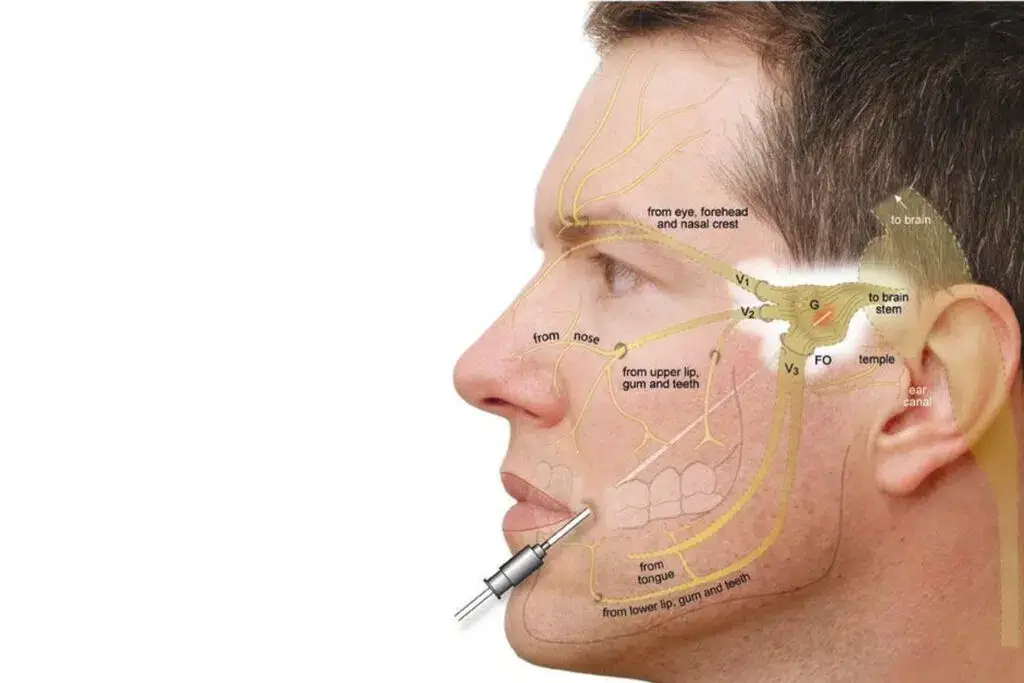
Trigeminal neuralgia is one of the most distressing pain conditions known to medicine — electric-shock, lancinating pain in the face, triggered by eating, speaking, touching the cheek, or simply a breeze. For patients who cannot tolerate or have failed carbamazepine, or who are not surgical candidates for microvascular decompression, percutaneous trigeminal glycerol rhizolysis is an elegant minimally invasive option.
Under fluoroscopic guidance, a needle is passed through the foramen ovale into Meckel's cave (the trigeminal cistern) — a small pool of CSF surrounding the trigeminal ganglion. A small volume of anhydrous glycerol (0.2–0.4 ml) is injected. Glycerol is hypobaric relative to the CSF in the cistern; it floats and selectively damages the smaller pain-carrying A-delta and C fibres while tending to preserve the larger touch and motor fibres — preserving some normal sensation (often including corneal reflex, which is important for eye safety).
The procedure is done awake or under light sedation, takes around 30 minutes, and patients typically go home the same day.
Anhydrous glycerol for trigeminal rhizolysis must be kept sterile and absolutely dry. Even trace moisture can alter its viscosity and distribution within Meckel's cave, unpredictably affecting the outcome. The ampoule must be freshly prepared; no pre-mixed syringes. This procedural detail is the difference between selective sensory relief and unwanted corneal anaesthesia.
The most common side effect is numbness in part of the face — usually expected and often welcome. The feared complication is anaesthesia dolorosa — a paradoxical, burning, constant pain in a numb face, which is arguably worse than the original neuralgia. Corneal numbness (if the ophthalmic branch is affected) risks corneal ulceration. Careful patient selection, meticulous fluoroscopic positioning, and limiting glycerol volume minimise these risks. Initial success rates for trigeminal glycerol rhizolysis are 75–90%, with pain recurrence at 3–5 years in 40–50% — repeat procedures are possible.
| Procedure | Indication | Agent | Efficacy | Duration | Key Risk | Evidence Level |
|---|---|---|---|---|---|---|
| Coeliac Plexus Neurolysis | Pancreatic / upper abdominal cancer | Alcohol 50–75% | 70–90% pain reduction | 3–9 months (agent-dependent) | Diarrhoea, hypotension, rare paraplegia | IA — Strong |
| Superior Hypogastric Plexus Block | Pelvic cancer (cervical, uterine, rectal, bladder) | Alcohol / phenol | 72–79% meaningful relief | Weeks–months (3–9 typical) | Bladder dysfunction, hypotension | IIB — Moderate |
| Ganglion of Impar Block | Perineal/anorectal cancer, coccydynia | Alcohol / phenol | 60–80% relief | Weeks–months | Rectal perforation (rare), dysaesthesia | IIB — Moderate |
| Intrathecal Neurolysis | Localised somatic cancer pain | Alcohol (hypobaric) or Phenol (hyperbaric) | 60–80% meaningful relief | 4–12 weeks | Motor weakness, bladder/bowel dysfunction | IIB — Moderate (limited RCT) |
| RF Thermal Ablation | Intercostal neuralgias, peripheral nerves, sympathetic chain, trigeminal | Thermal RF (60–90°C) | 60–85% meaningful relief | 6–12+ months; repeatable | Dysaesthesia, neuritis; deafferentation pain (lower than chemical) | IIB — Moderate |
| Cryoablation | Intercostal nerves, peripheral nerves, genicular nerves, post-surgical pain | Cryoprobe (−50 to −70°C) | 60–80% meaningful relief | 3–6 months (organised regrowth) | Frostbite risk, haematoma; lower deafferentation risk | IIB — Moderate |
| Intramuscular Neurolysis | Focal spasticity (stroke, SCI, CP) | Phenol 5–7% / Alcohol 45–100% | Good focal relaxation | 3–6 months | Dysaesthesia (phenol), pain on injection (alcohol) | IIB — Moderate |
| Trigeminal Glycerol Rhizolysis | Trigeminal neuralgia (refractory) | Anhydrous glycerol | 75–90% initial pain relief | 1–3 years (recurrence 40–50% at 5yr) | Facial numbness, anaesthesia dolorosa, corneal risk | IIB — Moderate |
I want to say something that comes from eight years of practising pain medicine in Hyderabad, having trained in the UK. Cancer pain management in India is still — and I say this with great sadness, not criticism — often inadequate. Morphine access has improved but remains inconsistent. Patients arrive to our clinic having been told, sometimes by well-meaning doctors, to "just bear it." The family is exhausted. The patient, once vibrant, is now curled in bed, refusing food, eyes half-open from excessive sedation on poorly titrated opioids.
A single neurolytic coeliac plexus block costs a fraction of three months of parenteral opioid therapy and nursing support. It can transform the last chapter of a person's life from one of suffering to one of relative dignity — sitting up, sharing a meal with family, watching television without grimacing. That is not a small thing. That is everything.
I think of a patient — a retired teacher from Secunderabad, pancreatic cancer diagnosed late, as so many are here. He came to us on day 42 of his morphine escalation. We did a neurolytic coeliac plexus block under CT guidance. He rang me three weeks later to say he had eaten a full plate of rice and dal for the first time in two months. He cried. I did not cry on the phone, but I did after.
If you or a family member has cancer pain or severe refractory chronic pain, a specialist consultation can clarify whether a neurolytic block is appropriate, safe, and likely to help. We offer imaging-guided procedures at both our Hyderabad locations.
A neurolytic block uses chemical agents (alcohol, phenol, or glycerol) to deliberately damage pain-carrying nerves, providing long-lasting pain relief. It is most appropriate for patients with cancer-related pain, severe chronic abdominal or pelvic pain, refractory trigeminal neuralgia, or significant spasticity that has not responded adequately to medications. It is not a first-line treatment — it is a carefully selected option when benefit clearly outweighs risk.
Neither is universally "better" — they work differently and are selected based on the procedure, approach, and patient. Alcohol is hypobaric (floats in CSF) and causes burning on injection; phenol is hyperbaric (sinks in CSF), initially painless, and preferred for intramuscular spasticity. For sympathetic plexus blocks (coeliac, hypogastric), alcohol is most commonly used; for intrathecal neurolysis, either may be used based on positioning strategy. Your pain specialist will choose the agent most appropriate for your specific anatomy and condition.
In pancreatic and upper abdominal cancer, a neurolytic coeliac plexus block typically provides meaningful pain relief for 2–6 months. Some patients enjoy relief for the remainder of their life. Multiple studies show 70–90% of patients experience significant pain reduction and reduced opioid requirements. The procedure can be repeated if pain returns, though successive blocks may be less effective.
The ganglion of impar (or ganglion of Walther) is the single unpaired terminal ganglion of the sympathetic chain, located at the sacrococcygeal junction. It transmits pain from the perineum, anus, rectum, vulva, and distal urethra. A neurolytic ganglion of impar block is indicated for burning perineal or coccygeal pain in anorectal and gynaecological cancers, and also for severe coccydynia unresponsive to conservative treatment. Relief rates of 60–80% have been reported in case series.
The main risks are motor weakness (leg weakness or paralysis), bladder dysfunction (urinary retention or incontinence), and bowel dysfunction, all of which can occur if the neurolytic agent spreads to motor nerve roots. Careful patient positioning (using the baricity difference between agent and CSF), small volumes, and experienced hands minimise these risks. Intrathecal neurolysis is generally reserved for patients with limited prognosis where quality of life outweighs the risk of motor side effects, or for carefully selected patients with isolated somatic pain in a dermatomal distribution.
Trigeminal glycerol rhizolysis involves injecting sterile anhydrous glycerol into Meckel's cave (the trigeminal cistern) through the foramen ovale, selectively damaging pain-carrying fibres. Unlike balloon compression or radiofrequency rhizotomy, it does not require general anaesthesia and tends to preserve touch sensation better. Compared to surgical microvascular decompression, it is less invasive and appropriate for elderly or frail patients. Initial success rates are 75–90% but recurrence occurs in 40–50% over five years. It can be repeated, though anaesthesia dolorosa risk increases with repeated procedures.
Yes. IBAP Clinics (Indo British Advanced Pain Clinics) in Banjara Hills and Madeenaguda, Hyderabad, perform imaging-guided neurolytic blocks including coeliac plexus blocks, superior hypogastric plexus blocks, ganglion of impar blocks, and trigeminal glycerol rhizolysis. These procedures are highly cost-effective compared to prolonged opioid therapy and its nursing costs. The exact cost depends on the procedure, imaging modality used, and individual clinical requirements. We recommend a consultation to assess suitability before any procedure is planned.
2nd Floor, 284/A, Road No. 12, above IDFC First Bank, near Omega Hospitals, MLA Colony, Banjara Hills, Hyderabad 500034
Sy No. 2, 4th Floor, Plot No. 200, beside South India Shopping Mall, opp. Fortune Heights, Mythri Nagar, Madeenaguda, Hyderabad 500049
This article is written for general patient education and does not constitute individual medical advice. Neurolytic procedures carry significant risks and must only be performed by trained specialists in appropriately equipped facilities following thorough clinical assessment. Always consult a qualified pain specialist before considering any interventional pain procedure. The clinical outcomes cited reflect published literature and individual results may vary. IBAP Clinics — Indo British Advanced Pain Clinics — Vijay Advanced Pain Clinics Pvt. Ltd., Hyderabad.
Banjara Hills
2nd Floor, 284/A, Road No. 12, above IDFC First Bank, near Omega hospitals, MLA Colony, Banjara Hills, Hyderabad, Telangana 500034.

Indo-British Advanced Pain Clinic © 2026. All Rights Reserved. Designed & Developed By Adroit
WhatsApp us