Helpline :
9807 55 6789
-
Call Us Now: 9807 55 6789Call Us Now: 9807 55 6789
Precision relief for chronic neuropathic pain and neuralgias
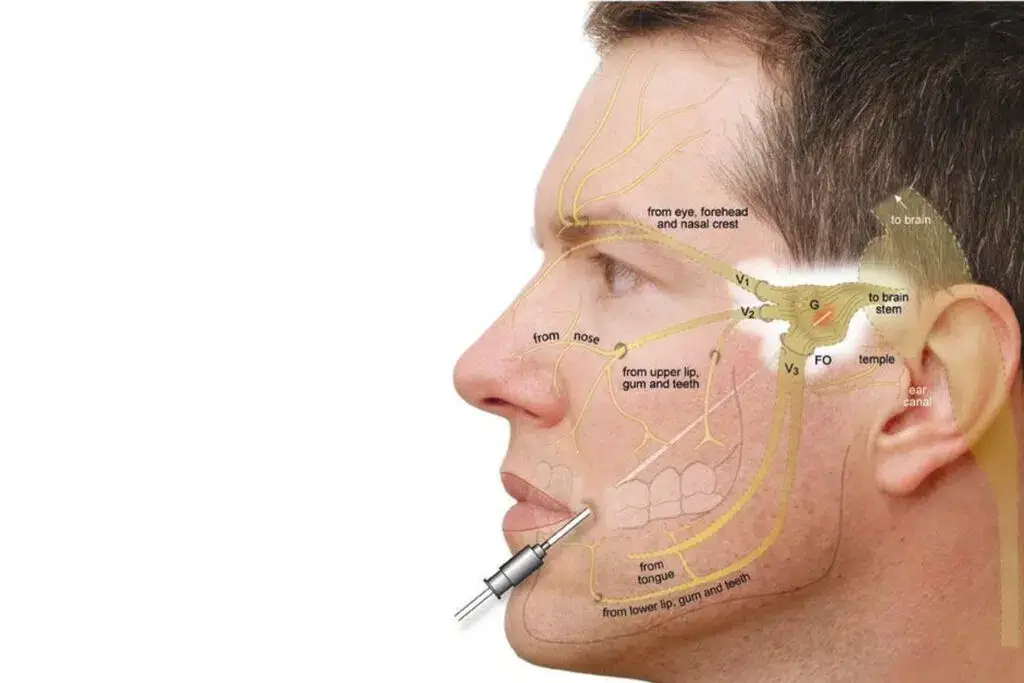
I want to start this article a little differently, because this topic is close to my heart. In twenty-odd years of practice — first through NHS pain clinics in Cambridge, Bradford and London, and now here in Hyderabad — the patient I find hardest to help isn't the one with the worst scan. It's the one who has been told, in one way or another, that their pain "isn't that serious," or that it is "just nerves," said almost dismissively. Nerve pain is not imaginary, it is not exaggeration, and treating it as such delays care that could have helped months, sometimes years, earlier. Understanding empathy, rather than discarding pain, is where good nerve pain treatment actually begins — and this isn't sentiment, it is, genuinely, scientifically linked to how well patients recover.
Think of your peripheral nerves as the household electrical wiring of the body — insulated cables running from the spinal cord out to your hand, your foot, your face, carrying both sensation inward and movement commands outward. Wiring that is pinched under a door, frayed by heat, or corroded by damp stops working properly; it may short-circuit, spark, or simply go dead. Peripheral nerves behave in an almost identical way when they are compressed, cut, inflamed, or poisoned by chemicals — the signal becomes pain, numbness, tingling, or weakness, often all four together.
I often tell my patients: your nerve is not being dramatic when it burns or tingles. A frayed wire doesn't spark for attention — it sparks because the insulation is genuinely damaged. Our job is to find exactly which wire, and repair the insulation, not simply mute the alarm.
The textbook causes of peripheral neuropathic pain are trauma, surgical injury, inflammation, entrapment, and toxic or metabolic insult. But in my clinic, these textbook categories arrive wearing very Indian clothes.
Hyderabad's roads, frankly, are unkind to nerves. Sudden braking at a speed breaker, a two-wheeler skid on a pothole, a fall while swerving to avoid an auto that has stopped without warning — these mechanisms stretch, crush or lacerate nerves around the shoulder, elbow, wrist and ankle. Brachial plexus stretch injuries after two-wheeler accidents are, sadly, something I see with real regularity.
Nerves can also be injured, entirely unintentionally, during surgery — a hernia repair nicking the ilioinguinal nerve, a knee replacement irritating the saphenous nerve, a mastectomy affecting the intercostobrachial nerve. This is nobody's fault; it is simply anatomy sitting close to the surgical field, and it is treatable.
Here is where modern Indian life plays its part. Our IT professionals sit at screens for ten, twelve hours, wrists cocked over a keyboard — carpal tunnel syndrome. Long commutes gripping a two-wheeler handlebar or a steering wheel compress the ulnar nerve at the elbow. And I cannot count how many patients present with a numb, weak hand after falling asleep, exhausted, with an arm folded awkwardly under a pillow or across a chair — "Saturday night palsy," except in Hyderabad it happens on any night of an exhausting working week.
Nerves also become inflamed on their own — from autoimmune processes, from viral illness, from unexplained localised neuritis — swelling within their own tight sheath, rather like a swollen finger inside a ring that has become too small.
Several chemotherapy agents (platinum compounds, taxanes, vinca alkaloids) are directly toxic to peripheral nerve fibres, producing a burning, glove-and-stocking neuropathy in hands and feet. Radiotherapy, months to years later, can cause fibrosis around nerve plexuses, particularly after breast or pelvic radiation. Certain long-term medications — isoniazid, some statins, prolonged metronidazole — carry their own neuropathy risk too.
Diabetes remains, by far, the most common metabolic cause of peripheral neuropathy I see in Hyderabad, often compounded by borderline thyroid function and vitamin B12 deficiency in a population eating increasingly processed, delivery-app food. High sugar, over years, damages the small blood vessels that feed the nerve itself, starving it slowly.
I would be doing my patients a disservice if I didn't mention stress itself. Chronic muscular tension — from school-going children under relentless grade and rank pressure, from NEET and JEE aspirants chasing a rank rather than an education, from software employees hitting deadline after deadline, from parents managing both — tightens the very tunnels and canals nerves pass through. Pain, in this setting, becomes a household affair, not an individual one; I frequently see it in teenagers as much as in their working parents.
Nerve pain can also follow an infection long after the infection itself has resolved — post-herpetic neuralgia after a shingles episode is a classic, often severe example, and I see it fairly often in my older patients. HIV-related neuropathy and a handful of autoimmune neuropathies round off this category, each needing a slightly different approach.
Beyond carpal and cubital tunnel, a few other entrapments turn up regularly in an Indian clinic: meralgia paraesthetica — burning over the outer thigh from a trapped lateral cutaneous nerve, often in patients wearing tight waistbands or carrying weight around the abdomen; piriformis syndrome, mimicking sciatica but arising from a deep gluteal muscle trapping the sciatic nerve, common in those who sit cross-legged on the floor for long prayer or work sessions; and tarsal tunnel syndrome, an ankle-level entrapment that shows up as burning under the sole, frequently in those on their feet all day in ill-fitting footwear.
Nerve pain rarely has one single cause. A software engineer with pre-diabetes, poor sleep posture, and a stressful, screen-heavy work life may develop entrapment neuropathy from at least three overlapping directions at once — which is exactly why a proper diagnostic work-up matters more than guesswork.
Diagnosis begins with a careful history and examination — where exactly does the pain radiate, what makes it worse, is there numbness or weakness alongside it. On examination, I am looking specifically for allodynia (pain triggered by a touch that shouldn't hurt at all), hyperalgesia (an exaggerated response to something that is mildly painful), and Tinel's sign — a tingling shock felt on tapping directly over a suspected entrapment point, which is often wonderfully diagnostic in itself. Simple validated tools such as the DN4 or LANSS questionnaires help confirm a neuropathic pattern, though in my Hyderabad practice I translate these into plain, practical language rather than clinical jargon.
Nerve conduction studies and electromyography help confirm which nerve, and how severely, is affected. High-resolution ultrasound has, in the last decade, become invaluable too — it lets us see nerve swelling, entrapment, scarring or a neuroma directly, in real time, rather than inferring it indirectly. Blood tests for diabetes, B12, thyroid function and, where relevant, a careful review of drugs such as anti-tuberculosis medication, round off the metabolic screen. And I say this gently but firmly to many patients: a "normal" report does not mean nothing is wrong — neuropathic pain frequently hides from standard tests, which is exactly where clinical examination and diagnostic blocks earn their keep.
This distinction confuses many patients, understandably, so let me be direct about it.
A diagnostic block uses a small volume of local anaesthetic placed precisely onto the suspected nerve. If your pain disappears, even briefly, we have confirmed the source with real confidence — think of it as switching off one circuit breaker to see which light goes out. A therapeutic block follows, once the diagnosis is confirmed, using medicines chosen for longer-lasting effect.
| Feature | Diagnostic Block | Therapeutic Block |
|---|---|---|
| Purpose | Confirm the pain-generating nerve | Reduce inflammation, relieve entrapment, provide durable relief |
| Typical agent | Local anaesthetic alone | Steroid, saline (hydrodissection), botulinum toxin, or neurolytic agent |
| Duration of relief | Hours (matches anaesthetic duration) | Weeks to several months |
| Guidance | Ultrasound, mandatory for accuracy | Ultrasound, mandatory for accuracy and safety |
| Repeat frequency | Usually once, occasionally twice | As clinically indicated, spaced appropriately |
Older techniques relied on surface landmarks and a sense of "feel" — a bit like trying to find a specific wire behind a wall using only a stud-finder and memory. Ultrasound is the torch that lets us actually see the wall's interior: the nerve, the surrounding vessels, muscles and fascial planes, all in real time, as the needle advances. This precision meaningfully reduces the risk of injecting into a vessel, avoids unnecessary needle passes, and allows the medicine to be deposited exactly where the nerve is compressed or inflamed, not simply somewhere nearby.
You lie comfortably — supine, prone, or side-lying, depending on which nerve we are chasing. The skin is cleaned, sterile gel applied, and I use the probe to map the nerve, the neighbouring vessels, and any surrounding scar tissue before the needle ever goes in. The needle is then advanced under continuous, real-time vision, using either an in-plane approach (needle seen along its entire length) or an out-of-plane approach (needle seen as a single bright dot), whichever suits the target best. Before injecting, I always aspirate first — gently pulling back on the syringe to confirm we are not sitting inside a blood vessel — and only then is the medicine delivered, watching it spread and "cuff" cleanly around the nerve on screen. The whole procedure typically takes fifteen to thirty minutes, and you are observed for a short period afterwards before heading home.
Real-time ultrasound allows the needle tip and the injectate spread to be watched continuously, keeping medicine around — never carelessly through — the nerve.
Placed around an inflamed or entrapped nerve, steroid reduces local swelling and irritation, often providing weeks to months of relief and, in milder entrapments, allowing the nerve to genuinely settle.
This is one of my favourite techniques to explain, because the concept is so visual. We inject sterile saline (sometimes with a small volume of local anaesthetic) around a nerve that has become stuck to surrounding scar tissue or fascia, gently separating — hydro-dissecting — the two, restoring the nerve's natural gliding movement. Rather like carefully working water between two pages of a book that have been stuck together by a spill.
In select neuralgias and painful muscle-entrapment syndromes, botulinum toxin can reduce the surrounding muscular compression or dampen abnormal nerve firing, with effects lasting several months.
For carefully selected, severe or cancer-related neuralgias, a neurolytic agent (such as phenol or alcohol) can be used to more permanently interrupt an identified pain-generating nerve — a decision taken thoughtfully, and usually only after diagnostic blocks have confirmed the target with certainty.
Chronic nerve pain is not simply "more of the same" pain lasting longer. Over time, ongoing nerve irritation can sensitise the spinal cord and brain itself, so that pain signals amplify, spread, and become self-sustaining, quite independent of how injured the original tissue still is. This is called central sensitisation, and it is precisely why early, accurate, well-targeted intervention matters so much — the sooner we interrupt the cycle, the less chance it has of becoming entrenched.
Think of chronic pain as a fire alarm stuck ringing long after the actual fire has been put out. A well-placed nerve block can, quite literally, reach in and reset that alarm — which is why timing matters as much as technique.
*Ranges are illustrative of published series and vary by nerve, cause and patient factors — discussed individually in consultation.
Come having eaten a light meal (fasting is usually not required for most peripheral blocks), continue your regular medicines unless specifically told otherwise, and do mention any blood thinners, allergies, or bleeding disorders beforehand — some anticoagulants need a dose adjustment or brief pause, and this decision must be made carefully, together with whoever prescribed them. Wear loose clothing that allows easy access to the area being treated, and bring someone to drive you home if a limb-related motor block is anticipated.
I also like to be honest about expectations before we start, because many of my patients have already seen a television advert or a YouTube reel promising a single injection that "cures" nerve pain permanently. A diagnostic block is exactly that — diagnostic, and short-lived by design. A therapeutic block aims for genuine, longer relief, but nerve pain is a circuit problem, not a single spot problem, and it usually improves in partnership with physiotherapy, posture correction and, where relevant, continued neuropathic medication, rather than through one sitting alone.
Do: rest the treated area gently for 24–48 hours, apply a cold pack if there is soreness, keep the small dressing dry for the first day, and follow up as advised to assess response. Continue any neuropathic medicines such as pregabalin or duloxetine unless we specifically agree to taper them — the block and the tablets very often work better together than either alone. Keep a simple pain diary noting scores, triggers and sleep quality; it genuinely helps me judge how well the block has worked and plan what comes next. Once pain eases, ease back into gentle movement gradually, and don't neglect basic sleep hygiene — a fixed routine, limited late-night screen time, and a short walk help consolidate the relief; temple visits and a film with friends are entirely fine, just mind long periods of unsupported sitting.
Don't: drive if the limb still feels numb or weak from local anaesthetic — this matters even more on our unpredictable roads with their sudden speed breakers — apply heat to the area on the day of the procedure, resume heavy gym work, lifting or aggressive stretching immediately, or stop or double your usual medicines on your own without checking with us first. And please don't ignore red flags: worsening swelling, progressive weakness, high fever, or breathing difficulty after any procedure should be reported immediately, not "waited out." Equally, don't lose heart if diagnostic relief fades quickly — that fading is expected, and useful information in itself.
I always tell patients: don't judge the whole treatment by day one. A diagnostic block fading in six hours isn't failure — it's the nerve confirming, quite clearly, "yes, it's me." That clarity is worth a great deal.
I want to be clear that a nerve block is never meant to stand alone. The best outcomes I see come from a genuinely multimodal plan: appropriate neuropathic medication where needed, the nerve block itself to open a window of reduced pain, physiotherapy and ergonomic correction to use that window well, and honest attention to sleep, stress and family support alongside it. Used this way — as one well-placed piece within a larger plan, rather than a one-time miracle — ultrasound-guided nerve blocks earn their place as one of the most useful tools I have.
Chronic nerve pain, in my experience, is one of the most under-recognised, and yet one of the most precisely treatable, forms of pain we see in Hyderabad today — across IT corridors, school-going households, ageing knees on temple steps, and everything in between. Ultrasound has given us the ability to see what we could previously only guess at, and that, genuinely, changes outcomes.
| Study focus | Nerve / Condition | Key finding |
|---|---|---|
| Ultrasound vs landmark-guided PNB | Mixed peripheral nerves | Higher first-pass accuracy and lower vascular puncture with ultrasound guidance |
| Hydrodissection for entrapment | Median, ulnar nerve | Improved symptom scores at short and medium-term follow-up |
| Steroid perineural injection | Occipital neuralgia | Significant reduction in headache frequency at 4–8 weeks |
| Botulinum toxin nerve-related pain | Piriformis / entrapment neuralgia | Reduced pain scores lasting several months in responders |
| Diagnostic block accuracy | Various neuralgias | Strong correlation between block response and subsequent treatment success |
It is an injection placed under real-time ultrasound imaging, directly around or onto an affected peripheral nerve, to reduce inflammation, interrupt pain signalling, or confirm a diagnosis.
A diagnostic block confirms which nerve is responsible using a small dose of local anaesthetic. A therapeutic block, using steroid, saline hydrodissection, or botulinum toxin, aims for longer-lasting relief.
Entrapment neuropathies (like carpal tunnel syndrome), post-traumatic and post-surgical nerve injury, chemotherapy-induced neuropathy, diabetic neuropathy, occipital and intercostal neuralgia, and inflammatory nerve pain.
Most patients feel a brief pinch and pressure. Skin numbing and ultrasound precision keep the procedure quick and generally well tolerated.
This depends on the cause and technique. A diagnostic block may last only hours; therapeutic blocks can provide relief from several weeks to a few months, sometimes longer.
Avoid strenuous use of the treated area for 24–48 hours, avoid driving if a limb feels numb or weak, and avoid heat application on the day of the procedure.
Under ultrasound guidance, these are considered safe, minimally invasive, day-care procedures. Soreness or bruising are the most common effects; serious complications are rare.
Usually not, and it is important to be realistic about this. Nerve pain is a circuit problem, not a single spot problem, so nerve blocks work best combined with appropriate medication, physiotherapy, and lifestyle correction, rather than as a single standalone "cure."
Speak with Dr Vijay Bhaskar Bandikatla about whether an ultrasound-guided peripheral nerve block is right for you.
2nd Floor, 284/A, Road No. 12, above IDFC First Bank, near Omega Hospitals, MLA Colony, Banjara Hills, Hyderabad 500034
Sy No. 2, 4th Floor, Plot No. 200, beside South India Shopping Mall, opp. Fortune Heights, Mythri Nagar, Madeenaguda, Hyderabad 500049
Banjara Hills
2nd Floor, 284/A, Road No. 12, above IDFC First Bank, near Omega hospitals, MLA Colony, Banjara Hills, Hyderabad, Telangana 500034.

Indo-British Advanced Pain Clinic © 2026. All Rights Reserved. Designed & Developed By Adroit
WhatsApp us