Spondylosis describes age-related changes in the discs and joints of the spine. Many people have these changes without symptoms. What you feel and what you can do help determine which findings matter.
Understand the anatomySee where discs, joints and nerves meet.
Recognise a changeNotice new weakness, clumsiness or difficulty walking.
Decide togetherBuild a care plan around symptoms, function and goals.
Contents 01 / 09Explore the anatomy
01Anatomy / guided comparison
One spine.Several kinds of change.
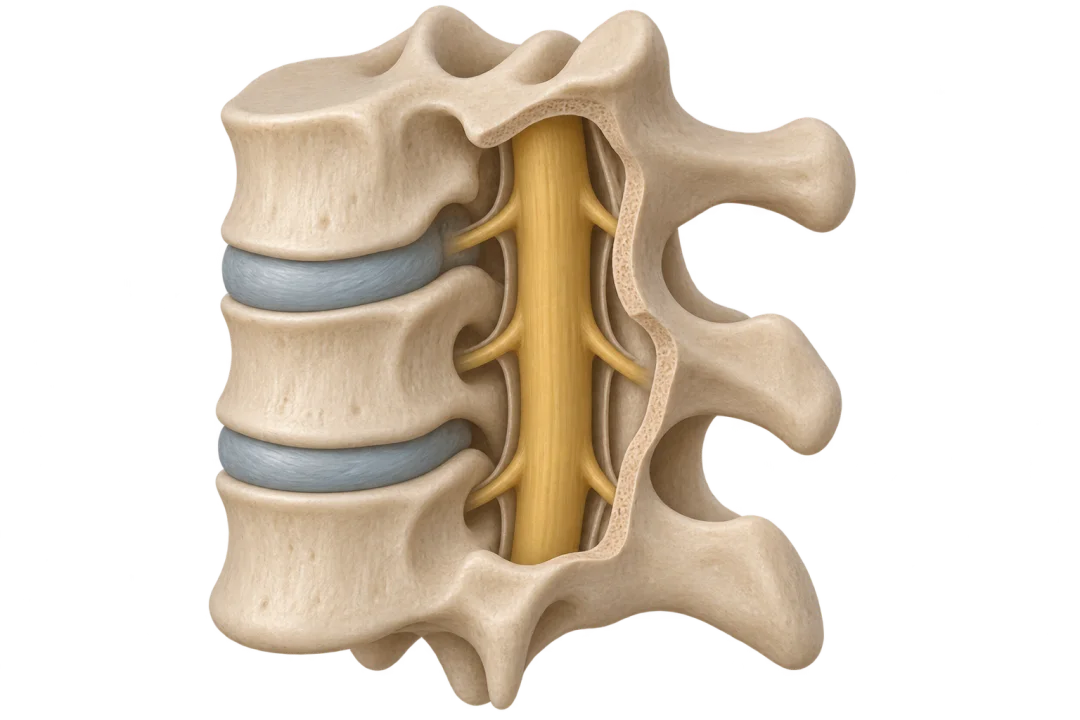
Discs can become thinner, small joints can develop arthritis, and bony growths can narrow the space available for nerves. Explore where each change happens and what an image can show.
Use the structure buttons to explore.
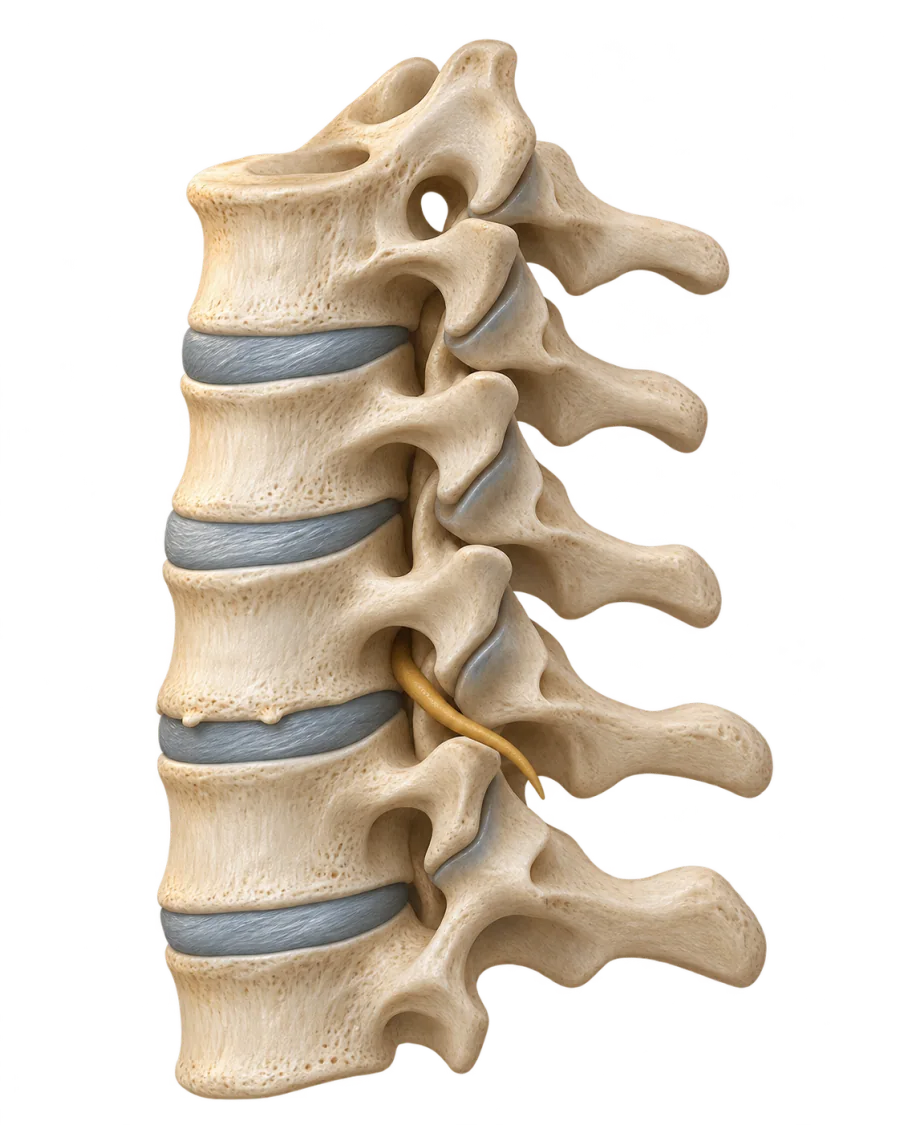
Illustrative neck model · side view
01 / Disc height
The cushion between bones
Discs sit between the vertebrae. They can lose height with age. A thinner disc can be visible on an image in people who have no symptoms.
02 / Facet joint
The small joint at the back
Facet joints help guide movement. Their surfaces can change with arthritis, and small bony growths can form around the edges.
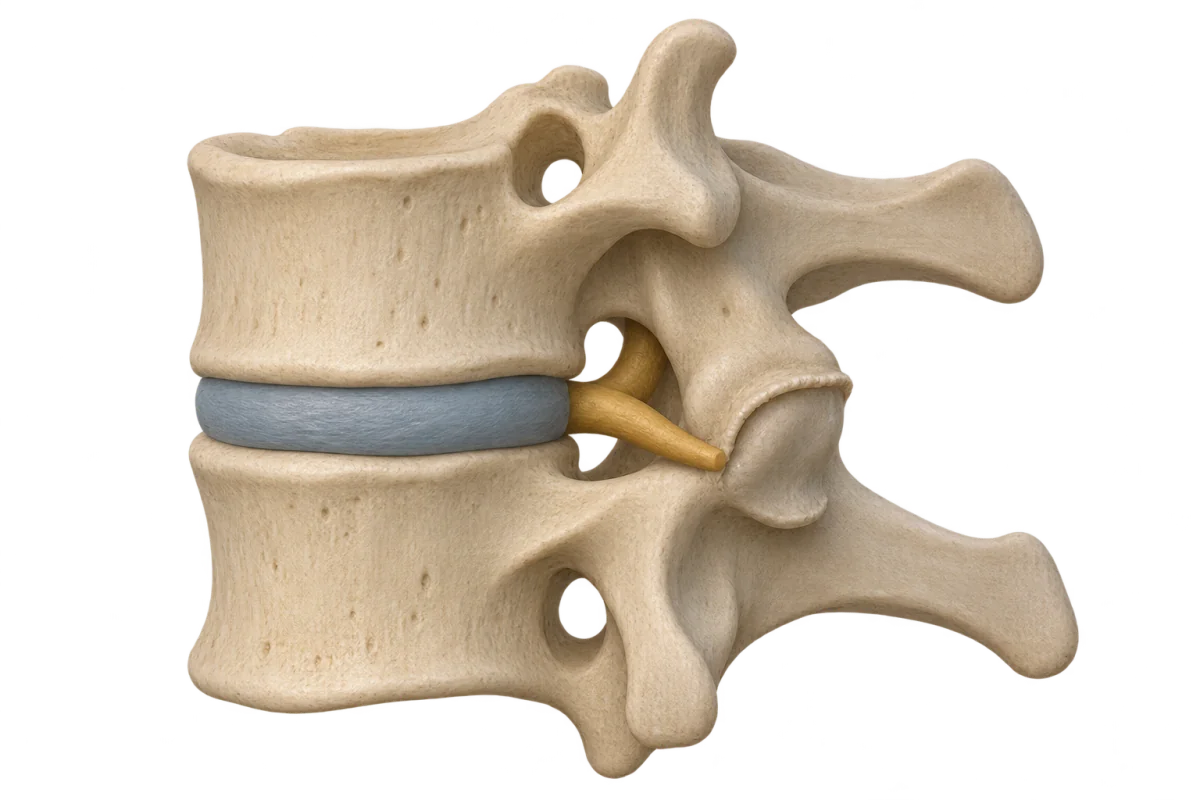
03 / Nerve space
The side opening for a nerve root
Each nerve root leaves the spine through an opening. Disc or bone changes can reduce that space. A clinician compares the level and side with your symptoms.
Follow the symptoms.Find what changes the next step.
Pain close to the spine, symptoms travelling into a limb and changes in coordination tell different stories. Use these patterns to describe your experience at an assessment.
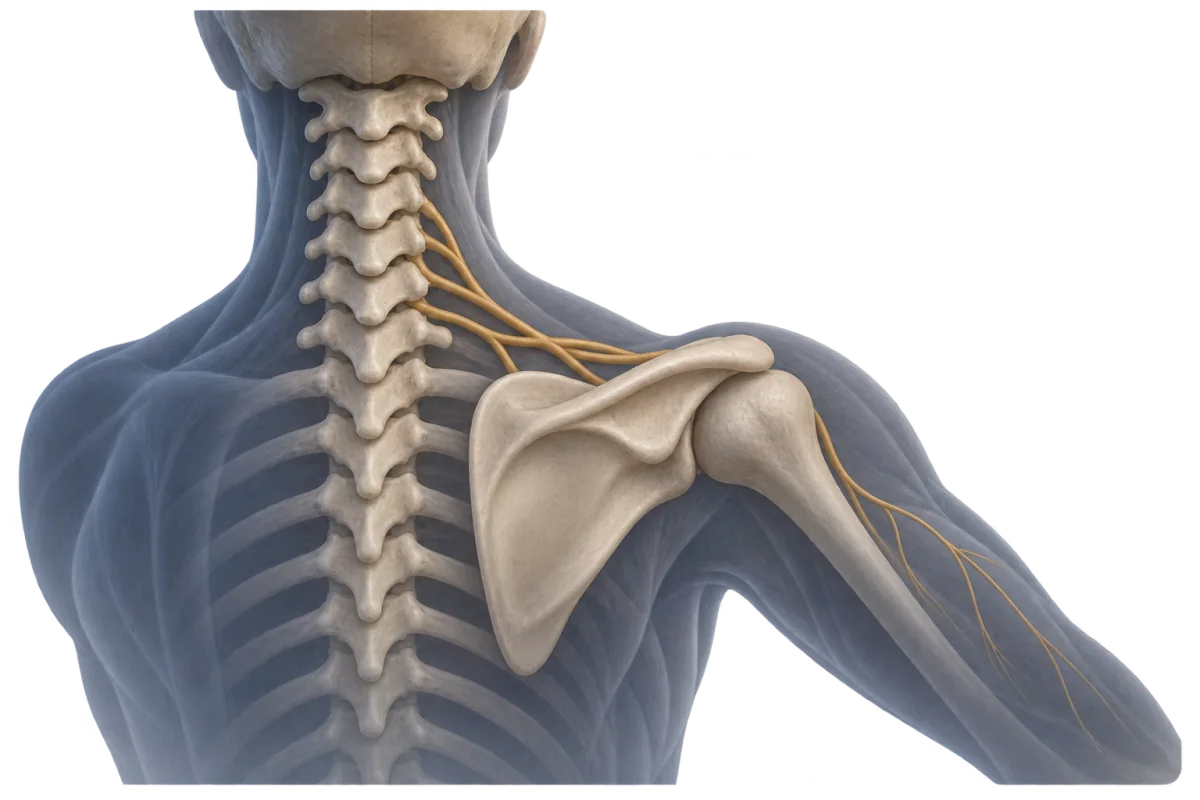
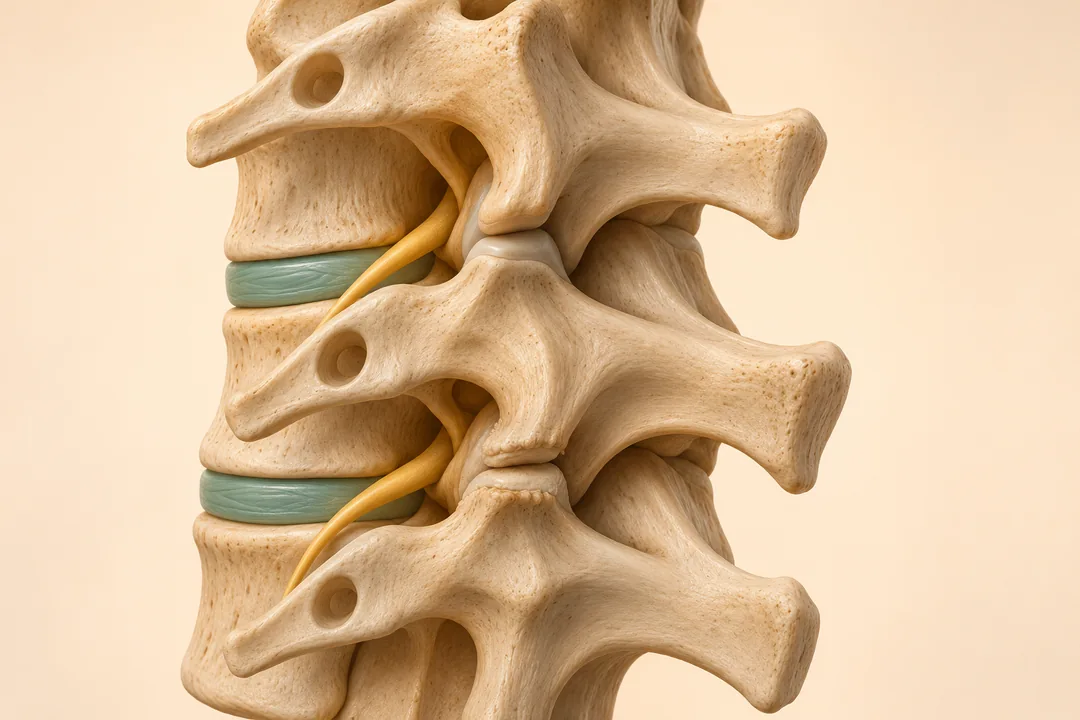
Neck and shoulderNeck and shoulder example. The gold lines represent simplified nerve branches. The spinal cord runs inside the spine.
01 / Neck or back
Stiffness close to the spine
Neck or lower-back pain can come and go. Note the activities or positions that bring it on, how long it lasts and whether turning, standing or working is harder.
A question for your visitWhere does it begin, where does it travel, and what brings it on or eases it?
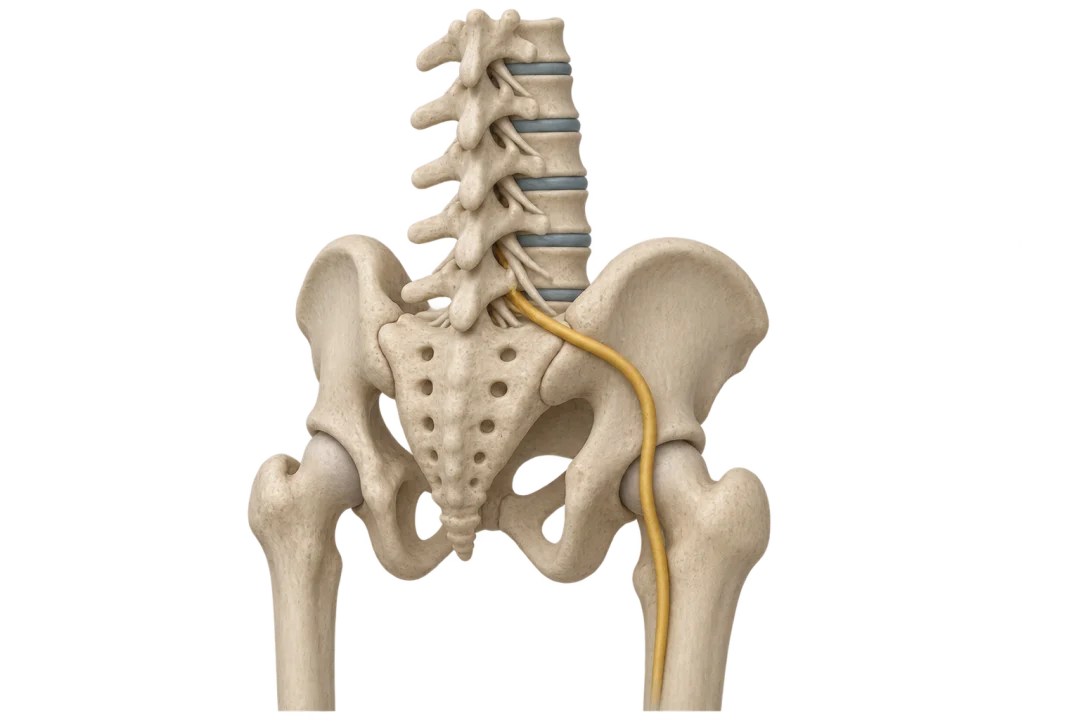
03 / Leg symptoms
Symptoms into a leg
A nerve root in the lower back can contribute to pain, tingling, altered feeling or weakness in a leg. Lower-back narrowing can also cause leg symptoms during standing or walking that ease after sitting. Similar symptoms have other possible causes.
A question for your visitWhere does it begin, where does it travel, and what brings it on or eases it?
04 / Hands and walking
Changes in coordination deserve attention
Pressure on the spinal cord in the neck can affect hand control or walking. Report changes such as fumbling with buttons, dropping things more often or feeling less steady. Use the urgent guidance below if these changes are new or worsening.
A question for your visitWhen did my hand control or balance begin to change?
03Warning signs / choose the right help
Some changesneed urgent attention.
Some new changes in strength, coordination or bladder and bowel function need immediate assessment. Use emergency care promptly if any of these signs are present.
Emergency assessment now
New trouble walking, sudden loss of hand coordination or rapidly worsening weakness in an arm or leg.
New loss of bladder or bowel control.
Back or leg symptoms with new difficulty passing urine or numbness around the genitals, anus or inner thighs.
Back pain with new pain, tingling, numbness or weakness in both legs.
The visit starts with your symptoms and the activities they affect. The examination helps decide whether a test will answer a question that changes your care.
Discs, joints and nerve roots occupy different spaces. Each imaging finding is interpreted alongside symptoms and examination.
01
Describe what has changed
Bring a timeline of pain, stiffness and any changes in sensation or strength. Include walking distance, hand tasks, sleep and work. Previous reports and a list of medicines can help.
History
Which parts of my story are most useful to record?
X-rays can show bone changes. MRI can give a closer view of discs, roots and the spinal cord when the clinical findings suggest a reason to look. For most adults with low-back pain or sciatica, NICE reserves imaging for situations where the result is likely to change management.
Treatment depends on the pattern of symptoms and the effect on daily life. Movement, medicine, procedures and a surgical opinion each have different purposes.
Compare purposes and limits
Movement
Purpose
Work towards a daily task that matters to you.
Limit
The plan depends on your symptoms and whether movement is appropriate.
Symptom relief
Purpose
Explore whether an option could improve comfort or function.
Limit
The expected benefit and risks depend on the option and your health.
Specialist review
Purpose
Clarify whether nerve or cord symptoms need specialist care.
Limit
Surgery decisions depend on confirmed findings and how symptoms affect you.
01 / Movement
Set a goal you can recognise
Purpose
Work towards a daily task that matters to you.
Limit
The plan depends on your symptoms and whether movement is appropriate.
When movement is appropriate, adapted activity and physiotherapy can help you work towards daily tasks. Start with a meaningful goal, such as turning your head comfortably or walking to a familiar place.
A question for your visitWhat activity can we work on safely, and when should I check back?
02 / Symptom relief
Discuss benefits, risks and alternatives
Purpose
Explore whether an option could improve comfort or function.
Limit
The expected benefit and risks depend on the option and your health.
A clinician can review medicine options alongside your health history and current treatments. If a procedure is proposed, ask which structure it targets and what change in comfort or function would make it worthwhile.
A question for your visitWhat is the expected benefit, and what would we do if it is small or brief?
03 / Specialist review
Match the referral to the concern
Purpose
Clarify whether nerve or cord symptoms need specialist care.
Limit
Surgery decisions depend on confirmed findings and how symptoms affect you.
Suspected pressure on the spinal cord needs timely specialist assessment. Surgery may be considered for clinically confirmed cord compression with symptoms or for selected people with persistent, function-limiting nerve symptoms.
A question for your visitWhich findings make specialist review useful or urgent?
06Evidence / shared decisions
What does the evidence say?What can it tell you?
Look for evidence about the specific condition and outcome. A study about low-back pain may answer a different question from guidance about the neck or spinal cord.
Confirmed cord symptoms need decisions based on severity and change.
01 / Imaging
A common finding needs clinical context
A systematic review found that age-related changes on scans were common in people without symptoms. The clinical question is whether the level and side of a finding fit your symptoms and examination.
For low-back care, NICE allows consideration of an epidural for acute, severe sciatica. It advises against using an epidural for walking-related leg symptoms caused by central spinal canal narrowing. These recommendations apply to different clinical groups.
A question to ask
Which condition are we treating, and what does the evidence say about it?
A guideline for confirmed degenerative cervical myelopathy recommends surgery for moderate or severe disease. It allows a choice of surgery or supervised structured rehabilitation for mild disease, with reassessment if symptoms deteriorate.
A question to ask
What would make the care team change the plan or review me sooner?
It describes age-related changes to the bones, discs and joints of the spine. Many people with these changes have no symptoms. The usefulness of a finding depends on how it fits your examination and symptoms.
A bone spur is a growth at a bone edge. Its location matters, including whether it reduces the space around a nerve. Your clinician can compare the scan with your symptoms and how your body is working.
Seek urgent medical advice if hand control is gradually worsening, especially alongside limb symptoms. Seek emergency care for sudden loss of coordination, new difficulty walking or rapidly worsening weakness.
A scan is selected to answer a specific question. For many people with low-back pain, particularly in non-specialist care, a scan is unlikely to change the initial plan. New neurological symptoms can change the urgency and the choice of test.
Many people start with adapted activity, physiotherapy and a review of symptom relief. Decisions about procedures or surgery depend on the condition and the clinical findings. Suspected cord problems call for a timely specialist opinion.
Bring previous reports if you have them, a medicines list and a short note on when symptoms changed and what tasks they affect. Mention any changes to walking, balance, strength or hand control.
Systematic review of how often spinal changes appear on scans in people without symptoms.
Read the complete original clinic article
This archive preserves the clinic’s source article, including its tables and references. It may contain earlier estimates, terminology and treatment claims. The patient guide above presents the current reading and decision-making context with separately linked guidance.