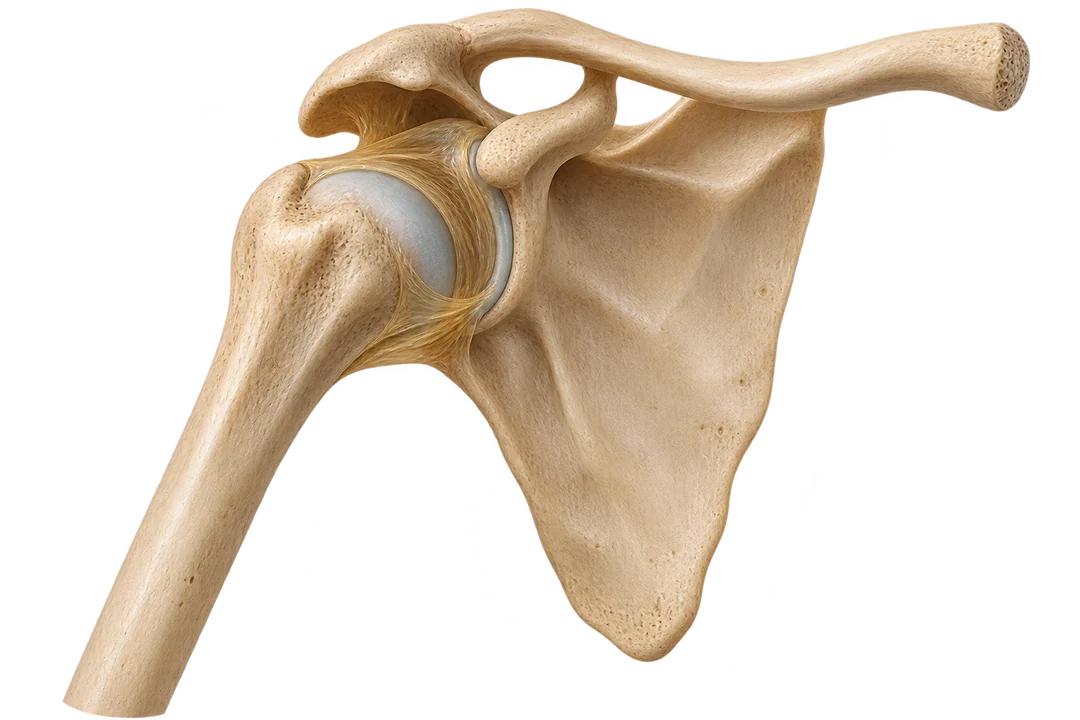
Flexible capsule
A flexible sleeve with room to move
The tissue around the joint is loose enough to fold as the upper arm turns or lifts.
Look below the ball. The softer blues indicate the drape of a flexible capsule.
ADHESIVE CAPSULITIS / PATIENT GUIDE
Frozen shoulder causes pain and stiffness as the tissue around the shoulder joint tightens. Notice which movements have changed, see what a clinician checks and explore the choices you can discuss together.
Article credits · Clinical review pending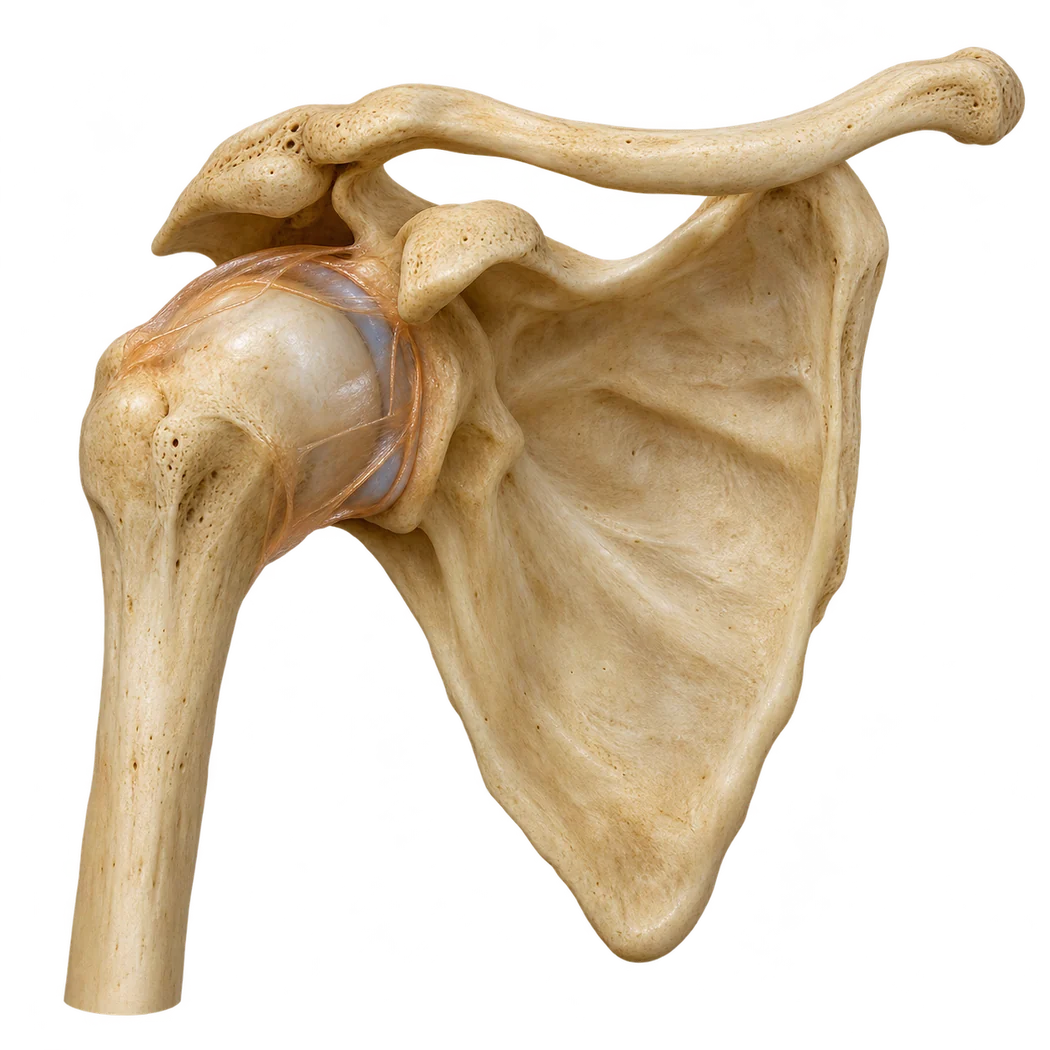
See what stiffensExplore the soft-tissue sleeve around the ball and socket.
Describe the changeThink about sleep, dressing and the movements you miss.
Plan the next stepCompare care options and agree what progress would look like.
01Anatomy / guided comparison
The ball of your upper arm fits in a shallow socket on the shoulder blade. A flexible tissue sleeve, called the capsule, surrounds that joint. In frozen shoulder the capsule can thicken and become tight, limiting movement.
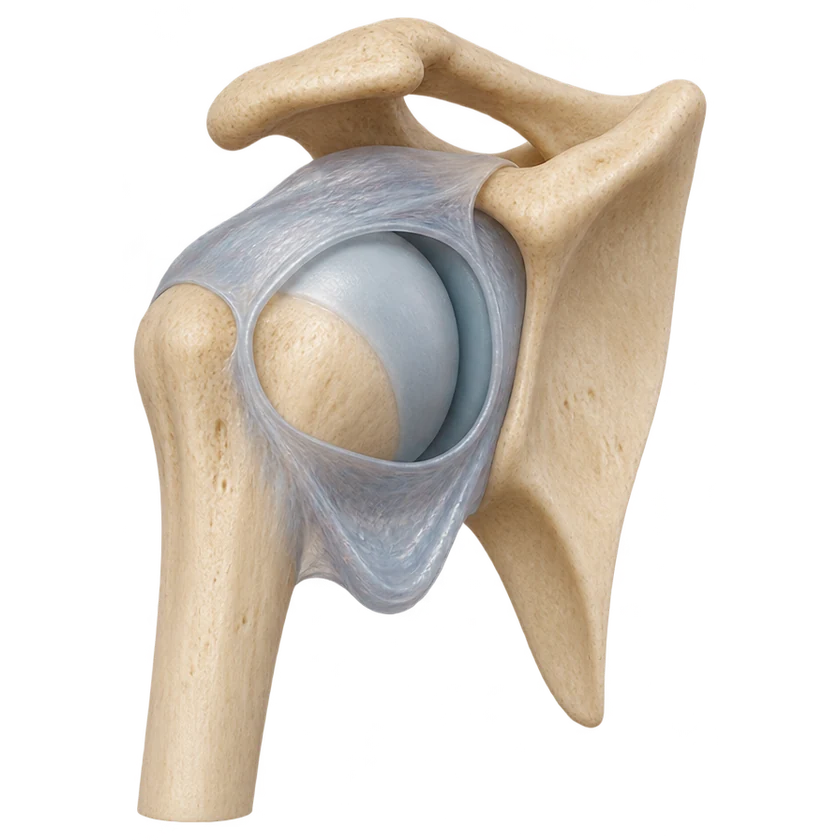
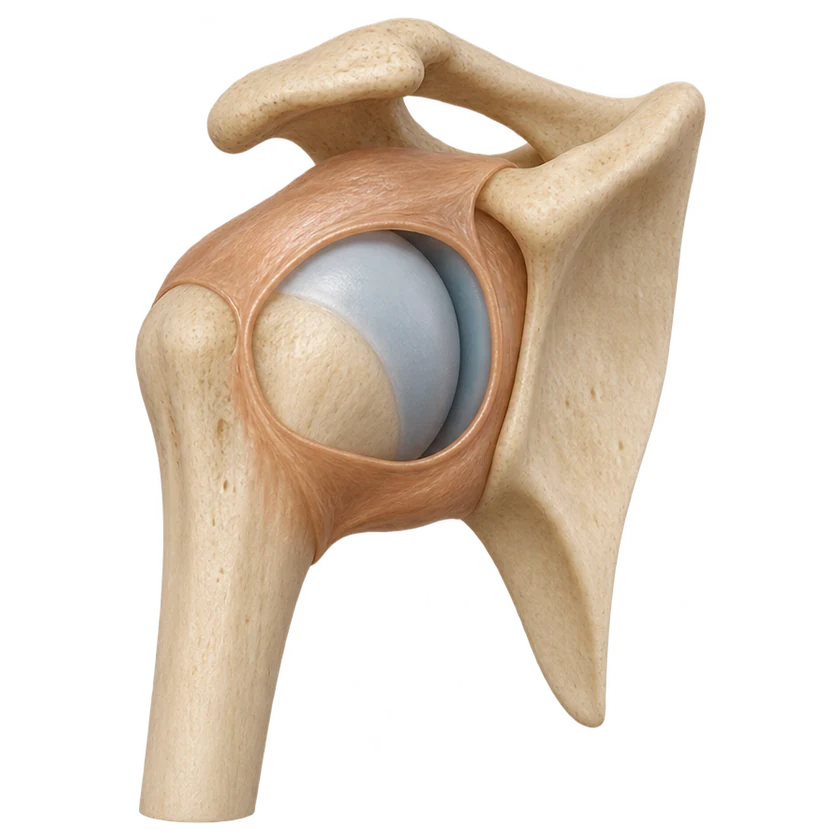
Flexible capsule
The tissue around the joint is loose enough to fold as the upper arm turns or lifts.
Look below the ball. The softer blues indicate the drape of a flexible capsule.
Two cutaway teaching views. The opening in each model lets you see the joint beneath the capsule.
AAOS OrthoInfo · Shoulder capsule02Symptoms / the pattern matters
Pain, stiffness and gradually easier movement are often described as phases. They can overlap and vary in length. Which movement is changing and how that affects your day matter more than naming a phase.

01 / Pain increasing
Pain may build gradually, disturb sleep or become noticeable when you reach. Some people first notice that taking off a shirt or washing their hair feels different.
NHS · Frozen shoulderA question for your visitWhich movements or nights are different from usual?
02 / Stiffness matters
Stiffness can remain even if pain eases. Reaching a high shelf, turning the arm out or reaching behind your back may still be harder.
AAOS OrthoInfo · Frozen shoulderA question for your visitWhich task would I most like to make easier?
03 / Motion returning
Movement may gradually become easier. Recovery varies and some people have lasting stiffness. If a new symptom appears or the shoulder keeps getting worse, tell your clinician.
AAOS OrthoInfo · Frozen shoulderA question for your visitWhich change would show that my plan is helping?
04 / Risk and history
Frozen shoulder can start without a clear trigger. Diabetes and thyroid conditions are associated with a higher chance of it, and it can follow injury or surgery that limits shoulder movement.
AAOS OrthoInfo · Frozen shoulderA question for your visitCould my recent injury, operation or existing condition matter?
03Warning signs / choose the right help
Frozen shoulder often develops gradually. Arrange a routine assessment if movement is getting harder or pain keeps affecting sleep or everyday tasks. New severe symptoms or feeling unwell can call for faster help.
Or go to the nearest emergency department. Arrange help getting there.
For routine clinic enquiries
Request an appointment04Assessment / questions before tests
The clinician compares what you can move yourself with carefully assisted movement. The history and examination guide whether a test can help explain the stiffness.

Describe whether the change began gradually or after an injury, operation or time in a sling. Tell your clinician about night pain, tasks you avoid and health conditions such as diabetes or thyroid disease.
What in my history points to frozen shoulder or another cause?
AAOS OrthoInfo · Frozen shoulderActive movement is what you do yourself. Passive movement is what the clinician can move gently while your arm relaxes. Both are often restricted in frozen shoulder, particularly when the arm turns outward.
Which direction is limited, and how will we track it?
AAOS OrthoInfo · Frozen shoulderAn X-ray may help look for alternatives such as arthritis. MRI or ultrasound may help if there is particular concern about another soft-tissue problem, such as a rotator cuff tear. Examination usually guides the diagnosis.
Would imaging change the next decision?
Korean Academy of Rehabilitation Medicine · 2025 guidelineAAOS OrthoInfo · Frozen shoulder05Care / options and limits
Your plan can start with the activities you want back, how much pain is limiting you and what is suitable for your health. The choices below serve different purposes. Your clinician can help you compare them.
01 / Movement and support
A clinician or physiotherapist can tailor mobility work and show how to adjust it as symptoms change. Ask which movements are suitable and what to do if pain flares. Avoid making up strenuous exercises or forcing the joint.
NHS · Frozen shoulderKorean Academy of Rehabilitation Medicine · 2025 guidelineA question for your visitWhich daily task should we use to judge my progress?
02 / Pain relief
Ask a clinician or pharmacist what pain relief is suitable for you. Bring a list of medicines, supplements and allergies, and agree what symptoms to track and when to review the plan.
NHS · Frozen shoulderA question for your visitHow long should I try this option before we review it?
03 / Joint injection
The decision depends on symptoms, health and past care. Discuss what improvement would count, any risks relevant to you and how a change in pain might help you work with a rehabilitation plan.
British Elbow and Shoulder Society · 2025 pathwayCambridge University Hospitals · Injection informationA question for your visitWould relief help me sleep or start a suitable movement plan?
04 / Hydrodilatation
This is a separate procedure a specialist may discuss. The mixture often includes a steroid. Ask about the evidence for the time period that matters to you and what movement support would follow.
British Elbow and Shoulder Society · 2025 pathwayAAOS OrthoInfo · Frozen shoulderA question for your visitWhat might fluid distension add for me and how would we check?
05 / Specialist review
A shoulder specialist may discuss continued non-surgical care, manipulation under anaesthesia or keyhole release of the capsule. Lasting stiffness alone does not establish which option will help most. Consider risks, timing and what recovery would involve.
Rangan et al. · UK FROST randomised trial, 2020AAOS OrthoInfo · Frozen shoulderA question for your visitHow would each choice affect my function and recovery time?
06Evidence / shared decisions
Separate earlier symptom relief from longer-term recovery. The research concerns defined groups of patients and treatments. Ask how closely those groups and goals match your situation.
01 / Steroid injection
The 2025 BESS guidance supports joint steroid injection for short-term symptom control in primary frozen shoulder. Pain and movement improved faster in some studies. Evidence beyond three months is more limited. Discuss what relief would let you do and whether the risks fit your health.
Are we aiming for easier sleep, a specific movement or both?
02 / Hydrodilatation
The 2025 non-surgical guideline says distension can be considered alongside a steroid injection for primary frozen shoulder, based on low-certainty evidence. The studies used different approaches, so the amount and duration of benefit can vary.
Compared with a joint steroid injection alone, what would we expect to gain?
03 / UK FROST
In 503 adults referred for primary frozen shoulder, the trial compared early structured physiotherapy with a steroid injection, manipulation under anaesthesia and keyhole capsule release. Both procedure groups had follow-up physiotherapy, and the manipulation group received a steroid injection. At 12 months, average differences in shoulder pain and function scores fell below the study’s targets of four or five points, depending on the comparison. Serious adverse events were reported more often in the capsule-release group than in the manipulation group. Hydrodilatation was outside the trial’s scope.
How should I weigh the chance of improved function against risks and recovery effort?
07Daily life / prepare for the visit
Tell your clinician which side is affected, when it changed and how it affects a task or your sleep. These two fictional notes show how small, specific details can make the first appointment more useful.

Fictional visit notes
08Questions / find a starting point
Several conditions can make a shoulder painful or stiff. A clinician compares the history, active and assisted movement, and sometimes imaging to distinguish the causes.
Improvement is often gradual and may take months or longer. People vary in how much pain and stiffness they experience, and some have lasting stiffness.
Many people can be assessed from their history and examination. A scan may be useful when a clinician is looking for a particular alternative cause.
Gentle movement as comfortable can be part of care. Ask a clinician or physiotherapist what fits your situation, especially after an injury or operation.
Steroid injection aims to ease symptoms. Hydrodilatation also uses fluid to expand the capsule, often with a steroid in the mixture. Ask how the expected benefits and risks differ for you.
Many people improve with time and non-surgical care. A specialist can discuss whether a procedure is worth considering if stiffness and pain remain limiting.
Get urgent assessment for sudden severe shoulder pain, a misshapen shoulder after injury, inability to move your arm, loss of feeling or fever. Call 112 for chest pressure, severe difficulty breathing or collapse.
09Sources / editorial accountability
This guide brings together the clinic’s original educational material and separately linked guidance.
Frozen Shoulder Pain · Published by IBAP Clinics
The original IBAP article names Dr Vijay Bhaskar Bandikatla as its author and describes a five-phase protocol. The archive retains that protocol and the article’s stated recovery estimates. This adaptation compares separate options using linked guidance and research.
Go to the original article archiveAdapted for IBAP Clinics with AI assistance from OpenAI Codex.
The adaptation reorganises the original article for patients and adds educational illustrations, examples and separately linked clinical guidance.

Clinic physician profile
Pain physician and founder, IBAP Clinics
Read the physician’s profileClinical review pendingClinician review of the adapted copy and illustrations is awaiting confirmation.
Editorial update
Patient guide to shoulder pain and stiffness, activity and treatment.
The joint capsule, risk factors, motion examination and treatment options.
When new shoulder symptoms, injury or feeling unwell warrant urgent assessment.
Emergency symptoms including chest pressure, spreading pain and severe breathlessness.
Evidence and recommendations for managing frozen shoulder, including the strength and limits of evidence.
Examination and non-surgical options for primary frozen shoulder, with graded recommendations.
Potential side effects of steroid injections, including a temporary rise in blood sugar.
Comparison of three treatments among 503 adults with primary frozen shoulder referred to 35 UK hospitals.
This archive preserves the clinic’s source article, including its tables and references. It may contain earlier estimates, terminology and treatment claims. The patient guide above presents the current reading and decision-making context with separately linked guidance.
Original article destinationEducational content for a clinical conversation. Illustrations simplify anatomy. Original patient stories describe individual experiences.