CHRONIC PAIN CONDITION / PATIENT GUIDE
Complex Regional
Pain Syndrome (CRPS)
Persistent limb pain can be accompanied by sensitivity, swelling and changes in colour, temperature or movement.
Understand the pattern, how a specialist assesses it, and the role of rehabilitation and a tailored care plan.
IBAP Clinics · Banjara Hills & Madeenaguda
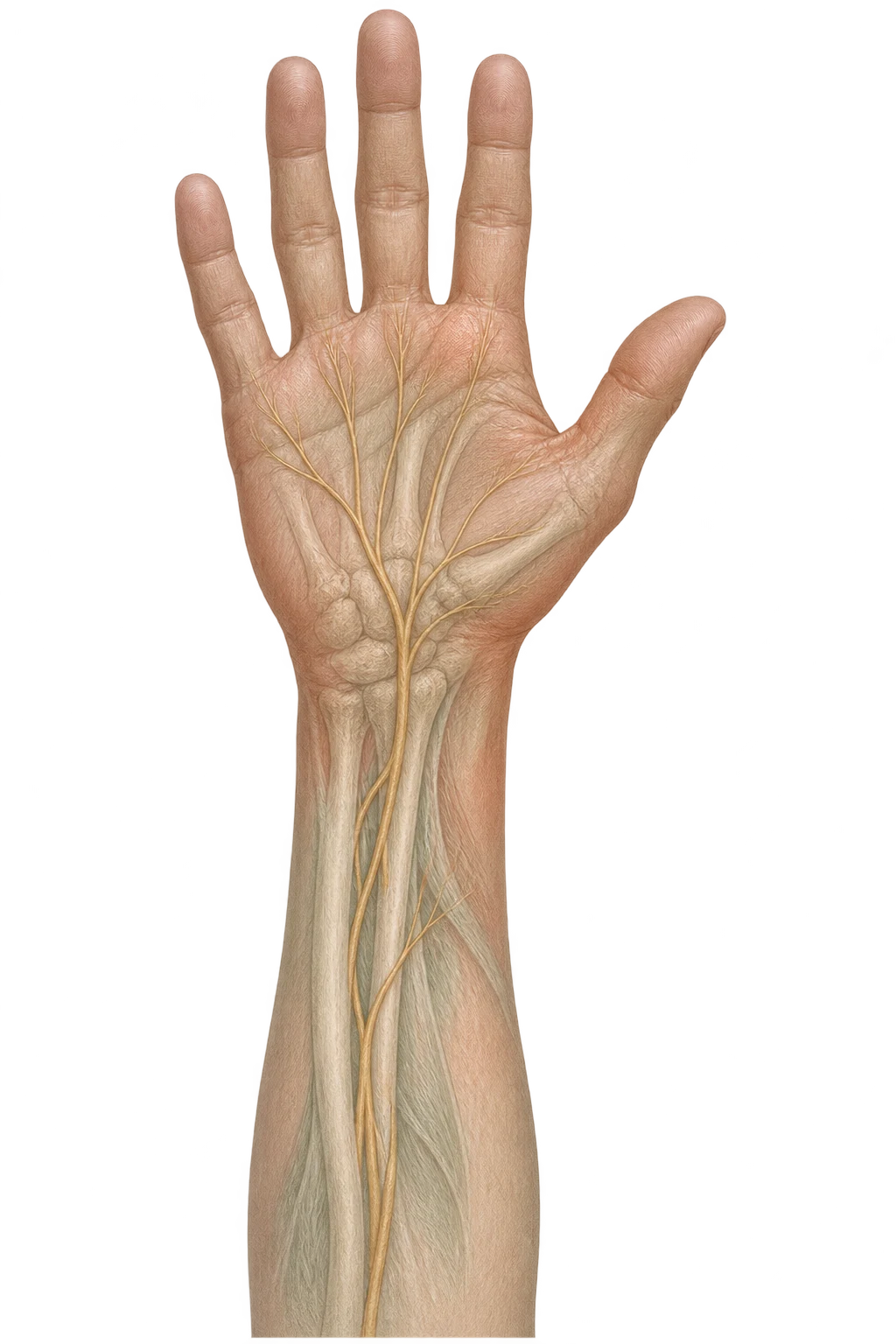
01 / Recognise
A regional pattern. A real experience.
Pain, sensitivity and changes in the affected limb deserve to be heard and assessed.
01UNDERSTANDING / CRPS AT A GLANCE
Your pain is real.
The pattern deserves attention.
CRPS can follow an injury, surgery or immobilisation. Sometimes there is no clear trigger. Early assessment can help you start a suitable care plan.
What is complex regional pain syndrome?
CRPS is a persistent pain condition that usually affects a region of one limb. The pain can be stronger or last longer than expected after the triggering event. Alongside pain, a person may notice sensitivity, swelling, changes in skin colour or warmth, and difficulty using the limb.
Even a sleeve brushing the wrist or a shoe touching the foot can become difficult to tolerate. Nerve signalling, inflammation and circulation may contribute in different ways for different people.
NHS · Understanding CRPSFORMERLY RSD
CRPS Type 1
There is no confirmed injury to a named peripheral nerve. It can develop after a fracture, sprain, surgery or immobilisation.
FORMERLY CAUSALGIA
CRPS Type 2
A peripheral nerve injury is identified. Both types can have similar clinical features. The nerve injury and the person’s functional needs inform care.
THE NAMES IN YOUR RECORDS
One history, many terms.
Bring records that mention RSD, causalgia, algodystrophy or Sudeck’s atrophy. Your clinician can review those findings alongside your symptoms today.
- 1864Causalgia
- 1900Sudeck’s atrophy
- 1994CRPS terminology
Explore all eight historical terms
| Term | Era or origin | Context |
|---|---|---|
| Causalgia | 1864 / Silas Weir Mitchell | Burning pain after nerve injury; now associated with CRPS Type 2. |
| Sudeck’s atrophy | 1900 / Paul Sudeck | Described regional bone loss after injury. Bone changes do not capture the whole syndrome. |
| Algodystrophy | Mid-20th century | A term emphasising pain and tissue changes, still found in some older records. |
| Post-traumatic dystrophy | Mid-20th century | Highlighted an injury trigger, though an obvious injury is not always identified. |
| Shoulder-hand syndrome | 1940s–1970s | Described a shoulder-and-hand pattern, including after stroke or other illness. |
| Reflex sympathetic dystrophy / RSD | 1940s–1994 | The name assumed a sympathetic mechanism, which does not explain every case. |
| Sympathetically maintained pain / SMP | 1980s–1990s | Describes a possible pain mechanism in some people, rather than a synonym for all CRPS. |
| Complex Regional Pain Syndrome | IASP terminology / 1994 | A descriptive name that avoids assuming a single underlying mechanism. |
02SYMPTOM ATLAS / FOUR CATEGORIES
What you might notice.
What to tell your clinician.
Explore how symptoms may affect a hand, arm, foot or leg. The experience and severity vary between people and over time.
01 / Sensory
When ordinary contact can hurt.
Pain may be burning, searing or electric and greater than expected from the original injury. Light touch, clothing or a breeze may hurt (allodynia); a painful stimulus may feel unusually intense (hyperalgesia).
- Allodynia: pain from normally non-painful contact.
- Hyperalgesia: an increased response to painful stimulation.
- Hypaesthesia: reduced sensation.
- Hyperpathia: a delayed, unusually strong response after repeated stimulation.
Read all four symptom explanations
Sensation · Sensory
Pain may be burning, searing or electric and greater than expected from the original injury. Light touch, clothing or a breeze may hurt (allodynia); a painful stimulus may feel unusually intense (hyperalgesia).
- Allodynia: pain from normally non-painful contact.
- Hyperalgesia: an increased response to painful stimulation.
- Hypaesthesia: reduced sensation.
- Hyperpathia: a delayed, unusually strong response after repeated stimulation.
Describe what triggers symptoms. These terms explain experiences; they do not diagnose CRPS.
Colour & warmth · Vasomotor
The affected region may be warmer or cooler than the other side. Skin can appear red, blue, purple, pale or mottled, and these changes may fluctuate.
- Colour differences can vary during the day.
- Temperature can differ between limbs.
A new colour or temperature change can have other causes. It needs assessment rather than an assumption of CRPS.
Sweating & swelling · Sudomotor / oedema
Swelling and altered sweating can occur in the painful region. Sweating may be increased or reduced compared with the other limb.
- Oedema means swelling.
- Sudomotor describes sweat-gland function.
Tell your clinician when the swelling or sweating began and whether it changes.
Movement & tissues · Motor / trophic
Stiffness, weakness, tremor or abnormal postures can affect use of the limb. Skin, hair or nail growth may change; some people have regional bone-density changes.
- Reduced movement, tremor or dystonia (abnormal posture).
- Changes in skin texture, hair or nails.
- Bone changes on imaging are neither required nor diagnostic on their own.
Trophic means changes in tissue growth or appearance. Therapy is adapted to your symptoms and capacity.
Why older articles describe three stages
Older descriptions use “acute”, “dystrophic” and “atrophic” to group warm swollen limbs, cooler or stiffer limbs, and longer-term changes such as muscle loss or joint contractures. Symptoms can fluctuate, persist or change in distribution. Research has not established a predictable three-stage timetable, and the terms do not determine how soon or how much someone can improve.
Harden et al. · Stage-model limitations, 201303THE NERVOUS SYSTEM / FIVE AREAS TO EXPLORE
More than one
pain pathway.
Select a view to see how sensitivity, pain processing, automatic regulation, inflammation and movement can interact. Which mechanisms matter can differ from person to person.
01 / At the limb
The threshold for pain can change.
Nerve endings in the affected region may become more responsive. This can contribute to pain with light contact or an amplified response to stimulation.
Peripheral sensitisationHarden et al. · Practical guidelines, 2022Read all five mechanism explanations
Peripheral sensitisation
Nerve endings in the affected region may become more responsive. This can contribute to pain with light contact or an amplified response to stimulation.
Central sensitisation
Changes in how the spinal cord and brain process sensory information may help maintain pain. Some people also experience altered body perception. This does not mean the pain is imagined or that every brain changes in the same way.
Sympathetic dysregulation
The autonomic nervous system helps regulate blood vessels, skin temperature and sweating. These functions can change in CRPS. Sympathetic activity contributes to pain in some people, but not in everyone.
Neuroinflammation
Research describes local inflammation and interactions between immune cells and nerves in CRPS. Substance P and CGRP are signalling molecules studied in this process; immune findings are not a routine diagnostic test.
Motor-system involvement
Pain, altered sensory feedback, stiffness and changes in motor control can make movement difficult. Supported rehabilitation addresses function alongside pain management, with goals and pacing chosen for the person.
04DIAGNOSIS / THE BUDAPEST CRITERIA
A clinical assessment.
A pattern of findings.
Your clinician brings together your history, your symptoms and findings on examination. These criteria describe a clinical assessment and cannot provide a diagnosis online.
What you report
What the clinician observes
Four requirements considered together.
- Pain
- Ongoing pain is disproportionate to the event that triggered it.
- Symptoms
- The person reports at least one symptom in three of the four categories.
- Signs
- The clinician observes at least one sign in two of the four categories at assessment.
- Other causes
- No other diagnosis better explains the findings.
Sensory
Allodynia or increased pain sensitivity.
Vasomotor
Differences in skin colour or temperature.
Sudomotor / oedema
Swelling or altered sweating.
Motor / trophic
Reduced movement, weakness, tremor, dystonia or changes in skin, hair or nails.
05CARE OPTIONS / FUNCTION & COMFORT
Build a plan around
what matters to you.
Rehabilitation, pain management and support can work together. Decisions about medicines and procedures depend on your symptoms, goals and response over time.

01 / Rehabilitation & support
Small, supported steps toward function.
Physical and occupational therapy help build activity and everyday use of the limb. Plans may include gentle movement, pacing, desensitisation and, when appropriate, graded motor imagery or mirror visual feedback.
- Progress is guided by a therapist familiar with CRPS; forceful exercise can aggravate symptoms.
- Pain education, sleep support and psychological therapies can help with distress and coping. Their role does not imply that the pain is imagined.
- Agree on a meaningful goal, such as using a cup, walking a familiar route or managing a daily task.
How will my programme adapt to flare-ups?
Read every care option in one place
Rehabilitation & support
Physical and occupational therapy help build activity and everyday use of the limb. Plans may include gentle movement, pacing, desensitisation and, when appropriate, graded motor imagery or mirror visual feedback.
- Progress is guided by a therapist familiar with CRPS; forceful exercise can aggravate symptoms.
- Pain education, sleep support and psychological therapies can help with distress and coping. Their role does not imply that the pain is imagined.
- Agree on a meaningful goal, such as using a cup, walking a familiar route or managing a daily task.
Medicines
The source article discusses nerve-pain medicines such as gabapentin, pregabalin, duloxetine and amitriptyline; anti-inflammatory medicines; bisphosphonates; topical agents; vitamin C and low-dose naltrexone. These have different indications, risks and levels of evidence.
- Ask what symptom each medicine is targeting and when benefit and side effects will be reviewed.
- Steroids or bisphosphonates may be considered selectively; they are not suitable for every person.
- Vitamin C prevention evidence is uncertain. Low-dose naltrexone remains an emerging approach with limited evidence; neither is a routine self-treatment recommendation.
- Do not start, stop or change prescribed medicines without your treating team.
Selected interventions
Sympathetic blocks, monitored ketamine treatment or neuromodulation may be considered in selected circumstances. A procedure is not a substitute for ongoing rehabilitation and follow-up.
- For a block or infusion, agree on the aim, how response will be measured and which risks apply.
- SCS and DRG stimulation require specialist selection, discussion of device risks and a trial process where appropriate.
- The original article also discusses IVIG. A larger placebo-controlled trial did not support low-dose IVIG for long-standing CRPS; it is not presented here as routine care.
EVIDENCE / SHARED DECISIONS
What the studies can tell us.
Ask which findings apply to your situation and what improvement would matter in daily life.
SCS with physiotherapy
A small trial in selected people with chronic RSD found better pain outcomes with stimulation plus physiotherapy than with physiotherapy alone at six months. The benefit and device risks need individual discussion.
Kemler et al. · SCS and physiotherapy trial, 2000More focal stimulation
The ACCURATE trial compared DRG stimulation with SCS in selected people with lower-limb CRPS or causalgia. More participants in the DRG group met the study’s treatment success criteria at three and twelve months. The study concerned the lower limb.
Deer et al. · ACCURATE trial, 2017IVIG and uncertainty
A larger placebo-controlled trial of low-dose IVIG for long-standing CRPS found no improvement in pain over placebo. The original article’s immune-treatment discussion needs this context.
Goebel et al. · IVIG randomised trial, 2017Compare all six interventions discussed in the source
| Intervention | Approach | Questions and limitations |
|---|---|---|
| Stellate ganglion block | A sympathetic block considered for selected upper-limb pain. | Relief is uncertain; discuss bleeding, infection, local-anaesthetic effects and nerve or nearby-structure injury. |
| Lumbar sympathetic block | A sympathetic block considered for selected lower-limb pain. | Not every CRPS pain mechanism is sympathetically maintained. Discuss the intended rehabilitation goal and procedural risks. |
| IV ketamine infusion | A monitored specialist option for some persistent pain problems. | Benefit may be temporary; side effects and monitoring needs require individual assessment. |
| Spinal cord stimulation / SCS | An implanted system that changes pain signalling using epidural leads. | Does not cure CRPS. Discuss trial response, infection, lead movement, revision and ongoing device care. |
| Dorsal root ganglion stimulation / DRG-S | A more focal stimulation approach for selected regions. | The ACCURATE trial concerned lower-limb CRPS or causalgia; findings cannot be applied to every patient or site. |
| IV immunoglobulin / IVIG | An immune treatment studied in CRPS. | Not routine CRPS care: a larger randomised trial did not show benefit over placebo for long-standing CRPS. |
06YOUR VISIT / PREPARATION & AFTERCARE
From assessment
to a plan you can follow.
Bring a record of how the symptoms started and how they affect everyday life. If a procedure is considered, ask for written instructions specific to you.
Before a procedure
Bring old diagnoses, reports and your medication list. Discuss benefits, risks, alternatives and the functional goal. Tell the team about blood thinners and agree on a plan with the relevant clinicians. Do not stop them independently.
On the day
Follow your team’s individual instructions for eating, drinking and medicines. Mention GLP-1 medicines such as semaglutide or tirzepatide, recent infection, fever and recent treatments. Bring requested reports and arrange transport as advised.
During the visit
The team will explain monitoring, sterile preparation, anaesthesia and imaging for the chosen procedure. Tests or an ECG may be requested before an implant. Ask what to expect for your specific plan.
Afterwards
Ask which temporary effects may occur after a block, such as eyelid or pupil changes or limb warmth. Follow written discharge instructions and agree when to resume rehabilitation and attend review.
AFTER A PROCEDURE
Know when to seek help.
Fever, severe headache, increasing pain or new neurological symptoms need prompt medical assessment. Follow the contact instructions provided at discharge.
Clinic contactBreathing difficulty or throat swelling
Seek emergency help immediately if a severe allergic reaction is suspected.
Call 108NHS · Severe allergic reactionsWhat happens in the wider clinic care process?
- Appointment enquiry
- Medical history
- Personalised consultation
- Imaging if useful
- Clinical assessment
- Individual care plan
- Rehabilitation
- Continued review
Testing and treatments are chosen after assessment. The appointment enquiry opens the existing form.
FREQUENTLY ASKED QUESTIONS
Questions you may
bring to your visit.
Seven questions from the original guide, with answers adapted for patient reading.
Ask about your situationThe course varies. Some people improve substantially, while others need longer-term support. A fixed stage timetable cannot predict an individual outcome. Seek assessment and a tailored rehabilitation plan rather than waiting for a particular stage.
NHS · Understanding CRPSCRPS can occur after surgery, an injury or a period of immobilisation, and occasionally without a clear trigger. Developing CRPS does not by itself establish negligence. If you have had CRPS, tell the team before a planned operation so that care can be coordinated.
NHS · Understanding CRPSNo. CRPS is a regional condition with a characteristic pattern of sensory, autonomic and movement or tissue changes. Fibromyalgia involves a different pattern of widespread symptoms. A clinician should assess overlapping features rather than assuming the conditions are interchangeable.
Harden et al. · Budapest criteria validation, 2010No cure is promised. Stimulation may reduce pain in selected patients, but response varies and device-related complications or further procedures can occur. Discuss the trial process, realistic goals, long-term maintenance and how it supports rehabilitation.
Deer et al. · ACCURATE trial, 2017No prevention method guarantees that CRPS will not develop. Follow the rehabilitation and movement advice appropriate to your injury or surgery. Evidence for vitamin C prevention is uncertain; discuss it with your treating team rather than self-prescribing a dose.
Harden et al. · Practical guidelines, 2022Studies have reported CRPS more often in women, but it can affect people of any sex and age, including children. Demographic patterns cannot confirm or exclude the diagnosis for an individual.
NHS · Understanding CRPSRSD is an older name commonly associated with CRPS Type 1. Bring records using this or other historical names to your appointment. Your clinician can review the original diagnosis, symptom history and present findings.
Original IBAP CRPS articleYOUR NEXT STEP / IBAP CLINICS
Start with your story.
Discuss a care plan.
Bring your reports, the changes you have noticed and a daily activity you would like help with. Your care team can assess the pattern and discuss options.
SOURCE / CLINICAL CONTEXT
About this guide.
This patient guide adapts the original IBAP article, with linked guidance on diagnosis, rehabilitation, evidence and preparation. It is general education for discussion with your care team.
Original IBAP CRPS articleMeet Dr Vijay Bhaskar BandikatlaAnatomy and rehabilitation images are generated educational illustrations. Clinical review of this new adaptation and its artwork is pending confirmation.
Clinical sources linked in this guide
- NHS · Understanding CRPS
- NHS · CRPS symptoms
- NHS · CRPS treatment
- Harden et al. · Budapest criteria validation, 2010
- Harden et al. · Practical guidelines, 2022
- Harden et al. · Stage-model limitations, 2013
- Cochrane · Overview of CRPS treatments, 2023
- Kemler et al. · SCS and physiotherapy trial, 2000
- Deer et al. · ACCURATE trial, 2017
- Goebel et al. · IVIG randomised trial, 2017
- NHS · Urgent assessment for a painful swollen joint
- NHS · Severe allergic reactions
- ASA · Diabetes and weight-loss medicines before surgery
Original article bibliography · 11 references
- Harden RN, Bruehl S, Perez RS, et al. Validation of proposed diagnostic criteria (the “Budapest Criteria”) for Complex Regional Pain Syndrome. Pain. 2010;150(2):268–274.
- Kemler MA, Barendse GA, van Kleef M, et al. Spinal cord stimulation in patients with chronic reflex sympathetic dystrophy. New England Journal of Medicine. 2000;343(9):618–624.
- Perez RS, Zollinger PE, Dijkstra PU, et al. Evidence based guidelines for complex regional pain syndrome type 1. BMC Neurology. 2010;10:20.
- Mitchell SW, Morehouse GR, Keen WW. Gunshot wounds and other injuries of nerves. Philadelphia: JB Lippincott; 1864. (Original description of causalgia.)
- Sudeck PHM. Über die akute entzündliche Knochenatrophie. Archiv für klinische Chirurgie. 1900;62:147–156. (Original description of Sudeck’s atrophy.)
- Bruehl S. Complex regional pain syndrome. BMJ. 2015;351:h2730.
- Lunden LK, Kleggetveit IP, Jørum E. Delayed diagnosis and worsening of pain following orthopedic surgery in patients with complex regional pain syndrome (CRPS). Scandinavian Journal of Pain. 2016;11:27–33.
- Zollinger PE, Tuinebreijer WE, Breederveld RS, et al. Can vitamin C prevent complex regional pain syndrome in patients with wrist fractures? Journal of Bone and Joint Surgery. 2007;89(7):1424–1431.
- Deer TR, Levy RM, Kramer J, et al. Dorsal root ganglion stimulation yielded higher treatment success rate for complex regional pain syndrome and causalgia at 3 and 12 months: a randomized comparative trial. Pain. 2017;158(4):669–681. (ACCURATE trial.)
- Moseley GL. Graded motor imagery is effective for long-standing complex regional pain syndrome: a randomised controlled trial. Pain. 2004;108(1–2):192–198.
- Stanton-Hicks M, Jänig W, Hassenbusch S, et al. Reflex sympathetic dystrophy: changing concepts and taxonomy. Pain. 1995;63(1):127–133. (IASP taxonomy consensus.)
Patient stories from the wider clinic
The original page includes these general clinic stories about several pain conditions. Individual experiences cannot predict a CRPS outcome.