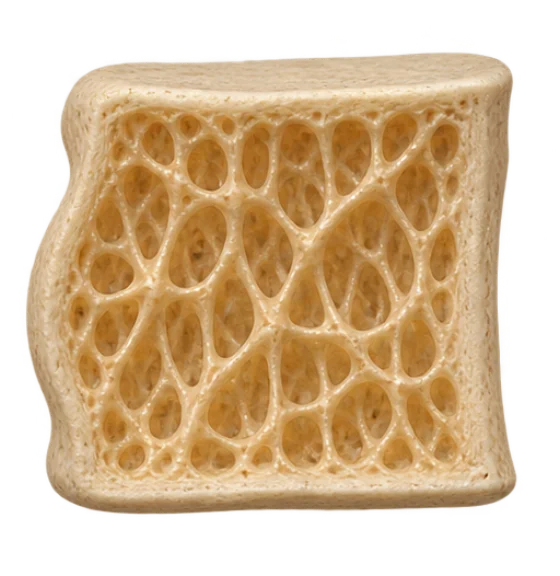
Intact structure
Inner bone supports
A network of fine struts helps the bone carry weight. The front and back edges keep their usual height.
Look for the close-set struts.
BONE HEALTH / PATIENT GUIDE
Weaker bones can break after a small fall. Learn when to get help for back pain and how to reduce future fracture risk.
Article credits · Clinical review pending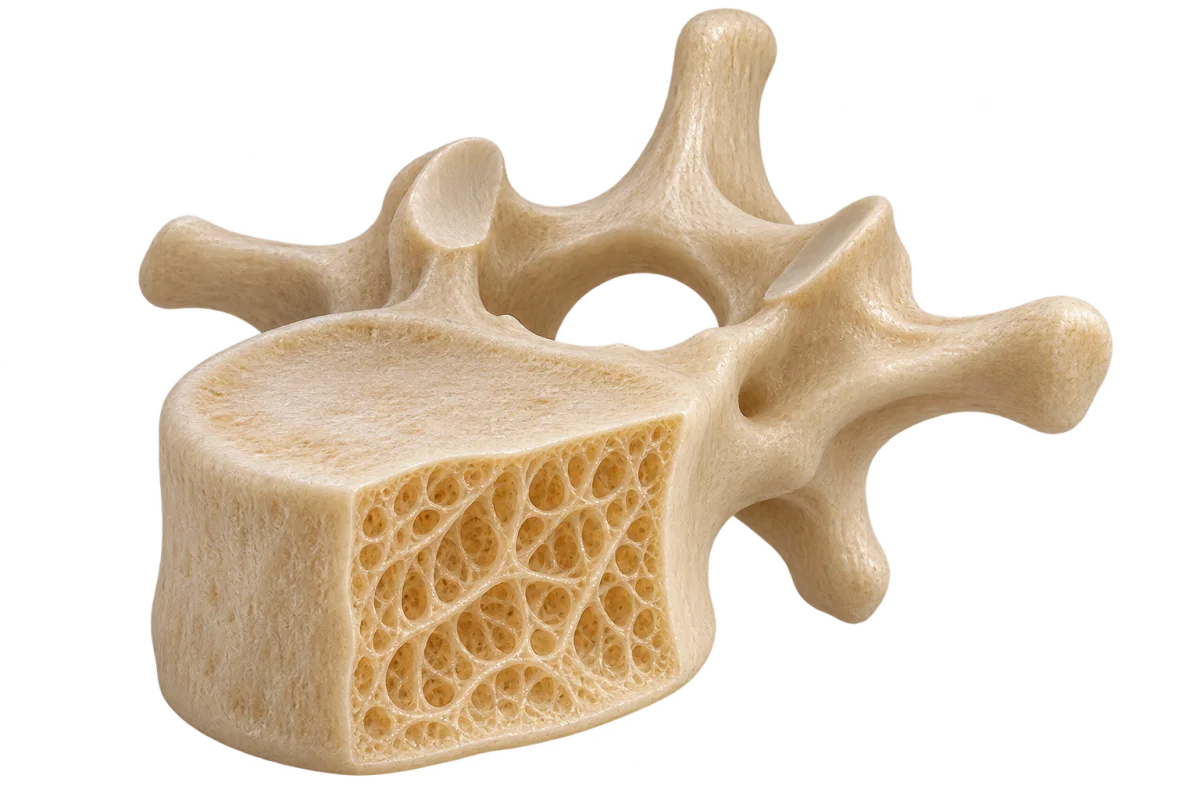
Understand the boneCompare the inner bone structure and the shape of a compression fracture.
Check new back painKnow which symptoms and changes need urgent assessment.
Plan beyond the fractureDiscuss pain relief, safe movement and ways to protect your bones.
01Anatomy / guided comparison
A vertebra has an outer shell and a network of struts inside that helps it carry weight. Osteoporosis can weaken this structure. Compare the three models to see how one kind of break changes the bone’s shape.
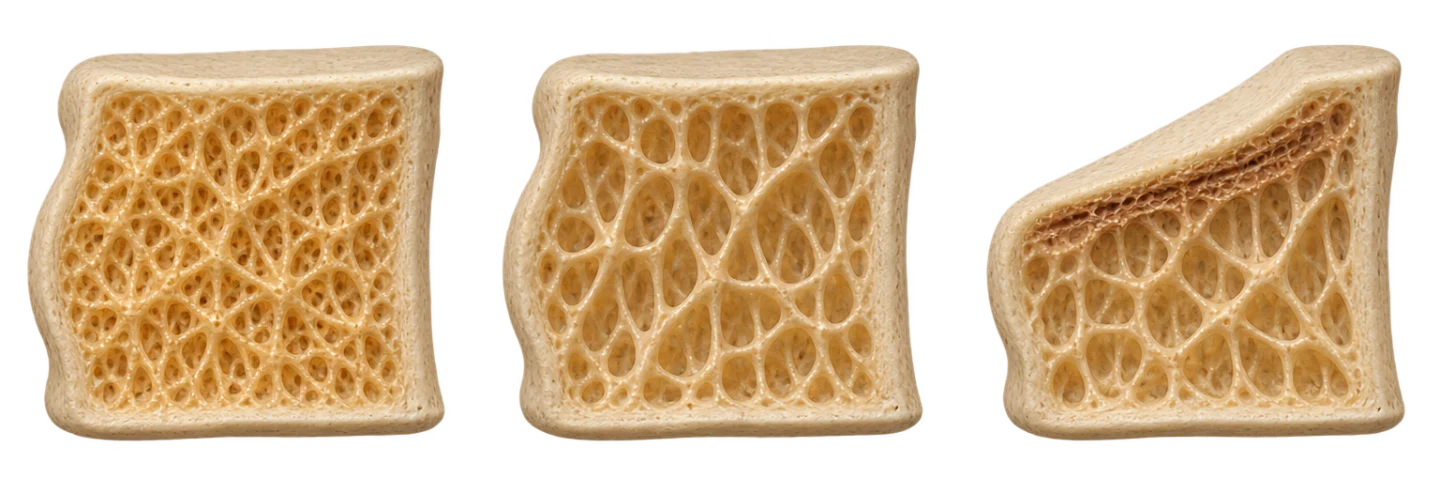
Intact structure
A network of fine struts helps the bone carry weight. The front and back edges keep their usual height.
Look for the close-set struts.
Lower density
With osteoporosis, the struts can become thinner or lose connections. Bone can weaken while its outer shape stays the same.
Compare the larger spaces.
Wedge fracture
In a wedge fracture, the front of the vertebral body shortens more than the back. This may affect height or posture.
Look at the front edge on the left.
These are three examples of bone structure and shape. A fracture is one possible outcome of weaker bone.
NIAMS · Osteoporosis overview02Symptoms / the pattern matters
Some spinal fractures cause sudden back pain. Others are found after a change in height or on an image taken for another reason. Your symptom story can help the clinician decide what to check.
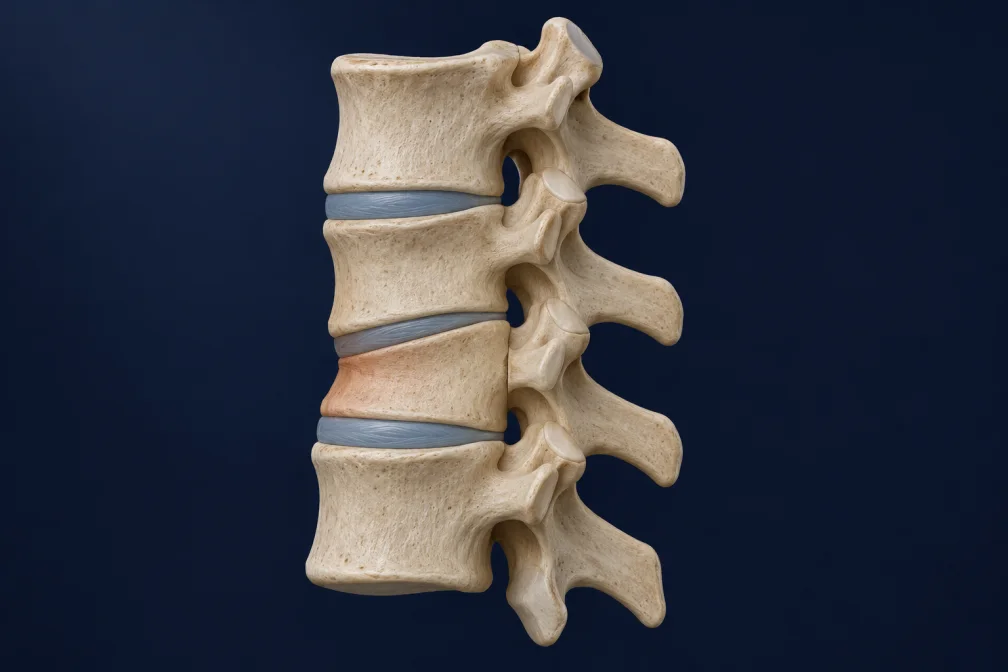
01 / New pain after a fall
A spinal fracture can cause pain in one area of the back after a small fall or strain. Tell the clinician when it started, whether standing or moving changes it, and whether you have had earlier fractures.
NHS · OsteoporosisA question for your visitWhat information about the fall and the pain would help you decide if a scan is needed?
02 / A change in height
A spinal fracture can shorten a vertebra and change the shape of the spine. There are other causes of these changes. An examination and, when appropriate, imaging can help distinguish them.
NOGG 2024 · Assessing the risk of another fractureA question for your visitShould I bring an older height measurement or imaging report to compare?
03 / No clear symptoms
Osteoporosis often has few obvious symptoms. Mention earlier low-impact fractures, family history and long-term steroid tablets. These details may prompt an assessment even when your back feels fine.
NHS · OsteoporosisA question for your visitWhich factors in my history make a bone-health check appropriate?
03Warning signs / choose the right help
Get medical help if you develop symptoms of a possible broken bone. How the pain started and any new changes in your legs, bladder or bowel help determine how urgently you need care.
Or go to the nearest emergency department. Arrange help getting there.
For routine clinic enquiries
Request an appointment04Assessment / questions before tests
The immediate question is whether there is a new injury or another cause of the pain. A separate bone-health assessment looks at the chance of future fractures.
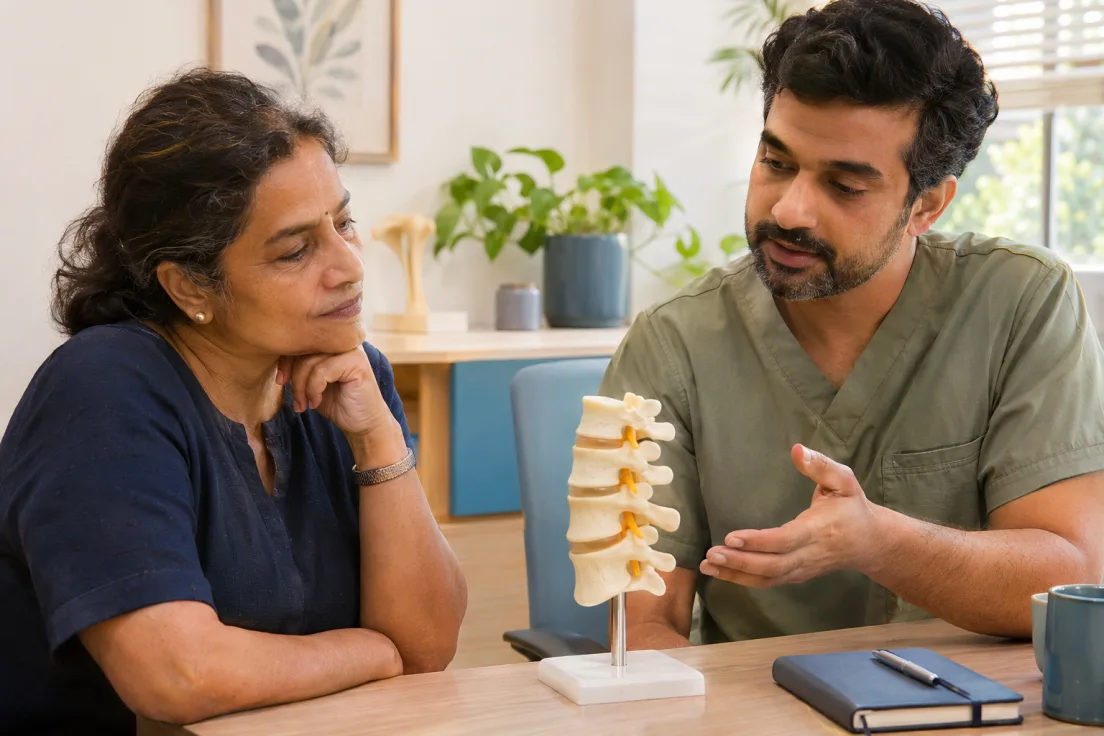
Bring any older scans, medicines and details of previous fractures. A clinician may check back tenderness, posture, movement, leg strength or sensation and decide whether imaging or other tests are needed.
What features of my symptoms make a new fracture more or less likely?
NOGG 2024 · Assessing the risk of another fractureNHS · Back pain and emergency signsAn X-ray can show a change in the shape or height of a vertebra. MRI can help judge whether a fracture is recent and look for causes or complications. CT can give more detail about the bone when needed.
What should this image clarify, and how would it change the next step?
ACR · Imaging and vertebral compression fracturesA bone-density scan called DXA measures mineral density, usually at the hip and spine. A clinician reads it with your age, injury and medication history. Selected blood tests can help check for underlying causes.
How does my fracture history affect the interpretation of my bone-density result?
NIAMS · What bone-density scores meanNOGG 2024 · Assessing the risk of another fracture05Care / options and limits
A fracture care plan has two jobs. The first is to make ordinary movement manageable while you recover. The second is to reduce the likelihood of a future fracture.
01 / Pain and recovery
Discuss a pain plan, side effects, and which movements are safe at this stage. If a brace comes up, ask why it is being considered. NOGG finds limited evidence for pain relief and no evidence that bracing improves healing.
NOGG 2024 · Painful vertebral fracturesA question for your visitWhat can I do safely this week, and which symptoms mean I should be reassessed?
02 / Strength and falls
A physiotherapist can help tailor a plan for posture, back strength, balance and daily movement. Ask about nutrition, including calcium and vitamin D, and practical changes such as improving lighting or removing trip hazards.
NOGG 2024 · Movement, nutrition and fallsNOGG 2024 · Painful vertebral fracturesA question for your visitWhich exercise or change at home would make the biggest difference for me now?
03 / Protect bone health
Some medicines help slow bone loss. Others help build new bone and may be considered for people at very high risk. Ask how long the treatment is planned and what to do if a dose is delayed. A change to denosumab needs a clinician-led plan to protect against fractures.
NOGG 2024 · Medicines that lower fracture riskA question for your visitHow will we review whether the plan still fits me, and whom should I contact if treatment is interrupted?
04 / Specialist procedure review
Vertebroplasty places bone cement into a vertebra. Balloon kyphoplasty first uses a balloon to create space for the cement. A clinician can explain whether either belongs in the discussion and how it compares with ongoing pain care and rehabilitation.
NOGG 2024 · Painful vertebral fracturesNICE TA279 · Who may be considered for a procedureACR · Imaging and vertebral compression fracturesA question for your visitWhat links the pain to that exact level, and what benefit or harm could the procedure bring for me?
06Evidence / shared decisions
UK guidance describes both the limits of routine procedures and the narrower circumstances in which a specialist may consider them. Fracture prevention remains a separate decision.
Historical tables from the original clinic article
01 / NOGG · Routine use
NOGG looked at evidence for symptomatic osteoporotic vertebral fractures. A painful scan finding alone does not give a predictable benefit from a procedure. The guideline supports reviewed pain relief, tailored movement and prevention after a new fracture.
What other approaches could we use first, and how would we review progress?
02 / NICE · Narrow criteria
This appraisal concerns vertebroplasty or balloon kyphoplasty without stenting in selected people. It describes when the procedures may be considered in that health system. Age of the fracture, symptom location, alternatives and procedure risks still require discussion.
Do my examination and scan identify the same painful level, and are there safer alternatives for me?
03 / After a fracture
Discuss falls, condition-specific exercise, nutrition and medicines as appropriate. A medicine can reduce fracture risk over time while a separate plan addresses current pain or stiffness.
Who will follow up my bone health and when should we review my plan?
07Daily life / prepare for the visit
Bring the date your symptoms started, past fracture details, a medication list and any previous reports. These examples show how a short note can start a conversation.

Fictional visit notes
08Questions / find a starting point
Yes. It often develops without obvious symptoms. The first sign may be a broken bone after a small fall or injury.
A low-impact fall can break a weakened vertebra. New back pain after a fall deserves assessment. Get emergency help if it is severe or comes with the emergency signs above.
DXA estimates bone mineral density. A spine X-ray can show the shape and height of vertebrae. Each answers a different clinical question.
A specialist may discuss it in selected cases of a recent, unhealed fracture with severe ongoing pain despite appropriate pain care. Examination and imaging must support the painful level within the NICE criteria.
NOGG does not recommend routine bracing. Evidence for pain relief is limited and improved healing has not been shown. Ask why a brace might be appropriate for your situation.
A spinal fragility fracture is a reason to revisit bone health. Ask about your future fracture risk, support for daily movement, falls and whether medicines are appropriate.
09Sources / editorial accountability
This guide brings together the clinic’s original educational material and separately linked guidance.
Osteoporosis & Spinal Fractures · Published by IBAP Clinics
The original IBAP Clinics article contains observations signed by Dr Vijay Bhaskar Bandikatla. The archive retains the clinic’s wording, illustrations, statistics and patient stories. The adaptation draws on separately identified clinical guidance for the current patient guide.
Go to the original article archiveAdapted for IBAP Clinics with AI assistance from OpenAI Codex.
The adaptation reorganises the original article for patients and adds educational illustrations, examples and separately linked clinical guidance.

Clinic physician profile
Pain physician and founder, IBAP Clinics
Read the physician’s profileClinical review pendingClinician review of the adapted copy and illustrations is awaiting confirmation.
Editorial update
Bone fragility, risk factors, fracture symptoms and when to seek help.
How bone changes and the symptoms that a spinal fracture can cause.
Signs of possible nerve injury or serious trauma that need emergency assessment.
What DXA measures and how clinicians interpret results alongside age and other fracture risks.
How the choice of X-ray, MRI and CT depends on the clinical question and history.
Risk factors, selected spine imaging, and assessment for underlying causes in adults.
Pain relief, tailored rehabilitation, fracture prevention, and evidence on bracing and procedures.
Tailored exercise, calcium and vitamin D, and ways to reduce fall risk.
Medicine choices and the need to plan treatment changes, particularly when using denosumab.
The exact UK appraisal criteria for vertebroplasty or balloon kyphoplasty without stenting.
This archive preserves the clinic’s source article, including its tables and references. It may contain earlier estimates, terminology and treatment claims. The patient guide above presents the current reading and decision-making context with separately linked guidance.
Original article destinationEducational content for a clinical conversation. Illustrations simplify anatomy. Original patient stories describe individual experiences.