Emergency care now
Call 112Call 112 in India for sudden difficulty breathing, swelling of the tongue or throat, or collapse.
NHS · Serious allergic reactionIndia · Emergency response 112Procedure guide · Joint care
Learn how tissue from your own fat is prepared, what knee arthritis studies found and when to seek help.
Article credits · Clinically reviewed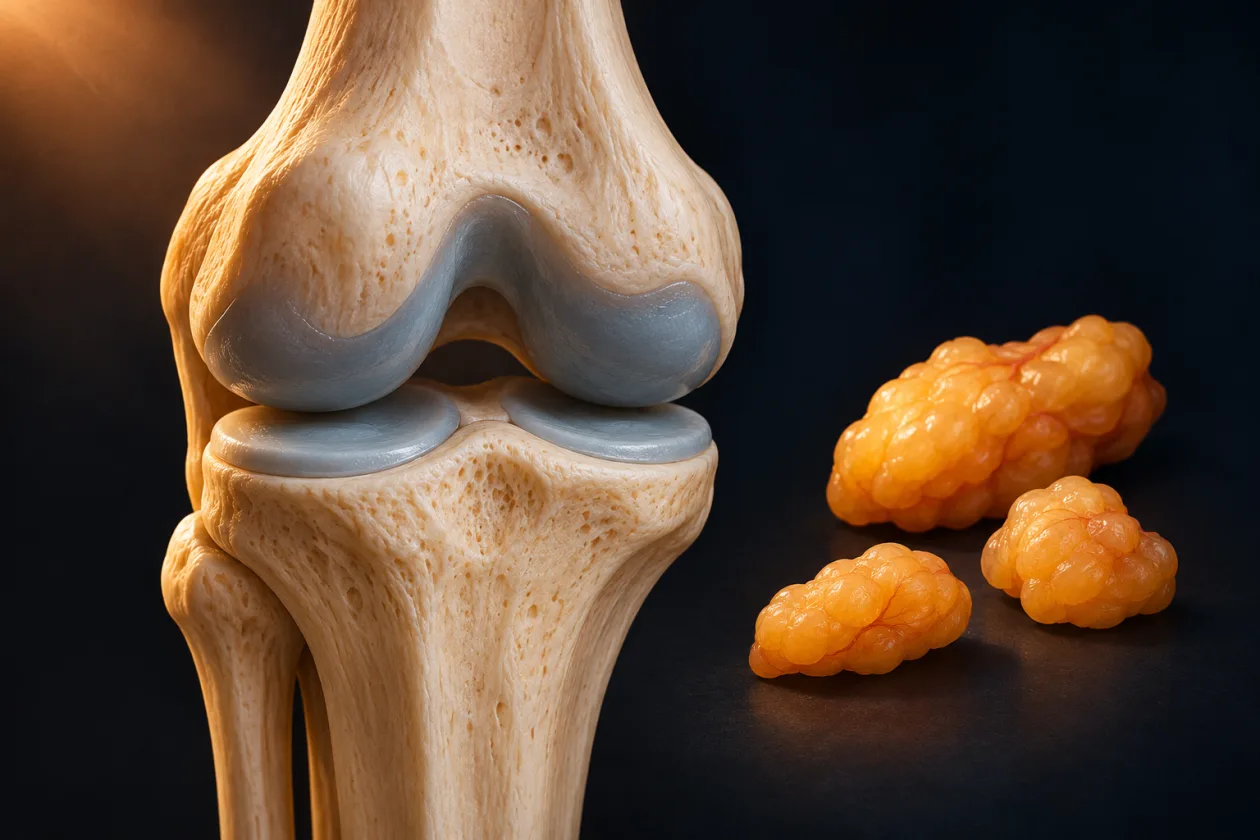
Confirm the causeAsk what is causing your joint or soft-tissue pain.
Compare care optionsAsk how the options compare for your diagnosis.
Choose a measurePick a daily activity you want to do more comfortably.
01Anatomy / from fat tissue to joint
MFAT stands for micro-fragmented adipose tissue. Explore the source tissue, one example of mechanical processing and the space inside a knee joint.
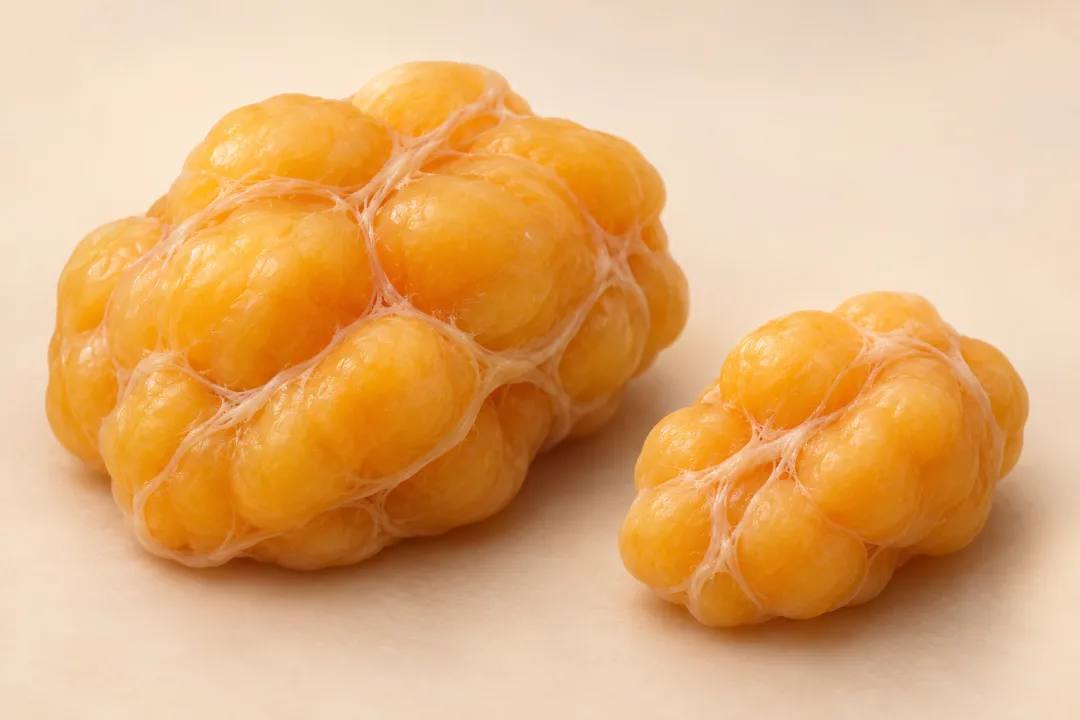
01 / Source tissue
MFAT starts with a sample of your own fat from beneath the skin. The word autologous means the tissue comes from you.
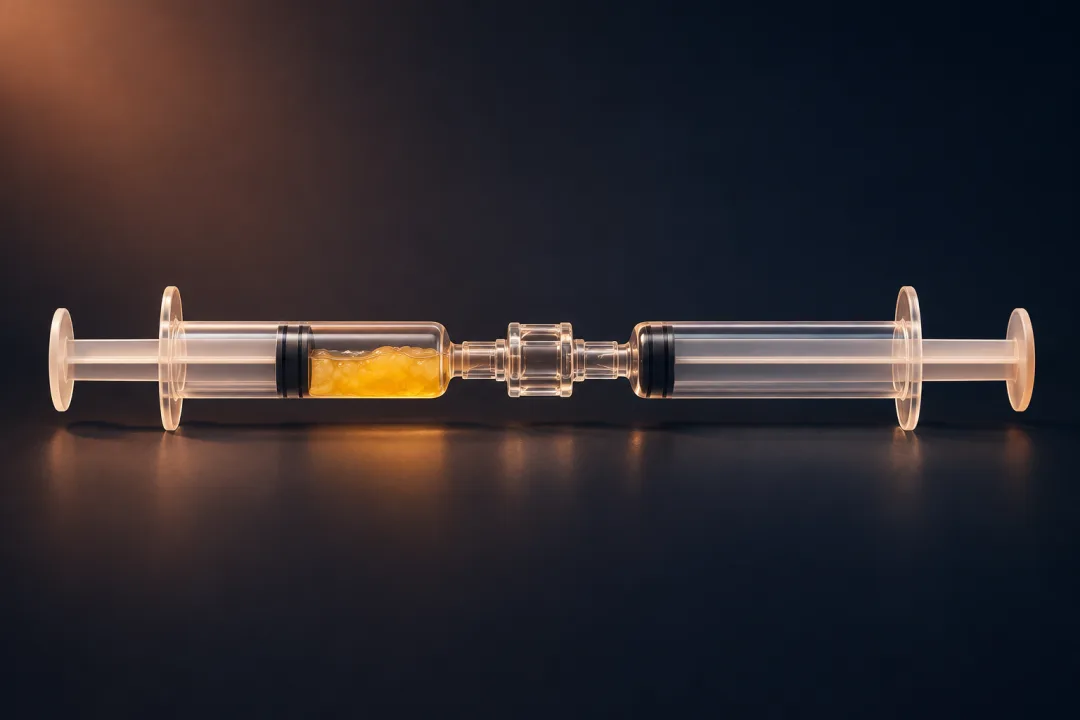
02 / Mechanical preparation
Mechanical processing makes the tissue fragments smaller. The paired syringes illustrate one kind of transfer system. Equipment and preparations vary.
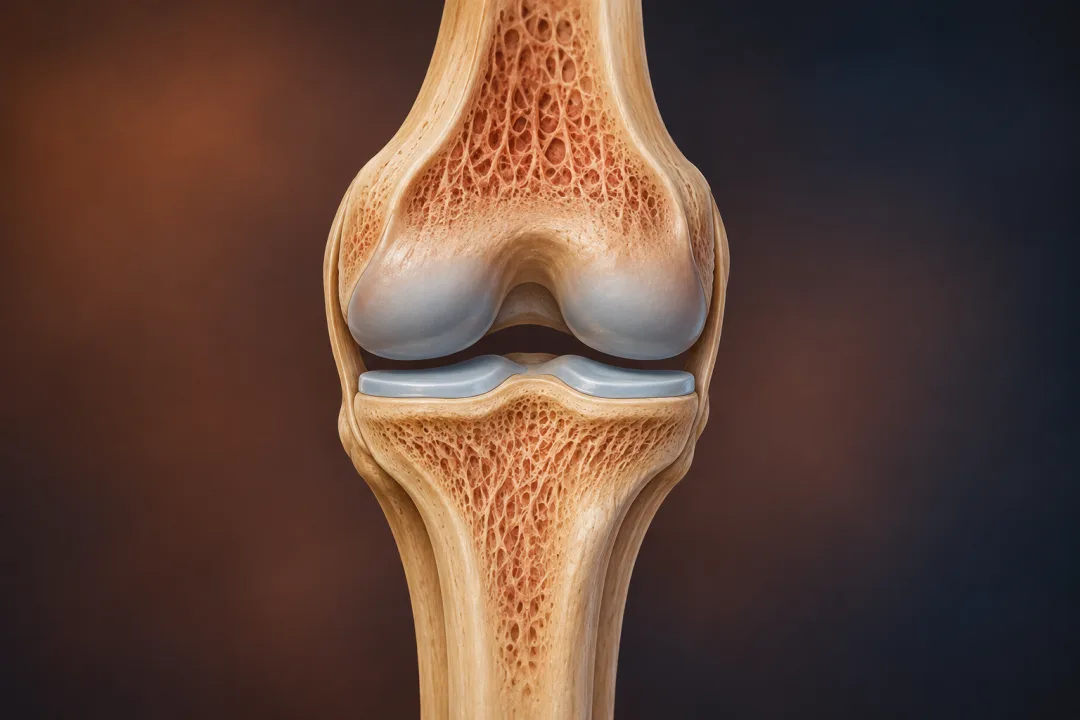
03 / Treatment target
An intra-articular injection goes into the joint space. The ring marks the space between the thighbone and shinbone in this simplified knee model.
02Assessment / symptoms and goals
Tell the clinician where you feel pain, when it started and which activities are harder. Bring relevant reports and a list of medicines, allergies and past treatments.
Knee arthritis, tendon injury and osteonecrosis involve different tissues. Ask how the examination supports your diagnosis and whether a scan would change the plan.
Choose a meaningful task, such as taking the stairs with fewer stops. Ask what change is plausible and when the team would reassess.

03Treatment discussion / alternatives
The original article covers several conditions. Compare the questions to ask for knee arthritis, hip pain and soft-tissue injuries.
04Your appointment / from consent to home
Ask who will collect and prepare the tissue, who will place it and how the team will follow your progress.
Before deciding
Ask for the exact preparation, treatment site, alternatives, risks and full fees. Review medicines, allergies and health conditions with the team before agreeing.
On the day
Tissue collection and placement involve two areas of care. Ask what to expect at each site, how discomfort will be managed and whether image guidance is planned.
Before leaving
Confirm wound care, activity and transport, what symptoms should prompt help and who to call after hours. Agree when the team will reassess benefit.

05Safety / when to seek help
Keep written instructions for both the tissue collection site and the treatment site.
Call 112 in India for sudden difficulty breathing, swelling of the tongue or throat, or collapse.
NHS · Serious allergic reactionIndia · Emergency response 112Get urgent medical assessment for sudden severe joint pain, a hot or swollen joint, or fever and feeling unwell. Contact the care team promptly if there is increasing redness, pain or drainage at the collection site.
NHS · Joint infection warning signsAsk about bruising, bleeding, infection and pain at either site. Talk through your health conditions and medicines, and what you would do if symptoms persisted or worsened.
06Recovery / activity and review
Plan for both the area where tissue was collected and the area treated.
Discharge instructions
Ask what to expect at both the collection and treatment sites. Follow the team's instructions for dressings and pain relief, and check before changing regular medicines.
Daily activity
Ask when you can drive, work, exercise or return to physiotherapy. Timing depends on the procedure, the joint treated and your health.
Follow-up visit
Record pain, any new symptoms and how you manage the activity you chose. Bring the record to follow-up so you can discuss what has changed.
07Evidence / benefits and limits
At a glance · Knee osteoarthritis
These studies concern knee osteoarthritis. They leave open questions about other joints, AVN, soft-tissue injuries and combinations of treatments.

VA/DoD · 2026 guideline
Recommendation 22 finds insufficient evidence to recommend for or against MFAT injection into the joint for knee osteoarthritis.
The guideline reviewed evidence through July 2025. Recommendation 22 applies to knee osteoarthritis care in the United States.
Arthroscopy · 2025 randomised trial
Richter and colleagues assigned 75 participants to MFAT, a corticosteroid or saline. The MFAT group reported better pain and function scores than the saline group during follow-up to one year.
The study scores measured symptoms and what people could do. Structural repair and an individual’s likely response are separate questions.
BJSM · 2025 blinded randomised trial
Barfod and colleagues assigned 120 people to MFAT or saline. They found no meaningful difference in patient-reported outcomes through two years.
Both groups underwent fat collection, with participants and assessors kept unaware of the injection assignment. The saline trials used different designs and enrolled different populations.
OJSM · 2024 randomised trial
Baria and colleagues found similar pain and function at 12 months in their MFAT and PRP groups. MFAT uses fat tissue and PRP uses a blood sample.
The comparison had no saline group. A separate two-year trial found no overall advantage for MFAT over PRP and did not show changes on X-ray or MRI after either injection.
08Your consultation / a worked example
Ask how to track a change that matters to you. These examples show notes someone could bring to an assessment and a follow-up.

09FAQs / practical details
MFAT stands for micro-fragmented adipose tissue. The original article also uses Nanofat, a term that can refer to a finer preparation in cosmetic grafting. Ask which tissue preparation is proposed for you.
Tonnard and colleagues · Nanofat terminologyPRP uses blood, BMAC uses bone marrow aspirate, and MFAT uses fat. A result for one preparation, or for one joint, does not predict the result of another. If a combination is proposed, ask what supports that exact combination.
Baria and colleagues · 2024 trialAsk how many visits are proposed, what would justify repeating treatment, how benefit will be measured and what the total cost includes. Ask the team for the procedure details in writing.
10Provenance / original article and adaptation
Original clinic article
Original article by Dr Vijay Bhaskar Bandikatla for IBAP Clinics. The archive preserves its wording, processing diagram, tables, FAQs, references and media.
Read the original clinic articlePatient guide adaptation
Prepared for IBAP Clinics with AI assistance.
Editorial update
US guidance on nonsurgical hip and knee osteoarthritis care. Recommendation 22 includes micro-fragmented adipose tissue injections for knee osteoarthritis.
Three-group randomised study of MFAT, corticosteroid and saline injections in people with symptomatic knee osteoarthritis.
Blinded randomised study comparing MFAT with a saline injection, with follow-up through two years.
Knee osteoarthritis randomised comparison of MFAT and platelet-rich plasma, with 12-month outcomes.
Randomised comparison of MFAT and PRP in knee osteoarthritis, including findings from X-ray and MRI.
Early description of a finely emulsified adipose preparation studied for cosmetic grafting applications.
Orthopaedic patient resource describing diagnosis and stage-dependent management of hip osteonecrosis.
Patient information on urgent symptoms of a joint infection, including sudden pain and swelling.
Patient information on symptoms and emergency assessment for a severe allergic reaction.
India’s single nationwide emergency number.