View 1 · Nerve root
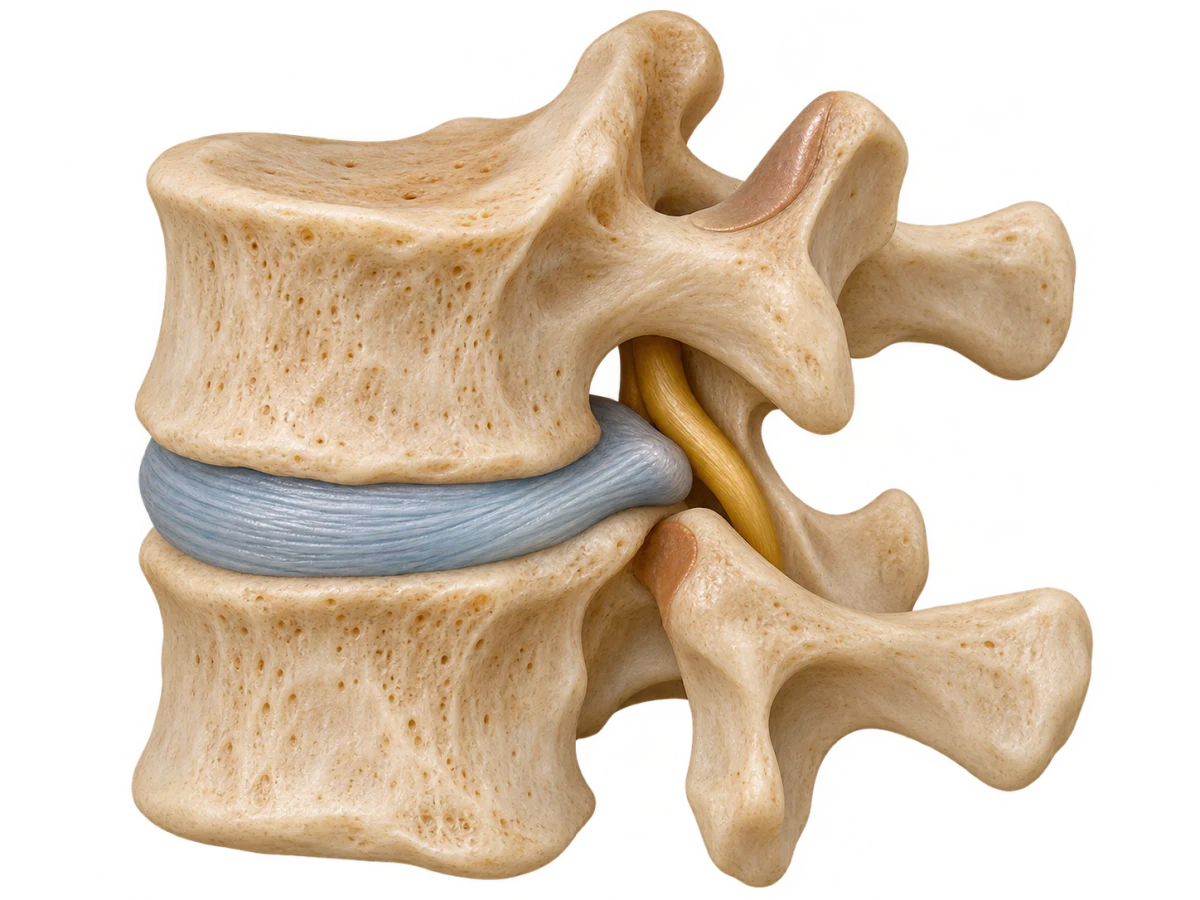
A root close to a disc
A disc herniation or narrowing around a nerve root can irritate it. Pain may then travel along the leg.
Gold shows the nerve root beside the blue-grey disc.
LEG PAIN FROM A NERVE / PATIENT GUIDE
Sciatica often feels like pain that runs from the buttock down one leg. Notice where it travels, what changes when you move and when to get help.
Article credits · Clinical review pending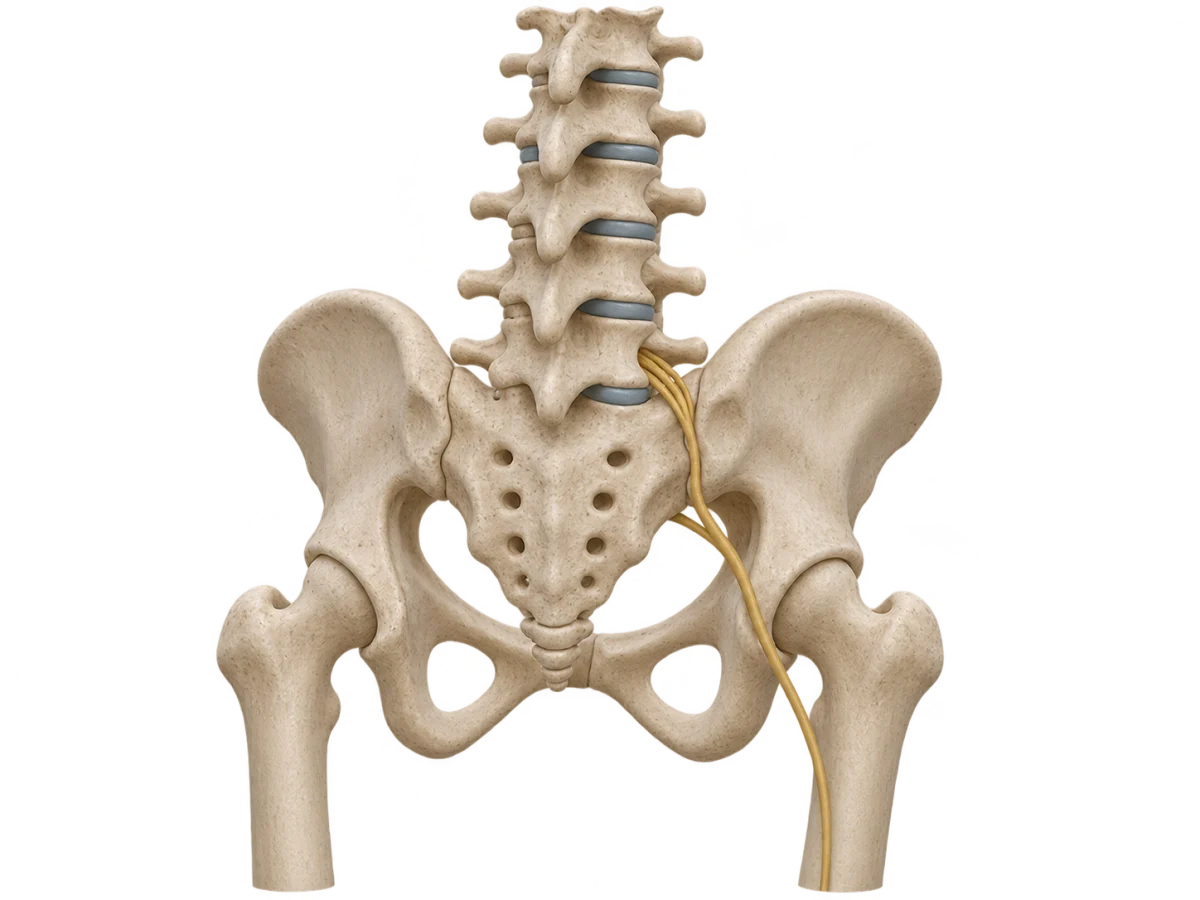
Trace the routeSee how a nerve root in the lower back relates to symptoms in your leg.
Notice what changesDescribe sensation, strength and the activities that feel different.
Discuss the next stepCompare care options and bring your priorities to the visit.
01Anatomy / guided comparison
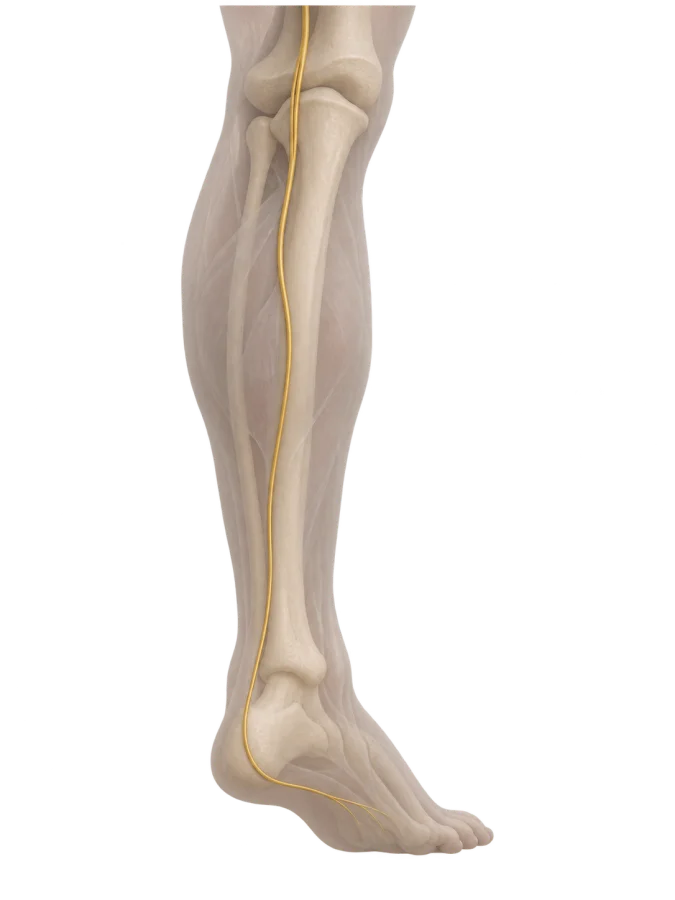
Several nerve roots from the lower back and sacrum join to form the sciatic nerve. Follow the illustrations from the spine to the leg to see how a problem near the spine can be felt farther down.
View 1 · Nerve root
A disc herniation or narrowing around a nerve root can irritate it. Pain may then travel along the leg.
Gold shows the nerve root beside the blue-grey disc.
The models show the path of the sciatic nerve. The pattern of symptoms can vary from person to person.
AAOS OrthoInfo · Sciatica02Symptoms / the pattern matters
The route and timing of symptoms help guide an assessment. A clinician brings those details together with other findings to check whether a nerve root, or another cause of leg pain, fits.
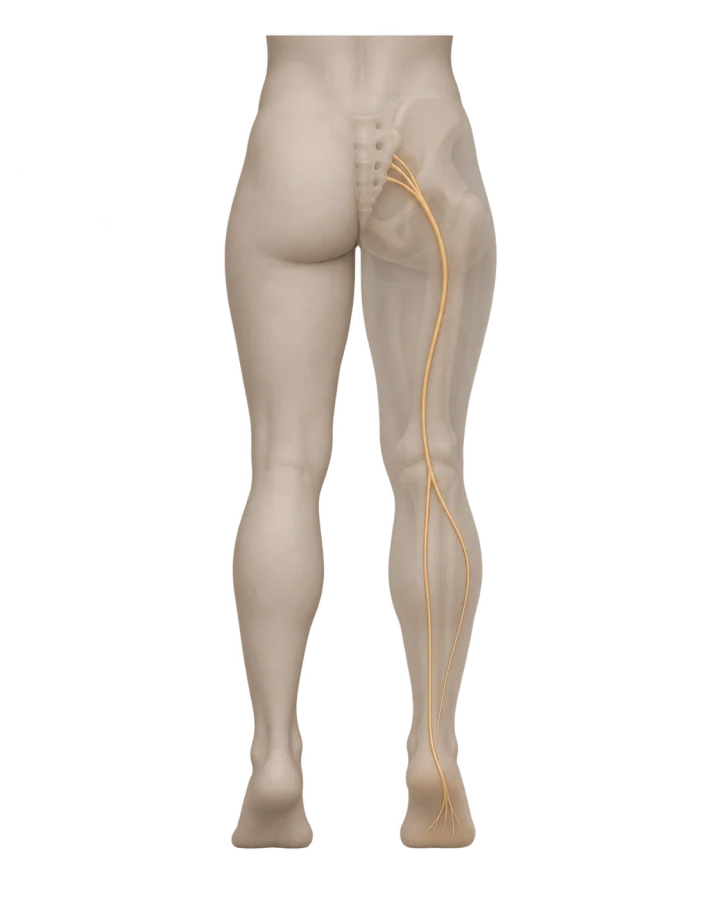
01 / Travel down a leg
Pain may feel sharp, burning or electric. It often runs through the buttock and along one leg, sometimes as far as the foot or toes. Note whether coughing or sneezing changes it.
NHS · SciaticaA question for your visitDoes the pain stop at my thigh or reach my calf or foot?
02 / Walking and standing
Narrowing around the nerves in the lower spine can cause symptoms with standing or walking that ease when you sit or lean forward. A clinician can assess this pattern and consider other causes of leg pain.
AAOS OrthoInfo · Lumbar spinal stenosisA question for your visitHow far can I walk before symptoms start, and what helps them settle?
03 / Feeling and strength
Tingling, numbness or weakness may occur in the leg or foot. Tell your clinician if your foot catches or your leg feels less steady. Use the warning signs below to decide how quickly to get help.
AAOS OrthoInfo · SciaticaA question for your visitWhat feels different when I walk, climb stairs or lift my foot?
03Warning signs / choose the right help
Get emergency help for the signs below. Some can signal serious pressure on nerves at the bottom of the spine, called cauda equina syndrome. Prompt assessment matters even if you already have sciatica.
Or go to the nearest emergency department. Arrange help getting there.
For routine clinic enquiries
Request an appointment04Assessment / questions before tests
Your description and the examination shape the first decision. A scan is usually discussed when the findings could change care.

Describe the side, the farthest point the symptoms reach and what changes while sitting, standing or walking. Bring relevant reports and a medicine list.
Which part of my symptom pattern matters most for the assessment?
NHS · SciaticaA clinician may check how you walk, how the leg muscles work and what you can feel. Reflexes and a leg-raising test may help when the symptoms suggest a lumbar nerve root.
Is there a change in strength or feeling that should be followed?
AAOS OrthoInfo · SciaticaNICE advises against routine imaging in non-specialist care for low back pain with or without sciatica. A specialist may consider MRI if the result could change the plan.
What decision could this scan help us make?
NICE · Low back pain and sciatica (NG59)05Care / options and limits
Sciatica often improves over weeks to months. A clinician can help you choose care based on the cause, changes in strength or feeling and what you need to do each day.
01 / Activity and rehab
Gentle activity as able and a physiotherapy plan may help you return to work or daily tasks. Discuss which activities you can continue or adapt and when to review progress.
NICE · Low back pain and sciatica (NG59)NHS · SciaticaA question for your visitWhich everyday activity should we use to measure progress?
02 / Medicine review
NICE advises against gabapentinoids, other antiepileptics, oral steroids and benzodiazepines for sciatica. NICE also advises against opioids for chronic sciatica. If you already take a medicine, ask the prescriber to review it with you.
NICE · Low back pain and sciatica (NG59)A question for your visitHow will we tell whether a medicine is helping enough to continue?
03 / Epidural discussion
NICE says to consider an epidural with local anaesthetic and steroid for acute, severe sciatica. Its guidance advises against epidurals for the walking-related symptoms of central spinal canal narrowing.
NICE · Low back pain and sciatica (NG59)Cochrane · Epidural corticosteroid injections, 2020A question for your visitWhat outcome would make an injection worthwhile to me?
04 / Surgical opinion
A specialist can discuss whether pressure on a nerve could explain the leg symptoms and whether an operation is suitable. Emergency nerve-compression signs take a different route and need immediate assessment.
NICE · Low back pain and sciatica (NG59)BMJ · Liu and colleagues, 2023A question for your visitWhat change is realistic for my main difficulty, and what are the risks?
06Evidence / shared decisions
The likely cause and duration of symptoms matter when interpreting research. These summaries distinguish a guideline recommendation from the averages seen in treatment trials.
01 / Initial care
NICE asks clinicians to tailor information and exercise to the person and support return to daily activities. Assessment still guides which option fits and whether symptoms need more urgent investigation.
How should we adjust my activity if symptoms change?
02 / Epidural evidence
Oliveira and colleagues reviewed 25 placebo-controlled trials. In the 8 trials reporting short-term leg pain, the average difference was about 5 points on a 100-point scale. The review describes small effects and limited information about harms.
What are the chances of a useful change for me and how long might it last?
03 / Disc surgery evidence
A BMJ review of trials in people with imaging-confirmed disc herniation found faster leg-pain relief after discectomy for some surgical candidates, with a diminishing advantage over time. Confidence in the estimates was low or very low. The results apply to that group.
How do I weigh the chance of quicker relief against the risks of an operation?
07Daily life / prepare for the visit
Write a few lines about what you feel and what you can do. These fictional examples show how changes in everyday tasks can guide a conversation.

Fictional visit notes
08Questions / find a starting point
Yes. The leg symptoms may be more noticeable than the back ache. Tell the clinician where they travel and what they feel like.
A disc herniation can irritate a nerve root. Narrowing in the spine can also contribute, and several conditions can cause leg pain. An assessment helps identify the cause.
A specialist may consider imaging if the result could change care. The first assessment usually starts with your history and examination.
Tell the clinician when symptoms start, how far you can walk and what helps them settle. That pattern can help assess for lumbar spinal stenosis and other causes.
It often improves over several weeks to a few months. It may last longer or come back. Seek an assessment if it is worsening, limiting daily life or failing to improve.
Get immediate help for new numbness around your genitals or anus, bladder or bowel changes, symptoms down both sides, or severe or worsening weakness or numbness in both legs.
09Sources / editorial accountability
This guide brings together the clinic’s original educational material and separately linked guidance.
Sciatica Pain · Published by IBAP Clinics
The original IBAP article names Dr Vijay Bhaskar Bandikatla. Its recovery estimates, disc-preservation philosophy and descriptions of clinic treatments appear in the original archive. This adaptation explains how symptoms, examination and the evidence inform a care discussion.
Go to the original article archiveAdapted for IBAP Clinics with AI assistance from OpenAI Codex.
The adaptation reorganises the original article for patients and adds educational illustrations, examples and separately linked clinical guidance.

Clinic physician profile
Pain physician and founder, IBAP Clinics
Read the physician’s profileClinical review pendingClinician review of the adapted copy and illustrations is awaiting confirmation.
Editorial update
Common leg symptoms, staying active, seeking advice and emergency warning signs.
Warning signs that change the urgency of care when back pain accompanies other symptoms.
Lumbar nerve roots, likely causes of irritation and what a clinical examination checks.
Narrowing around spinal nerves and patterns linked to standing, walking and sitting.
UK recommendations for assessment, activity, medicine, selected injections and decompression.
A review of placebo-controlled trials for lumbosacral radicular pain, with mostly short-term benefits.
Randomised trials comparing surgical and non-surgical treatment for sciatica from a lumbar disc herniation.
This archive preserves the clinic’s source article, including its tables and references. It may contain earlier estimates, terminology and treatment claims. The patient guide above presents the current reading and decision-making context with separately linked guidance.
Original article destinationEducational content for a clinical conversation. Illustrations simplify anatomy. Original patient stories describe individual experiences.