View 1 · Heel
Where the fascia begins
The band attaches to the underside of the heel bone. Pain from plantar fasciitis is often felt near this attachment.
HEEL PAIN / PATIENT GUIDE
Pain under the heel can be sharp when you stand after rest. See how the plantar fascia supports the foot, what to notice during your day and which options you can discuss with a clinician.
Article credits · Clinical review pending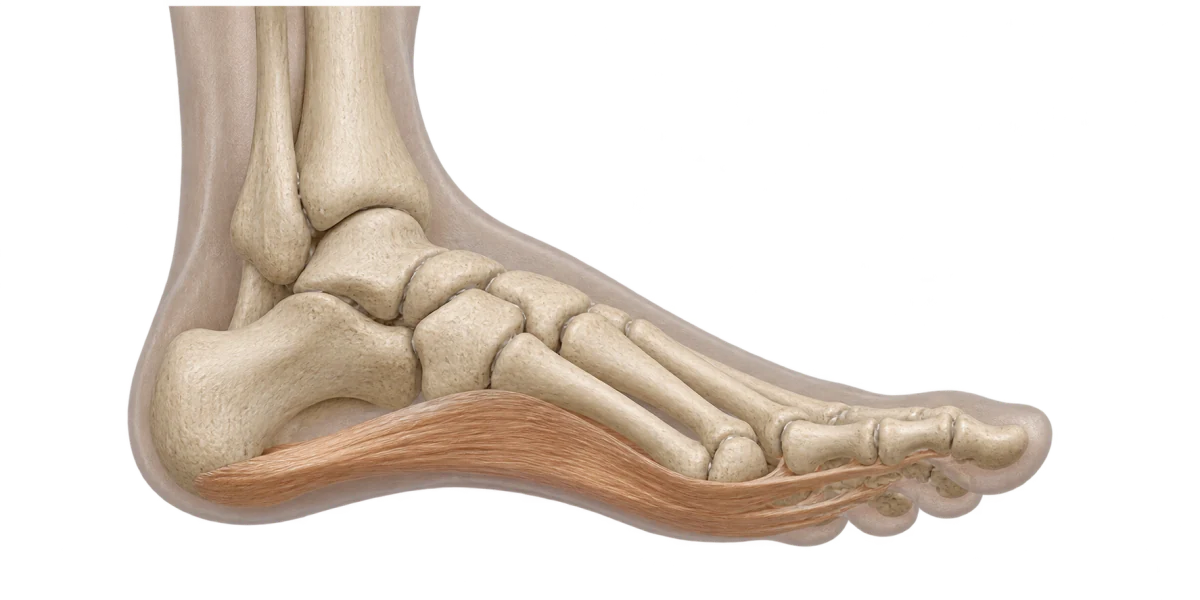
Find the heel attachmentSee where the band under your foot meets the heel bone.
Notice the patternBring the timing, location and activities that change the pain.
Compare care choicesAsk what each option can help with and where evidence is uncertain.
01Anatomy / guided comparison
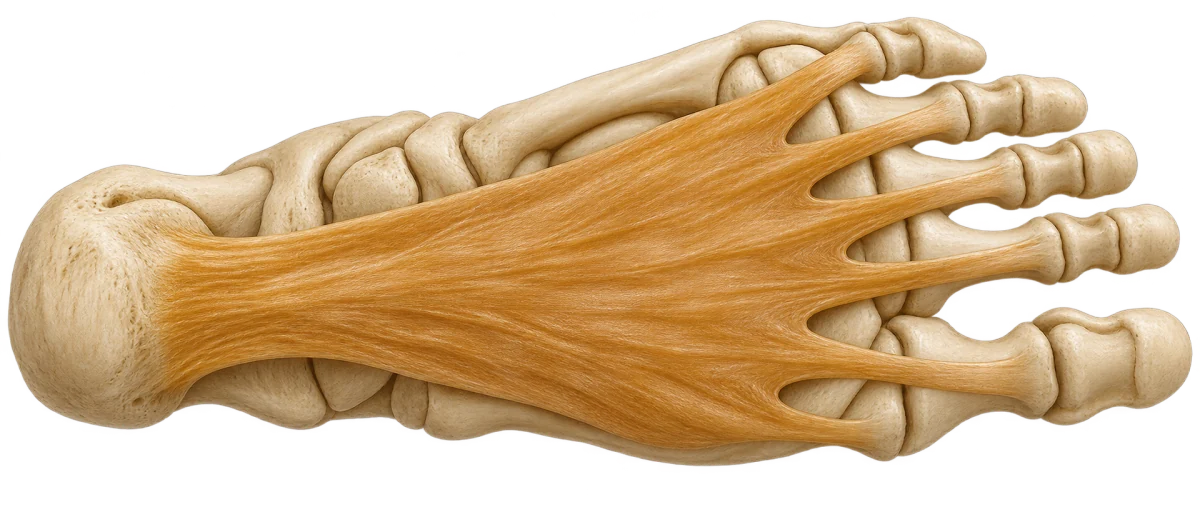
The plantar fascia is a strong band of tissue under the foot. It links the heel to the front of the foot and helps support the arch as you stand and walk.
View 1 · Heel
The band attaches to the underside of the heel bone. Pain from plantar fasciitis is often felt near this attachment.
The highlighted areas show anatomy. Symptoms can involve different parts of the foot.
AAOS OrthoInfo · Plantar fascia anatomy02Symptoms / the pattern matters
Describe how pain changes from the first steps to the end of the day. The pattern and location help a clinician consider plantar fasciitis and other causes of heel pain.

01 / First steps
You may notice sharp pain under the heel when you first stand in the morning or after sitting. It can ease as you start to move. Notice how long it takes to settle.
NHS · Plantar fasciitisA question for your visitDo the first steps after sitting hurt as much as the ones after getting out of bed?
02 / Long days on your feet
Symptoms can build after prolonged standing, walking or running. Think about recent changes in activity, surfaces or footwear and what happens later that day.
NHS · Plantar fasciitisA question for your visitHow long can I stand or walk before the pain starts to change?
03 / A different feeling
Tingling, numbness, an injury or pain at the back of the heel can point to other causes. Describe exactly where it hurts and tell your clinician if you have diabetes or a foot wound.
NHS · Heel painNICE · Diabetic foot problems (NG19)A question for your visitCould the location or a change in feeling point to another cause?
03Warning signs / choose the right help
New symptoms such as a badly injured foot or a foot wound with fever in someone with diabetes can require more urgent help than a routine heel-pain visit.
Or go to the nearest emergency department. Arrange help getting there.
For routine clinic enquiries
Request an appointment04Assessment / questions before tests
Your clinician can look at where pain occurs, what brings it on and what happened before it started. Imaging is used selectively when it can help answer a question.

Notice where the heel is sore, how long it takes to ease after rest and what happens after standing or walking. Mention injuries, recent training shifts and any change in foot sensation.
What part of my heel pain pattern matters most for this assessment?
NHS · Plantar fasciitisA clinician may examine the underside of the heel, the arch, ankle movement and calf flexibility. They may also look for signs of a problem with a nerve, bone or tendon if your symptoms point that way.
What makes plantar fascia pain more or less likely in my case?
AAOS OrthoInfo · Plantar fasciitis and bone spursJOSPT · Heel pain and plantar fasciitis guideline, 2023An X-ray can help evaluate a suspected bone problem. Ultrasound or MRI may be considered if the assessment suggests another cause or symptoms continue despite appropriate care. A heel spur can be an incidental finding.
What would we do differently depending on the result?
AAOS OrthoInfo · Plantar fasciitis and bone spurs05Care / options and limits
Arrange an assessment if heel pain keeps returning or limits usual activities. Which options fit depends on the assessment, symptom pattern and the tasks you want to do more comfortably.
01 / Activity and rehab
A tailored plan may include plantar fascia and calf stretching or progressive strengthening. Discuss what you can keep doing, what to adapt and when to review progress.
JOSPT · Heel pain and plantar fasciitis guideline, 2023NHS · Plantar fasciitisA question for your visitWhich task should we use to check whether my plan is helping?
02 / Footwear and supports
A clinician may discuss supportive shoes, taping or an insert. A night splint may be considered if first-step morning pain continues. Ask how long to try a support and how you will know it helps.
JOSPT · Heel pain and plantar fasciitis guideline, 2023A question for your visitWhich support makes sense for my day and how will we reassess it?
03 / Shockwave discussion
Some clinics offer focused or radial shockwave treatment for persistent plantar heel pain. Ask what evidence applies to the approach being considered, how discomfort is managed and what other options remain.
NICE · Shockwave therapy (HTG200)Gerdesmeyer and colleagues · Radial shockwave trial, 2008A question for your visitWhat improvement would make this worthwhile and when would we measure it?
04 / Specialist review
A specialist can revisit the cause of heel pain and the options you have already tried. If a procedure comes up, ask about benefit, duration, risks, uncertainty and what continuing rehabilitation would involve.
AAOS OrthoInfo · Plantar fasciitis and bone spursNICE · Autologous blood injection (HTG298)A question for your visitWhat does the evidence say about this specific option for someone like me?
06Evidence / shared decisions
Guidelines and trials answer different questions. Compare what each source studied with your own goals, symptom pattern and treatment stage.
01 / Stretching evidence
A 2003 trial compared the two approaches in people with longstanding symptoms. The trial measured changes in reported foot pain and function. The results describe an average response in that group.
How could I adapt a stretch to my symptoms and check if it helps?
02 / Support as part of care
The guideline advises against using prefabricated or custom inserts alone for short-term pain relief. It supports stretching and considers shoe inserts in combination with other care to improve symptoms and function.
What should I do alongside using an insert, and do I need a custom one?
03 / Shockwave evidence
The trial studied people with persistent plantar fasciitis using one protocol. Results can vary by device, treatment approach and patient group. Ask how the specific option compares with continuing to adapt your activity and rehabilitation.
Which results apply to the approach being offered, and what concerns remain?
07Daily life / prepare for the visit
Write down when your pain starts, how long it lasts and the task it affects most. These fictional examples show how two short notes can guide a visit.

Fictional visit notes
08Questions / find a starting point
Pain under the heel after sleep or sitting is common with plantar fasciitis. It may ease once you move and return after a long time on your feet. A clinician uses the full pattern and examination to assess the cause.
A heel spur on an X-ray can be an incidental finding. A clinician considers exactly where you hurt and what the examination shows.
A clinician can often assess typical symptoms using your history and an examination. A scan can help when another cause is suspected or the findings could change care.
Therapeutic ultrasound is a treatment technique. The 2023 rehabilitation guideline advises against using it to increase the benefit of stretching.
A 2023 guideline advises against using inserts alone for short-term relief and considers them alongside other treatments. Assess comfort and function in the activities that matter to you.
Ask for reassessment if symptoms still limit your activities after initial care. Each procedure has different evidence and risks, and its suitability depends on your situation.
Arrange prompt assessment for a new painful, hot or swollen foot or a foot wound. Get immediate help if there is a foot wound with fever or signs of severe illness, or a blackened area on the foot.
09Sources / editorial accountability
This guide brings together the clinic’s original educational material and separately linked guidance.
Plantar Fasciitis Pain · Published by IBAP Clinics
The original IBAP Clinics article attributes its content to Dr Vijay Bhaskar Bandikatla. Its recovery estimates, treatment comparisons and patient stories are preserved in the original archive. The adapted guide uses separately linked sources to support care decisions.
Go to the original article archiveAdapted for IBAP Clinics with AI assistance from OpenAI Codex.
The adaptation reorganises the original article for patients and adds educational illustrations, examples and separately linked clinical guidance.

Clinic physician profile
Pain physician and founder, IBAP Clinics
Read the physician’s profileClinical review pendingClinician review of the adapted copy and illustrations is awaiting confirmation.
Editorial update
Typical symptoms, everyday measures and when to seek an assessment.
Different causes of heel pain and signs that need urgent care.
Plantar fascia anatomy, heel spurs, assessment, imaging and treatment options.
Rehabilitation recommendations for nonarthritic plantar heel pain.
Assessment and referral for active diabetic foot problems, including emergencies.
A randomised comparison of two stretching approaches for ongoing plantar heel pain.
Evidence and safeguards for shockwave treatment when symptoms persist despite other care.
A placebo-controlled trial of one radial shockwave protocol in people with persistent symptoms.
Evidence limitations for injections using a person’s own blood, with or without platelet concentration.
This archive preserves the clinic’s source article, including its tables and references. It may contain earlier estimates, terminology and treatment claims. The patient guide above presents the current reading and decision-making context with separately linked guidance.
Original article destinationEducational content for a clinical conversation. Illustrations simplify anatomy. Original patient stories describe individual experiences.