Belly pain can come from the organs inside your abdomen, the muscles and nerves in its wall, or changes in how the gut and brain signal. Learn what to notice and when to get help.
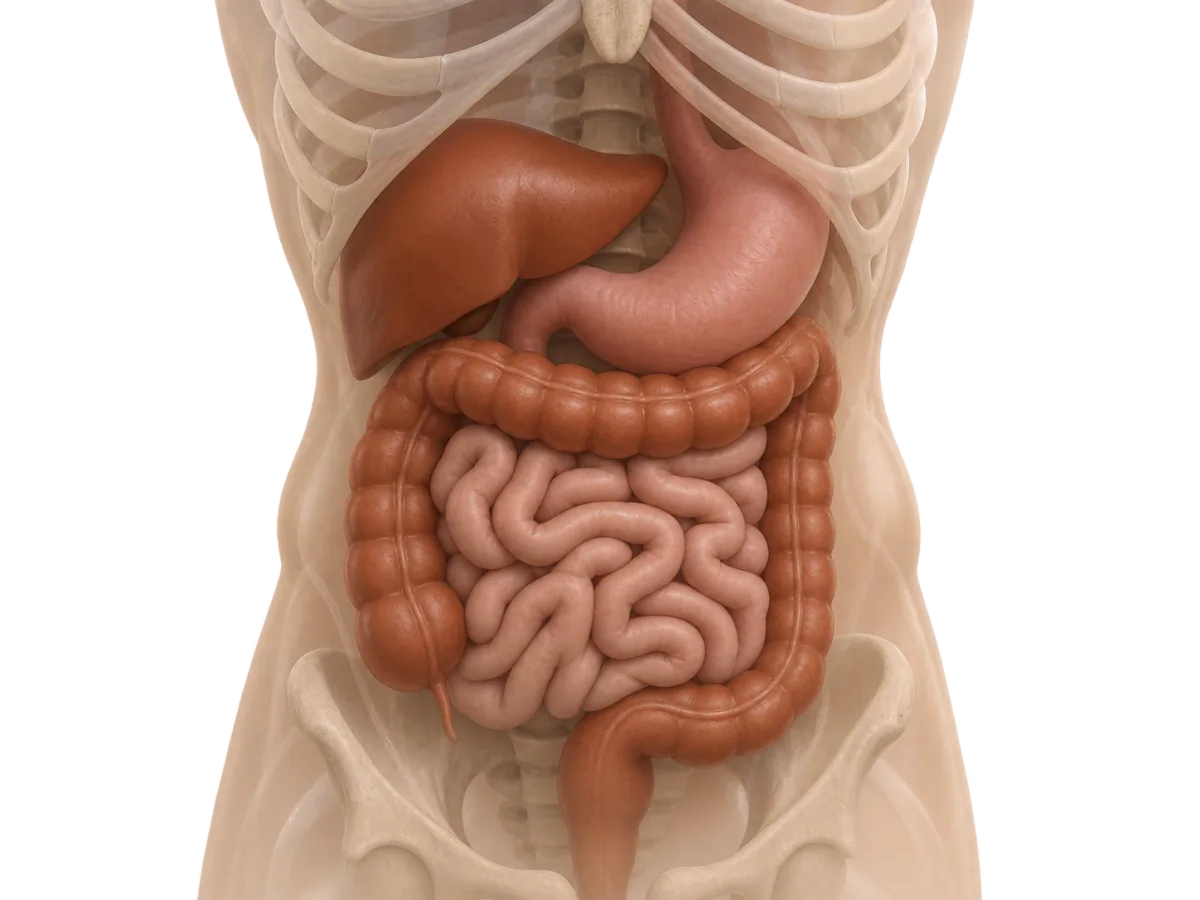
A view beneath the ribsEducational illustration of the digestive organs within the abdomen.
Explore the layersSee the organs, the abdominal wall and the gut–brain connection.
Track what changesNotice timing, meals, bowel changes and how movement affects pain.
Find the right next stepRecognise warning signs and ask what an assessment would change.
Contents 01 / 09Explore the anatomy
01Anatomy / guided comparison
Three ways to lookat abdominal pain.
Where you feel pain is one part of the picture. Explore the organs, the layers around them and the communication between the gut and brain. More than one process can contribute.
Loading illustration…
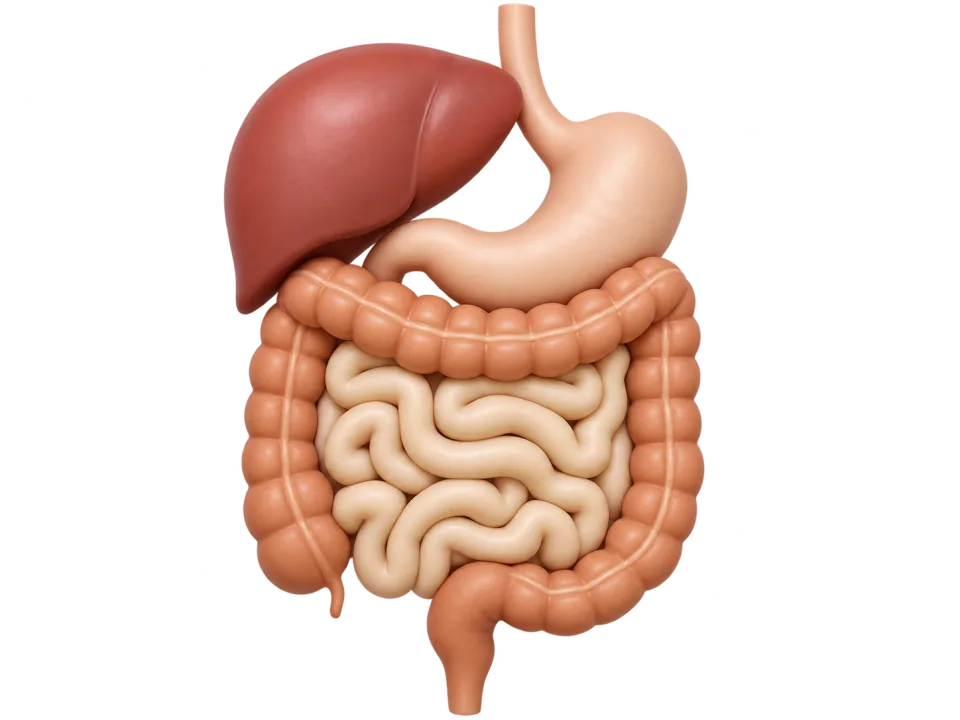
Illustration of the stomach, liver and bowel.
01 / Organs
Inside the abdomen
Pain can come from an organ such as the stomach, bowel or gallbladder. Where it starts, whether it travels and what else you notice help guide the assessment.
Notice changes around meals, bowel movements and urination.
Loading illustration…
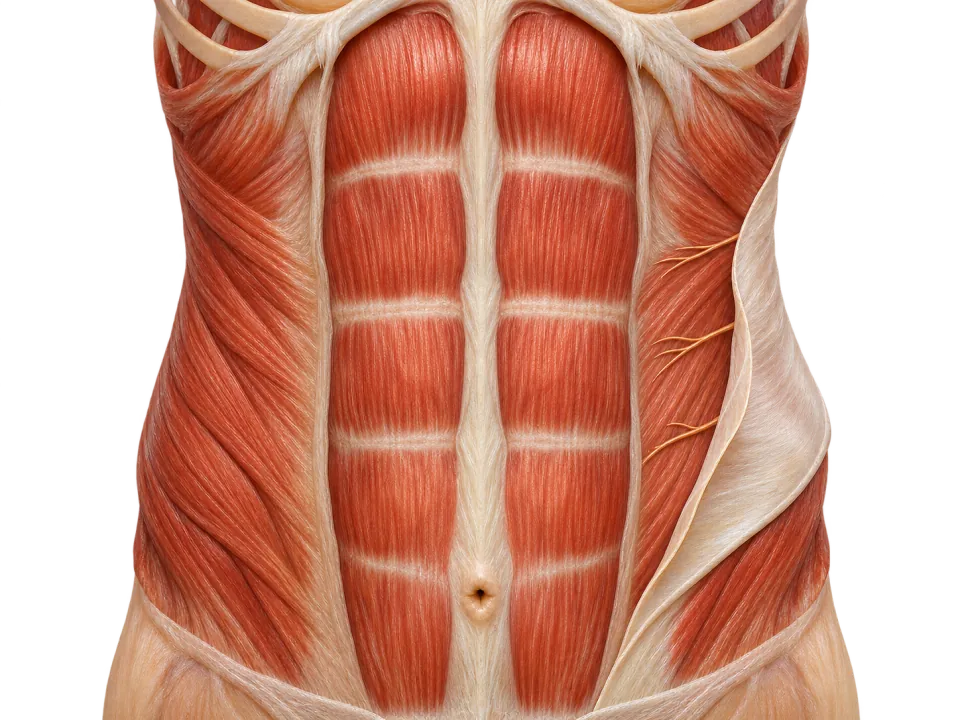
Muscle and sensory nerves of the wall.
02 / Wall
Muscles and nerves
The abdominal wall includes muscles, connective tissue and small nerves. A clinician can examine the wall if pain feels localised or changes when you move.
Mention a tender spot, a scar or pain with twisting or coughing.
Loading illustration…
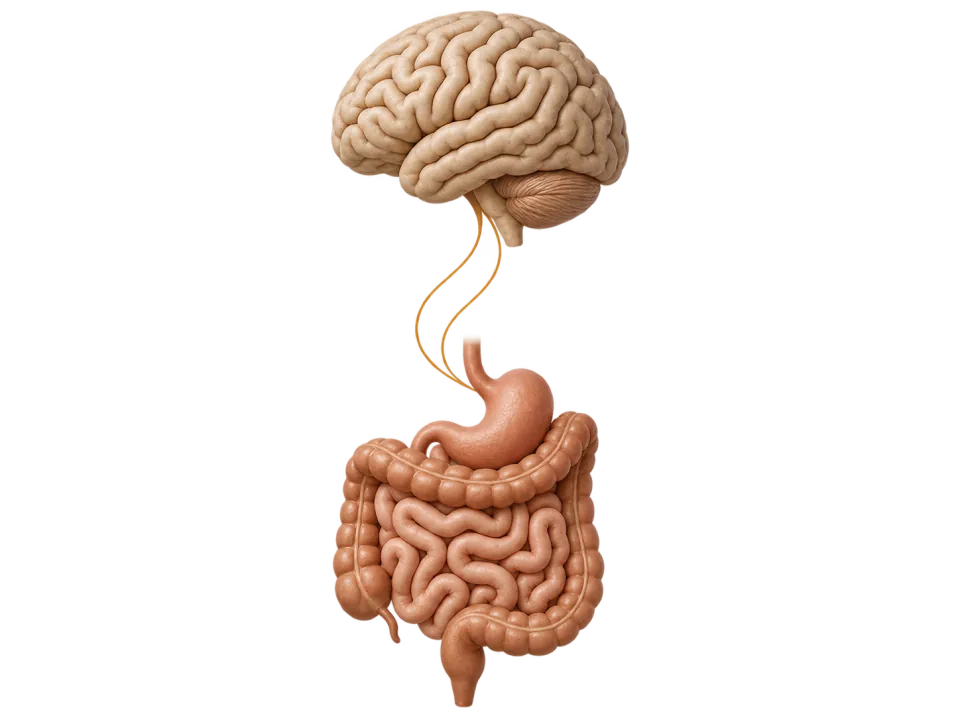
Simplified gut–brain communication.
03 / Gut–brain
The gut and brain
The gut and brain exchange signals that affect bowel function and sensation. In conditions such as IBS, changes in this communication can contribute to real pain.
Tell your clinician about repeated pain and changes in bowel habits.
Pain can come from an organ such as the stomach, bowel or gallbladder. Where it starts, whether it travels and what else you notice help guide the assessment.
Muscles and nerves
The abdominal wall includes muscles, connective tissue and small nerves. A clinician can examine the wall if pain feels localised or changes when you move.
The gut and brain
The gut and brain exchange signals that affect bowel function and sensation. In conditions such as IBS, changes in this communication can contribute to real pain.
02Symptoms / the pattern matters
When does the pain change?Start with that detail.
Describe one episode from start to finish. Include the place, feeling, duration and what changed around that time. Bring any new or unusual symptoms to your clinician’s attention.
Timing and digestionTell your clinician when pain changes around meals or bowel movements.
01 / Meals and bowel movements
Notice when pain follows a meal or changes on the toilet
Write down whether pain comes before, during or after meals, and whether it changes after a bowel movement. Note bloating, nausea, constipation or loose stools and describe how your usual pattern has changed.
A question for your visitDoes the pain change when I have a bowel movement, and what is different about my stool?
02 / One small tender spot
Describe a precise spot and what brings it on
Pain that you can localise with one fingertip and that changes when you twist or cough may lead your clinician to examine the abdominal wall. Mention scars, injuries and past operations.
A question for your visitCould the abdominal wall or a nerve be involved, and what else should we check?
03 / Symptoms beyond pain
What else changed?
Mention fever, bowel or urinary changes, unusual vaginal bleeding or pain linked to periods. Say if you could be pregnant. Check the warning signs below if pain starts very suddenly or is severe.
A question for your visitWhich accompanying symptoms change how quickly I should be seen?
03Warning signs / choose the right help
Some changesneed urgent attention.
Seek help promptly if abdominal pain changes suddenly or comes with bleeding, faintness or other warning signs. These signs matter even when you have had abdominal pain before.
The history and examination help your clinician decide what deserves a closer look. A useful test has a reason, such as checking for a specific cause or deciding which care to try next.
Fictional consultation. Describe where the pain begins and when you notice it.
01
Bring the place, timing and pattern
Give the exact location and tell your clinician whether the pain travels. Mention meals, bowel movements, urination, periods where relevant, recent medicines, prior surgery and other symptoms.
Describe one episode
Which parts of the pattern would change the assessment?
A clinician may look for swelling and tenderness and examine a focused sore spot. Carnett’s sign describes pain that stays the same or worsens when the abdominal muscles tense during an examination. The result is one clue alongside the rest of the assessment.
Examine the location
Does the examination point to the wall, an organ or another source?
Depending on your symptoms, a clinician may discuss a blood or stool test or investigate a concern with imaging or another test. For a pattern that fits IBS, the clinician can often use symptoms and selective tests to make a positive diagnosis.
Choose purposeful tests
What are we looking for, and what happens if the result is normal?
Care depends on the likely cause, the effect on your daily life and which treatments you have tried. Set a goal you can describe at follow-up, such as eating more comfortably or getting through a work shift.
Compare purposes and limits
Cause-directed care
Purpose
Treat the cause where it can be identified, and agree on a follow-up plan.
Limit
Similar symptoms can need different care. New warning signs call for reassessment.
Gut–brain care
Purpose
Choose care that matches a diagnosed bowel condition and its effect on your routine.
Limit
Advice for IBS applies to a specific clinical pattern. Choices depend on symptoms and other health needs.
Focal abdominal wall pain
Purpose
In selected people, a local anaesthetic injection can help assess whether a small nerve in the wall contributes to pain.
Limit
The best-matched trial measured short-term response in selected adults. Longer-term benefit needs a separate discussion.
Specialist cancer pain
Purpose
Discuss additional pain relief for selected people with cancer-related upper abdominal pain.
Limit
Evidence for a coeliac plexus block comes from specific cancer contexts, particularly pancreatic cancer.
01 / Cause-directed care
Start with the condition that needs attention
Purpose
Treat the cause where it can be identified, and agree on a follow-up plan.
Limit
Similar symptoms can need different care. New warning signs call for reassessment.
The first appointment can help decide whether you need primary care, gastroenterology, another specialist or urgent assessment. Ask which change would mean the working diagnosis needs another look.
A question for your visitWhat would make us revisit the cause or the plan?
02 / Gut–brain care
Address bowel symptoms and gut sensitivity together
Purpose
Choose care that matches a diagnosed bowel condition and its effect on your routine.
Limit
Advice for IBS applies to a specific clinical pattern. Choices depend on symptoms and other health needs.
For IBS, a clinician may discuss a guided dietary trial, treatment tailored to bowel symptoms, or gut-directed psychological therapy. Some medicines can change how pain signals are processed. The AGA advises against prescribing opioids for chronic pain caused by a disorder of gut–brain interaction.
A question for your visitWhich option matches my main symptoms, and how will we judge the effect?
03 / Focal abdominal wall pain
Consider a targeted option after assessment
Purpose
In selected people, a local anaesthetic injection can help assess whether a small nerve in the wall contributes to pain.
Limit
The best-matched trial measured short-term response in selected adults. Longer-term benefit needs a separate discussion.
A clinician first considers the pattern, examination and other possible causes. If an injection is considered, ask how it would inform the diagnosis, what the risks are and what happens afterward.
A question for your visitHow would a response to the injection change my treatment plan?
04 / Specialist cancer pain
Coordinate decisions with the cancer care team
Purpose
Discuss additional pain relief for selected people with cancer-related upper abdominal pain.
Limit
Evidence for a coeliac plexus block comes from specific cancer contexts, particularly pancreatic cancer.
A coeliac plexus block targets a cluster of nerves involved in signals from upper abdominal organs. Your oncology, palliative care and pain teams can discuss whether it fits your goals, what risks and alternatives matter, and how it would work alongside other care.
A question for your visitWhat change in symptoms could I realistically expect from adding a block?
06Evidence / shared decisions
What does the evidence say?What can it tell you?
Each source answers a different question. Compare the people studied, the type of care tested and what the researchers measured before applying the result to a care decision.
The guideline suggests checking for coeliac disease and considers a stool marker for inflammation in people with suspected IBS and diarrhoea. It also discusses gut-directed psychotherapy for overall IBS symptoms. Ask which parts of this guidance fit your pattern.
A question to ask
Does my symptom pattern fit IBS, and is there anything that needs separate investigation?
A short-term injection response can inform assessment
The participants had suspected entrapment of a small abdominal wall nerve. Researchers measured response 15 to 20 minutes after injection. The study tells us about short-term response in that group. Decisions about lasting relief need more information.
A question to ask
What would a short-term response tell us, and what uncertainty would remain?
One trial found improved pain with a specialist block
The trial tested a block alongside pain medicines. It did not find clear differences in quality of life, opioid use or survival. The cancer care team can weigh the potential benefit and harms in your situation.
A question to ask
What outcome is most important to me, and how closely do I match the people studied?
A short note can show how one episode fits into your day. These fictional examples demonstrate what to bring, including details that may point the clinician toward different assessments.
One note about timing and symptoms can help explain your day.
Fictional visit notes
Bring the details you noticed.
After lunch, twice this week
Timing
Cramping started about an hour after lunch and lasted until I used the toilet.
What changed
My stools have been looser than usual on the days when this happens.
One question
What should I track to see whether the pain follows a bowel pattern?
At the end of a work shift
Location
I can point to one small spot just left of my belly button.
What changed
It felt sharper when I turned to pick up a bag. I have an old operation scar nearby.
One question
Could you check whether the abdominal wall or the area around the scar is involved?
Seek emergency help for very sudden or severe pain, fainting, signs of serious bleeding, difficulty breathing or inability to pass stool or gas. If you may be pregnant and have sudden intense pain and feel faint, get emergency help.
Yes. Muscles, connective tissue and small nerves in the wall can be involved. A focused sore spot or symptoms with movement are useful details to report. A clinician can check the wall as part of the assessment.
03What does the gut–brain connection have to do with pain?
The gut and brain exchange signals that can affect bowel habits and how strongly sensations are felt. In some conditions, including IBS, this communication and gut sensitivity help explain real symptoms.
Tests depend on the history and examination. A clinician may use symptoms and selective tests for suspected IBS. Other patterns or warning signs may need different investigations.
A specialist may use it to reduce some types of upper abdominal cancer pain, especially with pancreatic cancer. The team considers risks, expected benefit and other care. Ask which evidence fits your diagnosis.
Bring a short record of the pain, bowel or urinary changes, medicines, past operations and tests. Note one task affected by the symptoms and one question for your clinician.
Know what you’re reading.Know where it comes from.
This guide brings together the clinic’s original educational material and separately linked guidance.
Original article
Abdominal Pain · Published by IBAP Clinics
Dr Vijay Bhaskar Bandikatla is credited as the author of IBAP Clinics’ original chronic abdominal pain article. Its observations, procedure comparisons, figures and stories remain in the original article archive. This adaptation uses the separately linked evidence for its assessment and care explanations.
A randomised study of pain and other outcomes after a coeliac plexus block for unresectable pancreatic cancer.
Read the complete original clinic article
This archive preserves the clinic’s source article, including its tables and references. It may contain earlier estimates, terminology and treatment claims. The patient guide above presents the current reading and decision-making context with separately linked guidance.