
Seconds to minutes
Sudden electric shocks
Brief, severe, usually one-sided attacks triggered by light touch, washing, talking or chewing can suggest trigeminal neuralgia. A clinician checks the full pattern and other explanations.
FACIAL PAIN / A GUIDE TO THE PATTERN
A shock, an ache, a burning sensation. Pain in the face can have different beginnings. A careful assessment helps make the next step clearer.
Patient education for an individual clinical conversation.
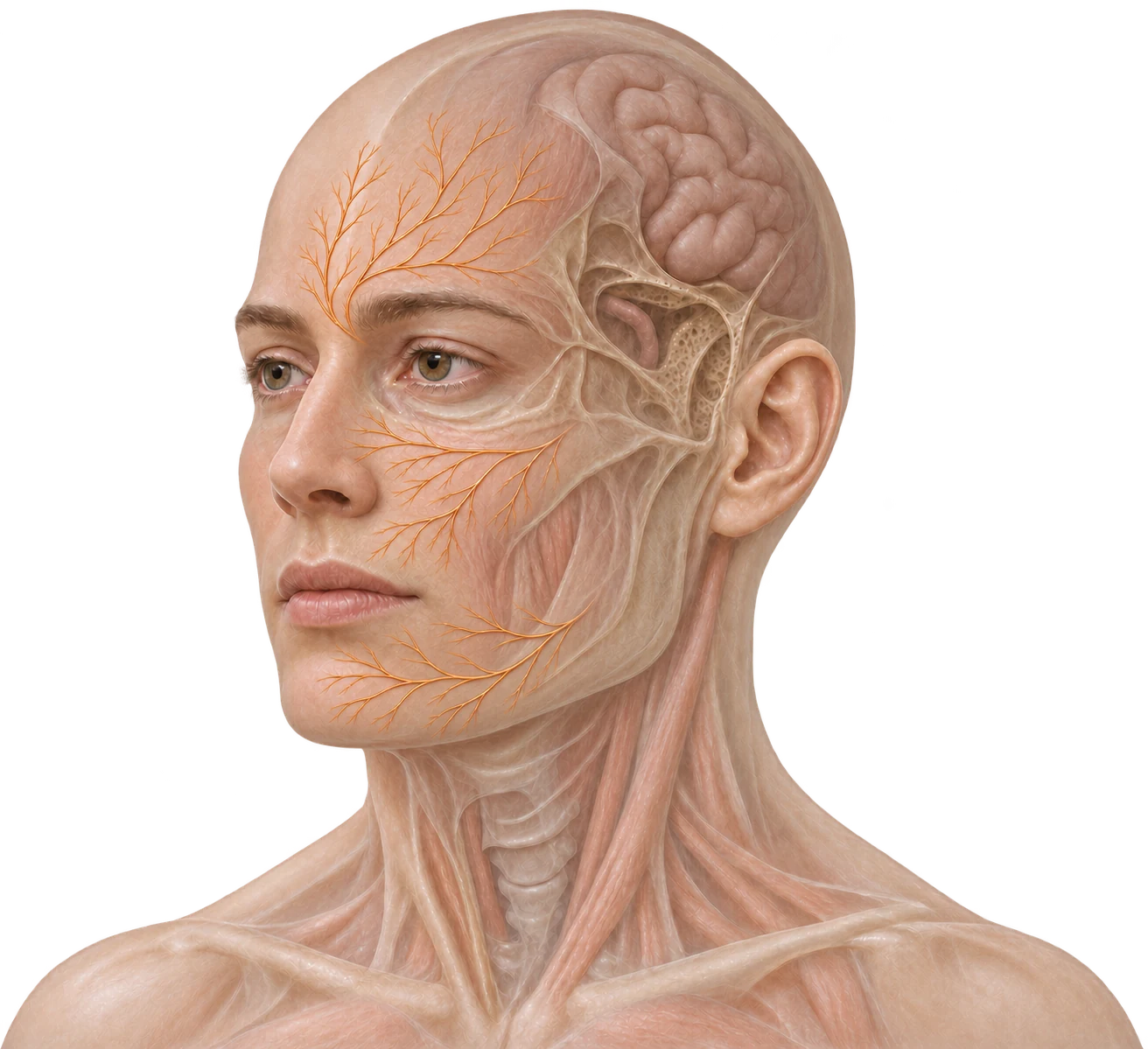
A local cause can need dental care.
Timing and triggers add context.
Eating, sleep and confidence matter.
01UNDERSTANDING / START WITH YOUR STORY
Facial pain describes where pain is felt. It does not name a single condition. Assessment asks what happens, how long it lasts and what comes with it.
Point to the place.
Describe the pattern.
Add the context.
WHY THE DETAILS MATTER
Brief touch-triggered attacks, an aching jaw and pain that comes with a headache can call for different care. More than one condition can also be present.
A useful plan considers dental and medical explanations and how symptoms are changing. Pain that affects washing, eating or speaking deserves to be taken seriously.
One side or both? A tooth, cheek, jaw, temple or eye? Marking a simple face outline can help.
Seconds or hours? Shock-like, aching, burning or pressure? Is there pain between attacks?
Jaw stiffness, altered sensation, light sensitivity, tearing, swelling or a rash are useful clues.
02THE FACE / DIFFERENT SOURCES
The face brings nerves, teeth, muscles and headache pathways into a small space. Explore the relationships, then bring your own pattern to an assessment.
A CLINICAL CONVERSATION
Three divisions carry sensation from the upper, middle and lower face. Short electric-shock attacks and longer-lasting burning pain describe different patterns. Your examination helps distinguish neuralgia, neuropathy and other causes.
The maxillary division serves much of the middle face. Dental disease and several nerve or headache conditions can be felt in this region, so location alone cannot identify the cause.
The maxillary division serves much of the middle face. Dental disease and several nerve or headache conditions can be felt in this region, so location alone cannot identify the cause.
NIH NIDCR · jaw disordersICHD-3 · trigeminal conditionsHo et al. 2017 · SPG systematic review
This atlas explains relationships. Pain location by itself cannot identify a diagnosis or select a treatment.
How assessment works03SYMPTOMS / CLUES TO DISCUSS
These examples help organise a conversation. Similar symptoms can have different causes, and a clinician may need to reassess a changing pattern.
Brief, severe, usually one-sided attacks triggered by light touch, washing, talking or chewing can suggest trigeminal neuralgia. A clinician checks the full pattern and other explanations.
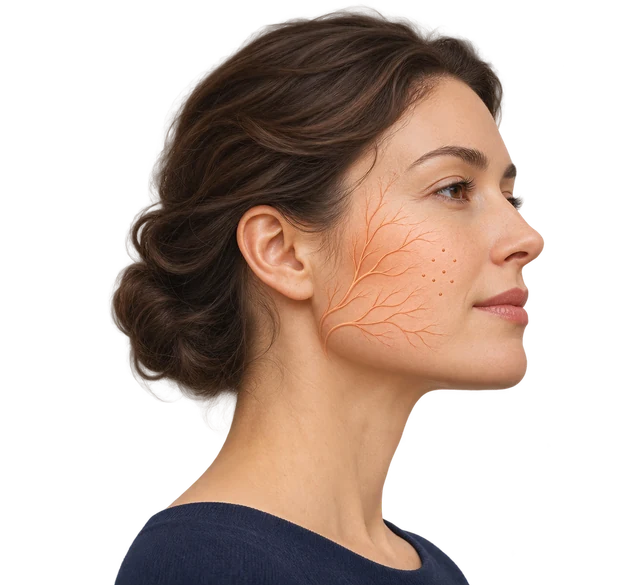
Burning, tingling, numbness or sensitivity may accompany a painful trigeminal neuropathy. Tell the team about shingles, an injury, an operation or dental treatment before symptoms began.
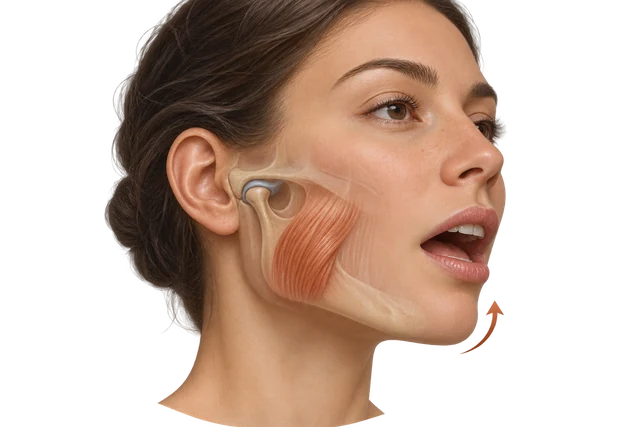
Aching near the jaw or ear, stiffness or painful clicking may involve the jaw joint or chewing muscles. A painless click by itself does not necessarily require treatment.
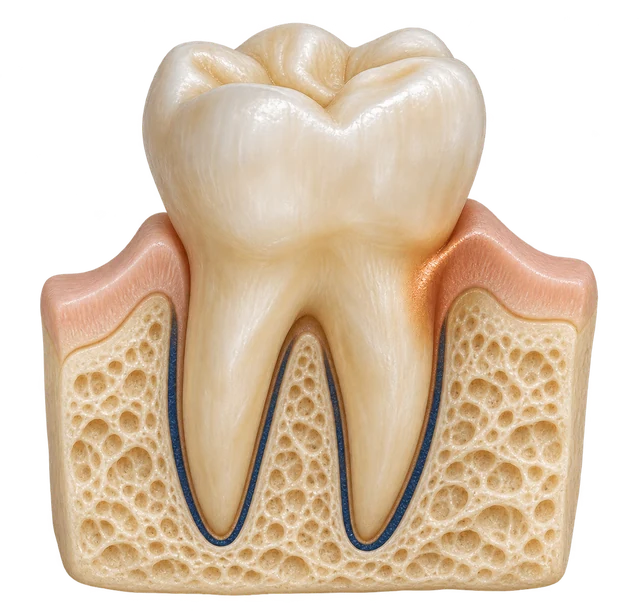
A painful tooth, temperature sensitivity, bad taste or swelling needs dental assessment. An abscess requires urgent dental care and will not resolve simply by treating the pain.

Headache features matter even when the pain is strongest around an eye or cheek. Tracking associated symptoms helps separate migraine, cluster headache and other headache disorders.
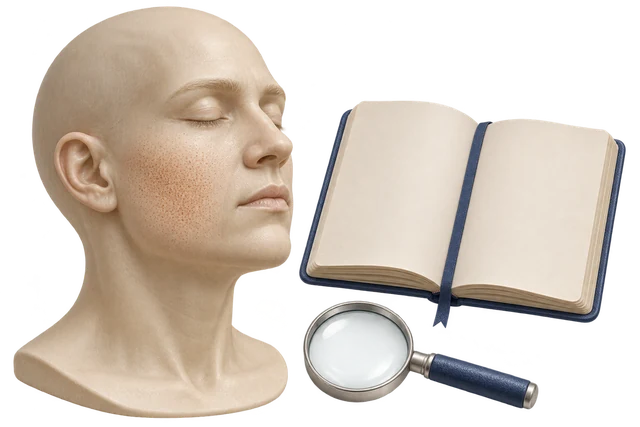
Persistent idiopathic facial pain is a recognised diagnosis made after appropriate assessment. An examination may be normal. Continuing pain deserves care even when routine tests do not show an explanation.
04WARNING SIGNS / THE RIGHT LEVEL OF CARE
Use urgent services for new warning signs. They should take priority over booking a routine pain appointment.
Or go to the nearest emergency department.
NHS · dental abscessNHS · sudden eye symptomsNICE CG150 · headache care
URGENT ASSESSMENT
NHS · dental abscessNHS · temporal arteritisNHS · trigeminal neuralgia
Routine clinic contact05ASSESSMENT / FROM STORY TO A WORKING DIAGNOSIS
Bring the history, previous dental findings and treatment records together. Investigations are chosen to answer a clinical question.
The start of symptoms, attack length, triggers, medication use and effect on daily activities all help. Bring a diary and your own questions.
The examination may include sensation, jaw movement, facial or mouth findings and a dental assessment when indicated.
For suspected trigeminal neuralgia, MRI can help assess possible causes. Other dental or medical tests depend on the findings.
Discuss the working diagnosis, uncertainty and what to do if symptoms change. Arrange review around relief, side effects and daily function.
A normal scan does not make the pain less real. The meaning of a test is interpreted alongside your symptoms and examination.
06CARE OPTIONS / SHARED DECISIONS
The right option depends on what is causing the pain, what has already been tried and what matters in daily life. These are care pathways to discuss, rather than a sequence everyone must follow.
Dental disease and painful jaw disorders need an appropriate dental or jaw-care plan.
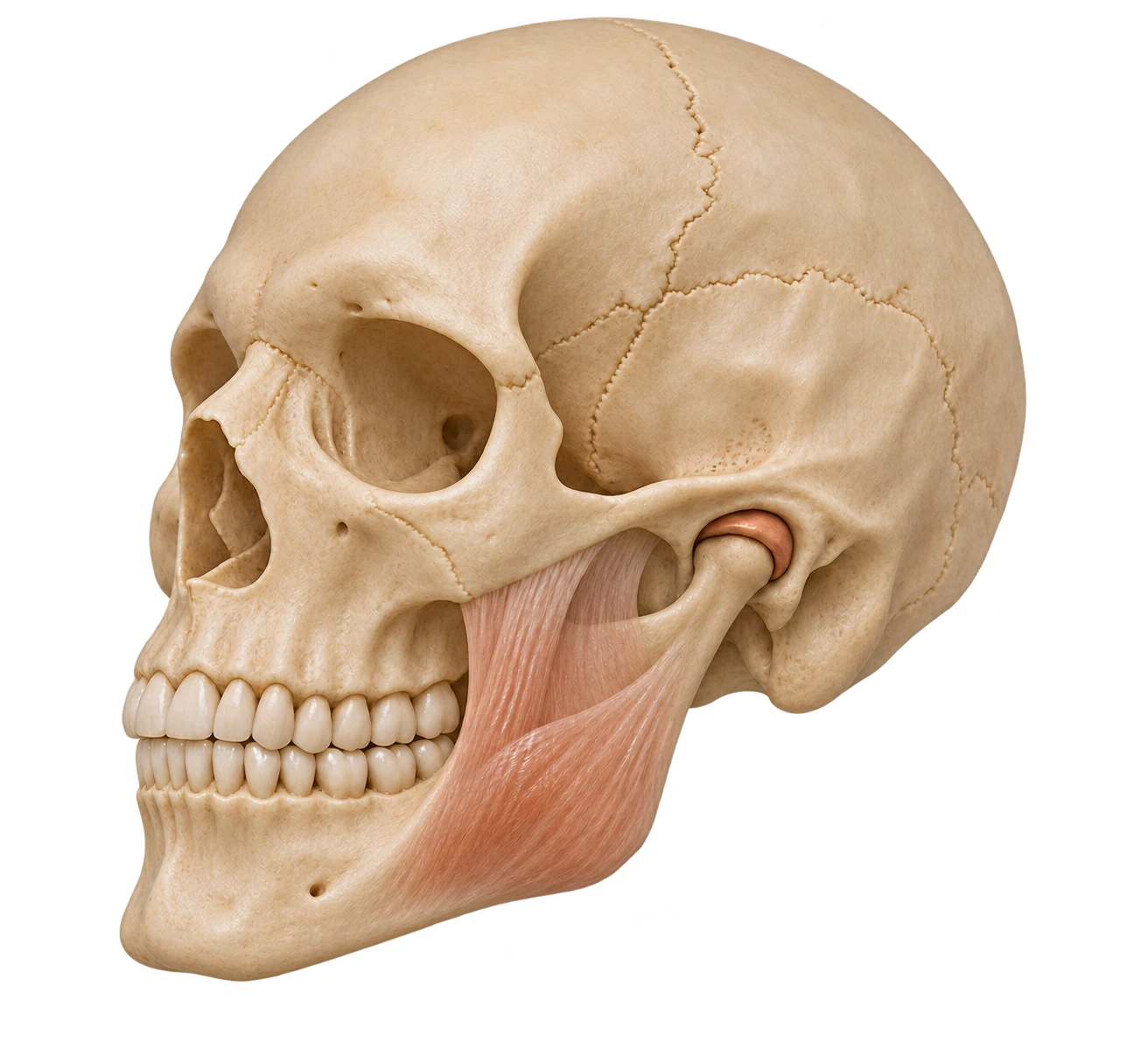
What finding makes a dental or jaw source likely?
Dental disease and painful jaw disorders need an appropriate dental or jaw-care plan.
A prescription plan can target the condition rather than repeatedly treating every attack with ordinary painkillers.
Migraine and cluster headache have distinct treatment plans. A facial location does not make their treatment interchangeable.
A specialist may discuss a peripheral nerve or sphenopalatine ganglion block for a selected indication.
Persistent, complex or medicine-resistant symptoms may need coordinated review.
EVIDENCE IN CONTEXT
The clinic source discusses devices, SPG blocks, peripheral blocks and botulinum toxin. Each has its own indication, evidence and practical limits. Ask which findings apply to your diagnosis, whether the proposed treatment is locally available and how improvement will be reviewed.
Ho et al. 2017 · SPG systematic reviewNICE CG150 · headache care
07DAILY LIFE / SUPPORT BETWEEN APPOINTMENTS
Facial pain can affect meals, conversation, sleep and confidence. Tell the team which daily activity you most want help with.

Note the time, duration, location, triggers and associated symptoms. Record medicines used and what changed afterwards.
Tell the team if pain makes eating or drinking difficult. With jaw or dental symptoms, ask about temporary food-texture adjustments and care for the underlying cause.
Discuss sleep, jaw habits and the activities you have begun avoiding. Rehabilitation or psychological support can be part of a wider plan.
Know whom to contact, when the treatment will be reviewed and which changes should prompt an earlier assessment.
A diary helps bring your experience into the consultation.
NHS · jaw pain and movementNICE CG150 · headache careNHS · neuralgia treatments
You deserve a clear explanation, a chance to ask questions and care that takes the impact of pain seriously.
08QUESTIONS / A CLEARER NEXT STEP
These answers are general guidance. Your own diagnosis, medicines and examination guide the conversation.
Discuss your facial painNo. Teeth, jaw muscles and joints, headache disorders, nerve conditions and other problems can cause facial pain. An assessment considers the location, timing, triggers and associated symptoms. A pattern on a diagram cannot make the diagnosis.
Explore the facial atlasA painful tooth, gum problem, hot or cold sensitivity or facial swelling makes a dental assessment important. If a dental cause is excluded, or the pattern suggests a neurological condition, your dentist or doctor can help coordinate the next assessment. Urgent warning signs take priority.
Check the warning signsMRI is often part of assessing suspected trigeminal neuralgia and can help investigate possible causes. Imaging is selected according to your history and examination. A scan alone cannot account for every person's pain.
See the assessment journeyA headache disorder can overlap with facial symptoms. Features such as attack duration, light sensitivity, nausea, tearing and restlessness help guide assessment. A sudden painful red eye or a change in vision needs urgent medical attention.
Compare the possible originsA block may be considered for a particular diagnostic or treatment purpose. The expected effect, duration and uncertainty depend on the condition and technique. Ask how it fits with medicines, rehabilitation or other care, and what happens if it does not help.
Ho et al. 2017 · SPG systematic review
Explore care decisionsNormal findings do not make the pain imaginary. Some persistent facial pain diagnoses depend on the clinical history and exclusion of other causes. A follow-up plan can address pain, sleep, activity and the effect on daily life while checking for any change in the pattern.
ICHD-3 · persistent facial pain
Read the intervention limitsDiscuss any reduction with the prescriber. Medicines used for trigeminal neuralgia are generally taken as a planned course rather than only during an attack. Your clinician can explain review, monitoring and a suitable approach to any change.
Plan support between appointments09ABOUT THIS GUIDE / SOURCES & ACCOUNTABILITY
This patient guide adapts the original IBAP clinic article and adds linked guidance on diagnosis, safety and shared decisions. It is general education for a clinical conversation.

CLINIC PHYSICIAN PROFILE
Learn about the physician's published qualifications, experience and clinical background.
View the complete profileClinical review of this new adaptation and its generated illustrations is pending confirmation. Review details will be recorded when confirmed.
Patient guide updated 19 November 2026.
Generated anatomy simplifies relationships. The photographs and animated scene are illustrative and show no actual patient outcome.
This archive preserves the clinic’s source article, including its tables and references. It may contain earlier estimates, terminology and treatment claims. The patient guide above presents the current reading and decision-making context with separately linked guidance.
Original article destinationYOUR NEXT STEP
Bring the pattern, the previous reports and what matters to you.