Procedure guide · Facial pain
Trigeminal RF Understand the choices.
Trigeminal radiofrequency thermocoagulation is a specialist procedure for selected people with trigeminal neuralgia. Learn when it may help, what changes in sensation can mean and when to seek help.
Article credits · Clinically reviewed
Confirm the diagnosisThe pain pattern, MRI and treatment history inform the choice.
Understand the targetControlled heat changes how part of the nerve carries signals.
Weigh the trade-offPain may improve. Numbness can persist and pain can return.
01Anatomy / visual explainer
Follow the nerve. See where RF acts.
Explore how the trigeminal nerve carries facial sensation, what pain signals feel like and what controlled heat aims to change.
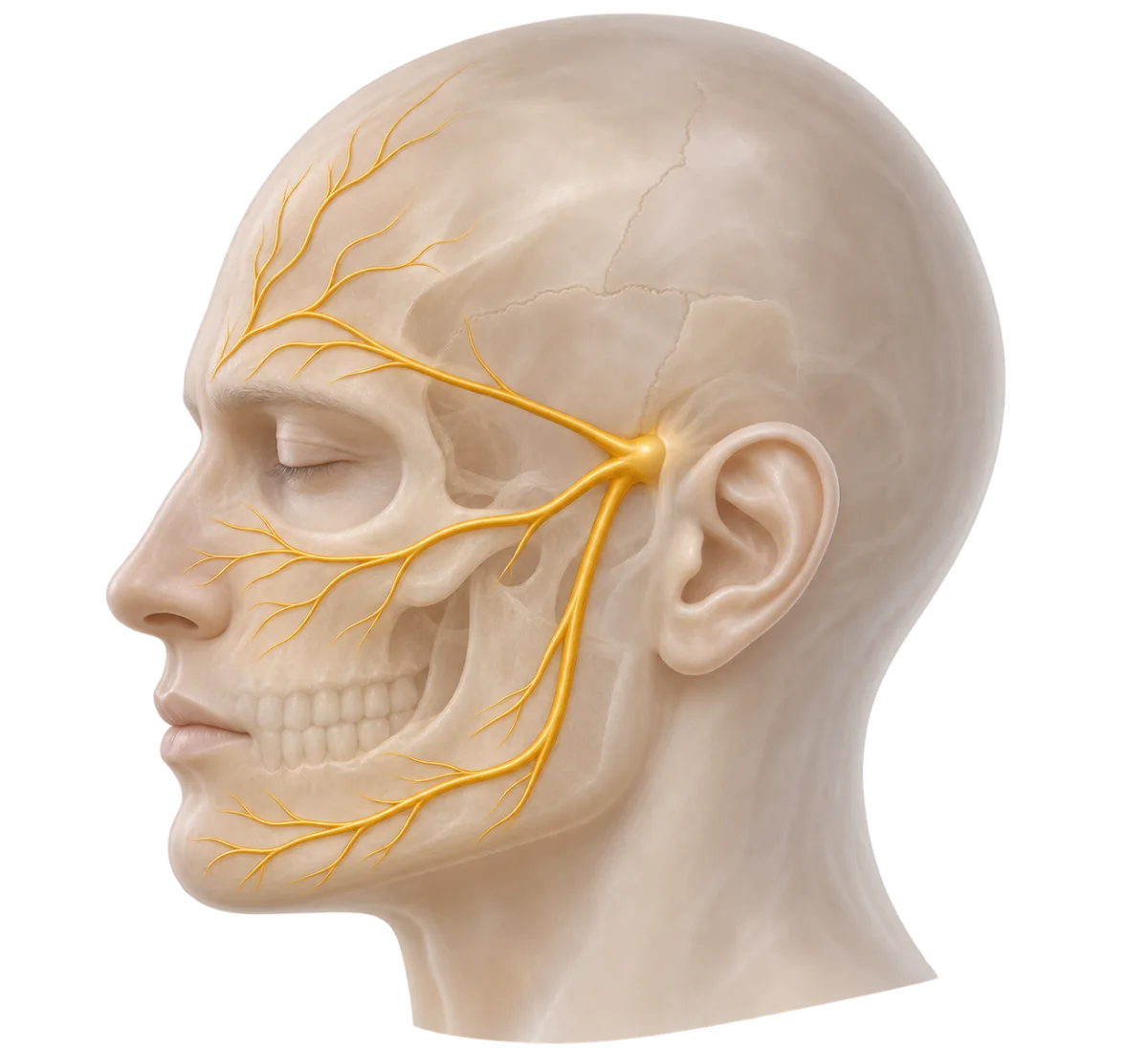
Simplified trigeminal nerve territories
Where facial sensation travels
Three branches carry sensation from the forehead and eye area (V1), cheek and upper lip (V2), and lower jaw (V3).
Trace the three illustrated branches towards their shared hub.
NIH · Trigeminal neuralgiaThe artwork simplifies anatomy for education. Your team can explain which area matters in your case.
02Assessment / confirm the diagnosis
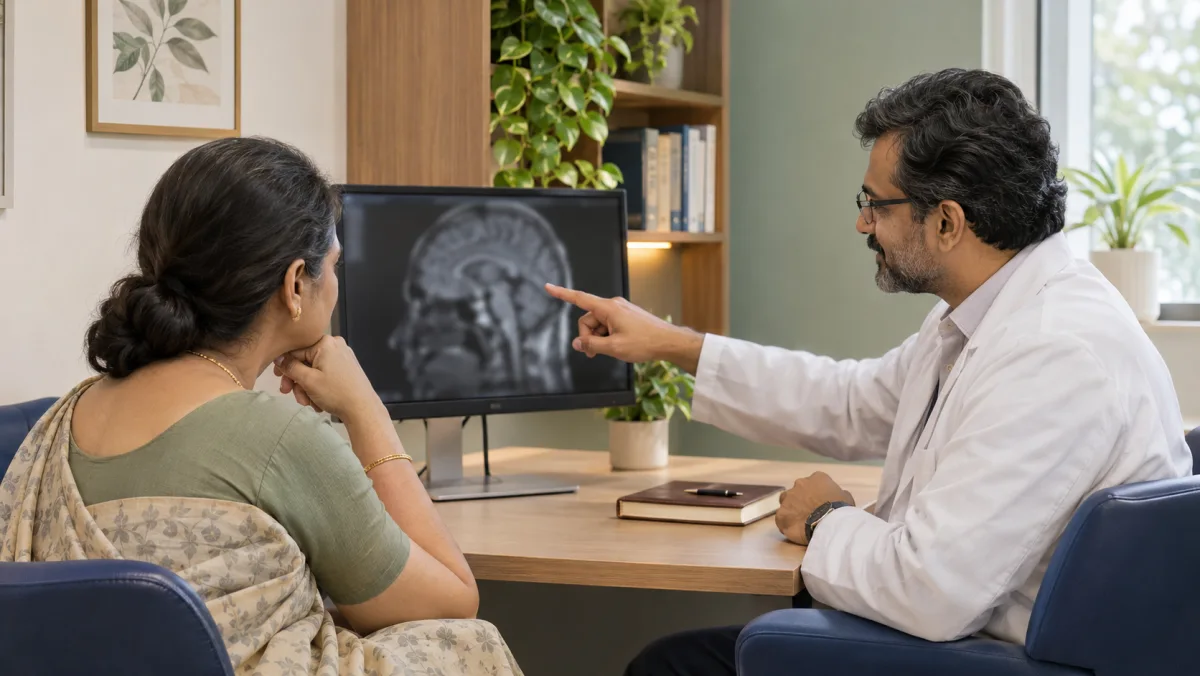
The pattern comes first. The scan adds context.
Your team checks whether your symptoms fit trigeminal neuralgia and reviews the benefit or side effects of treatments already tried.
- 01
Confirm the pain pattern
Tell the team where pain starts, how long each burst lasts and what brings it on. Similar symptoms can have other causes.
- 02
Review the MRI
The team looks for changes around the nerve that may help explain the pain. The scan can also identify other causes and inform which procedures fit.
- 03
Review medicine and health history
Bring current doses, relief and side effects, plus previous procedures and health conditions that could affect anaesthesia or recovery.
04Your visit / before, during, after
Know what happens around the procedure.
The treating service will explain preparation, anaesthesia and follow-up for your situation.

Before
Agree the plan
The team reviews the diagnosis, scan, medicines and anaesthesia. Ask when to arrive and what arrangements you need to make for going home.
During
Treatment with imaging
In a monitored setting, the clinician uses images to guide the treatment and applies controlled heat to the selected nerve tissue.
After
Check comfort and sensation
The team checks your recovery and gives you individual instructions on medicines, eye care, travel and when to call for advice.
05Recovery / eye care and warning signs
Notice changes early. Know who to call.
Numbness or tingling can follow RF. Less commonly, chewing feels weaker or the eye loses some sensation. Ask for an individual recovery plan.
Emergency assessment now
Get emergency help for sudden facial droop, arm weakness or speech changes, even if the symptoms pass.
NHS · Stroke symptomsSeek same-day eye advice
After treatment, tell the treating team or an eye-care service about eye redness, irritation or blurred vision. A change can occur with little pain if sensation is reduced.
Mayfield Brain & Spine · Patient instructions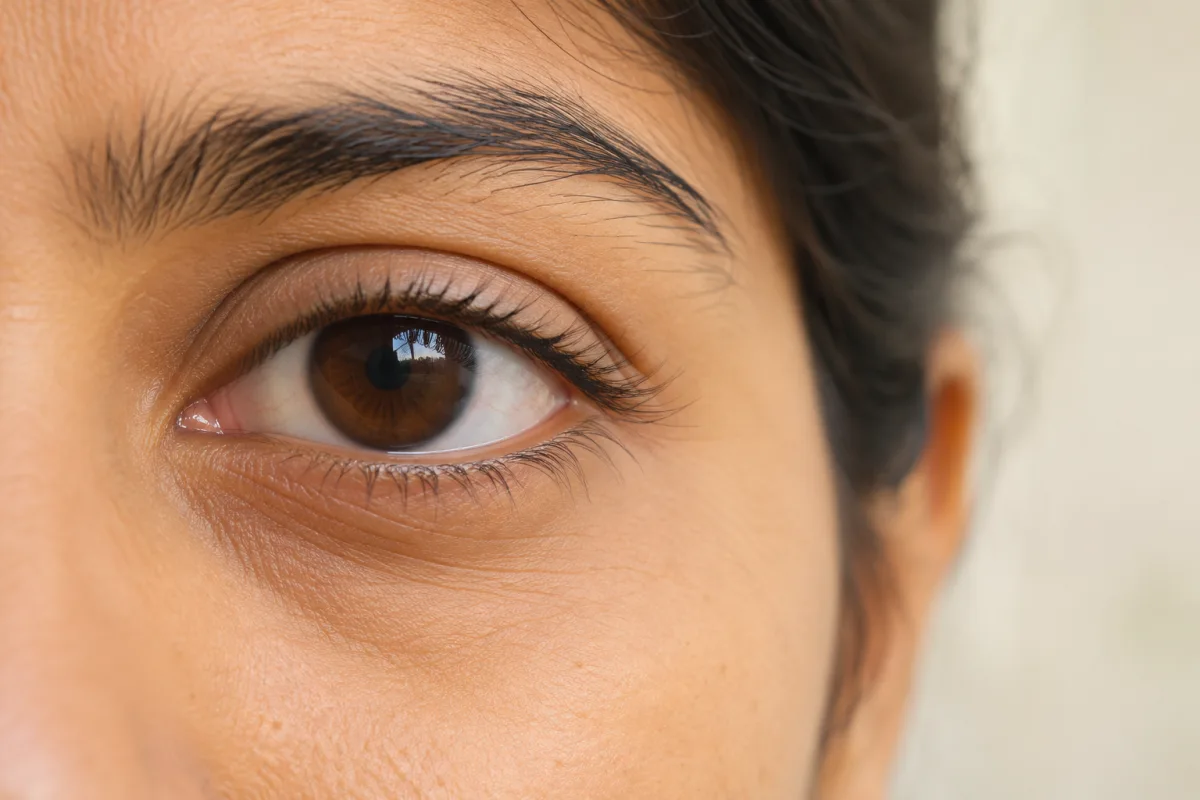
Make a plan for eye checks.
Ask your team whether the area treated can affect eye sensation and which eye checks or precautions they want you to follow. Follow their instructions on medicines and report new or worsening changes.
06Evidence / shared decisions
Read the range. Ask what shapes it.
The Royal College of Surgeons guideline summarises outcomes for several procedures. The numbers below refer to radiofrequency thermocoagulation.
Radiofrequency thermocoagulation
Pain-free at follow-up in 7 studies
26–82%
Relief can last. Pain can return.
Some studies followed different groups for different lengths of time. That helps explain why the results vary.
Ask how this applies to you.
The range describes study results. Your diagnosis, prior procedures and willingness to accept changes in sensation affect whether RF fits your goals.
07Prepare for your visit / two note cards
Bring your pain pattern. Bring a question.
A few notes can help you and your specialist discuss which options fit your symptoms and what you want to be able to do.

- Where and when
- Mark where the pain starts, where it travels and an approximate length of each burst.
- What triggers it
- Bring two examples such as brushing teeth, eating or talking.
- Medicines tried
- List what helped and any side effects, with medicine names and doses.
Does my pattern and scan support this diagnosis?
- My priority
- Think about a goal such as eating more comfortably or speaking without fear of an attack.
- The trade-off
- Ask which areas might feel numb and how the team would look after your eye.
- Follow-up
- Bring a question on recurrence, medicines or how to reach the treating team.
Which options fit my goals and what is the backup plan if pain returns?
08Questions / find a starting point
Ask what matters before you decide.
01Is Trigeminal RF suitable for every facial pain pattern?
The procedure is considered in selected people with confirmed trigeminal neuralgia. If the pattern or diagnosis is uncertain, a specialist assessment helps clarify the cause first.
02Will my face feel different afterwards?
A change in facial sensation is common after heat lesioning and can persist. Ask where you are most likely to feel numb and what eye and mouth precautions your team recommends.
03How long can relief last?
Relief varies. Pain may recur and the options for further treatment depend on your response and any sensory changes.
04How does thermal RF differ from a nerve block?
Thermal radiofrequency uses controlled heat to change nerve tissue. A nerve block usually uses local anaesthetic to interrupt signals temporarily. Ask which procedure is being proposed and why.
05When can I change my medicines?
Your prescriber should guide any changes after treatment. Confirm what to take on the day, what to continue at home and when the team will review the plan.
09Sources / editorial accountability
Know where the information comes from.
The original clinic article and the guidance used in this focused procedure guide are linked below.
- Original clinic article
- Head, Neck & Facial Pain
IBAP Clinics’ broader article, including diagnosis, treatment discussions and original media.
- Procedure guide adaptation
IBAP Clinics patient education. The text focuses on the decision about Trigeminal RF and is informed by the sources below.
The newly generated artwork uses simplified anatomy and fictional clinical scenes.
Editorial update
Guidance and evidence used in this guide
- NHS · Trigeminal neuralgia treatment
Medicines, specialist procedures, recurrence and potential complications.
- NIH · Trigeminal neuralgia
Facial nerve function, symptom assessment and an overview of treatment options.
- European Academy of Neurology guideline
MRI, medical treatment, specialist referral and selection of surgical options.
- Royal College of Surgeons · Guideline
Table 1 describes outcomes by procedure. The discussion covers limits of comparative evidence, altered sensation and eye precautions.
- Mayfield Brain & Spine · Patient instructions
An example of discharge advice for radiofrequency rhizotomy, including checking the eye for redness, irritation or changes in vision.
- NHS · Stroke symptoms
Emergency warning signs including facial droop, arm weakness and sudden speech changes.
- Ministry of Home Affairs · Emergency number 112
India’s emergency response number.