
Skip to Nerve Block
24/7 CARE HELPLINE +91 9807 55 6789 Banjara Hills Madeenaguda

NERVE BLOCK / IMAGE-GUIDED CARE

Ultrasound-Guided Peripheral Nerve Blocks

A carefully guided injection around a peripheral nerve, used to help assess or treat selected nerve pain problems.

Your assessment guides whether a block is right for you.

IBAP Clinics · Banjara Hills & Madeenaguda

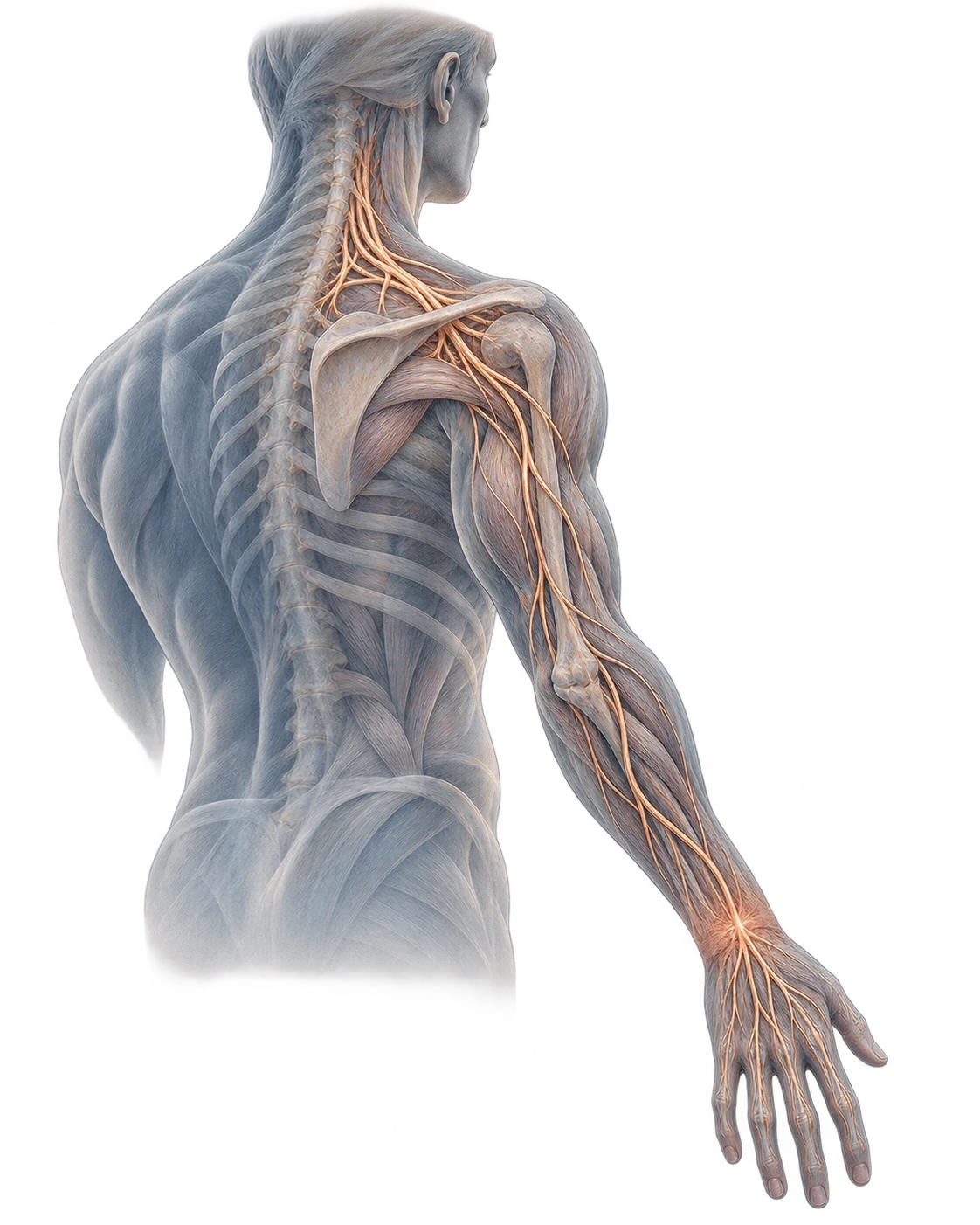
Educational anatomy illustration of the shoulder, arm and hand, with peripheral nerves highlighted in copper.
THE PERIPHERAL NERVE NETWORKIllustrative anatomy / not a scan

AT A GLANCE

A clearer
starting point.

A short reading guide. Complete original passages remain available throughout.

  1. How nerves become irritated

    Injury, pressure, health conditions and some treatments can affect peripheral nerves.

  2. What ultrasound adds

    Ultrasound helps the clinician see the target and surrounding structures.

  3. Two different purposes

    A block may help assess a pain source or form part of treatment.

  4. Understanding persistent pain

    Persistent pain can involve the wider nervous system and needs an individual plan.

  5. Preparing and recovering

    Follow your team’s preparation, travel and discharge instructions.

Read the original article’s five key points
  • Peripheral nerves get injured or trapped by trauma, surgery, inflammation, chemotherapy, diabetes and simple everyday postures — and this is far more common in busy Indian lives than most people realise.

  • Ultrasound-guided peripheral nerve blocks let us see the nerve directly and place medicine exactly where it is needed, rather than guessing by landmark.

  • A diagnostic block tells us which nerve is guilty; a therapeutic block — using steroid, saline hydrodissection, or botulinum toxin — treats it.

  • Done correctly, these blocks can interrupt, and sometimes break, the self-sustaining cycle of chronic nerve pain.

  • Preparation is simple and recovery is quick, but a few sensible do's and don'ts genuinely matter.

Illustrative scene of a woman discussing hand discomfort with a clinician in a sunlit consulting room.
Illustrative consultation · Care begins with listening.

A NOTE FROM THE AUTHOR

Nerve pain deserves
to be heard.

Nerve pain is not imaginary, it is not exaggeration, and treating it as such delays care that could have helped months, sometimes years, earlier.

From the original article by Dr Vijay Bhaskar Bandikatla
Meet Dr Vijay
Read the author’s full opening note

I want to start this article a little differently, because this topic is close to my heart. In twenty-odd years of practice — first through NHS pain clinics in Cambridge, Bradford and London, and now here in Hyderabad — the patient I find hardest to help isn't the one with the worst scan. It's the one who has been told, in one way or another, that their pain "isn't that serious," or that it is "just nerves," said almost dismissively. Nerve pain is not imaginary, it is not exaggeration, and treating it as such delays care that could have helped months, sometimes years, earlier. Understanding empathy, rather than discarding pain, is where good nerve pain treatment actually begins — and this isn't sentiment, it is, genuinely, scientifically linked to how well patients recover.

01UNDERSTANDING THE NERVE

What exactly is a peripheral nerve, and why does it misbehave

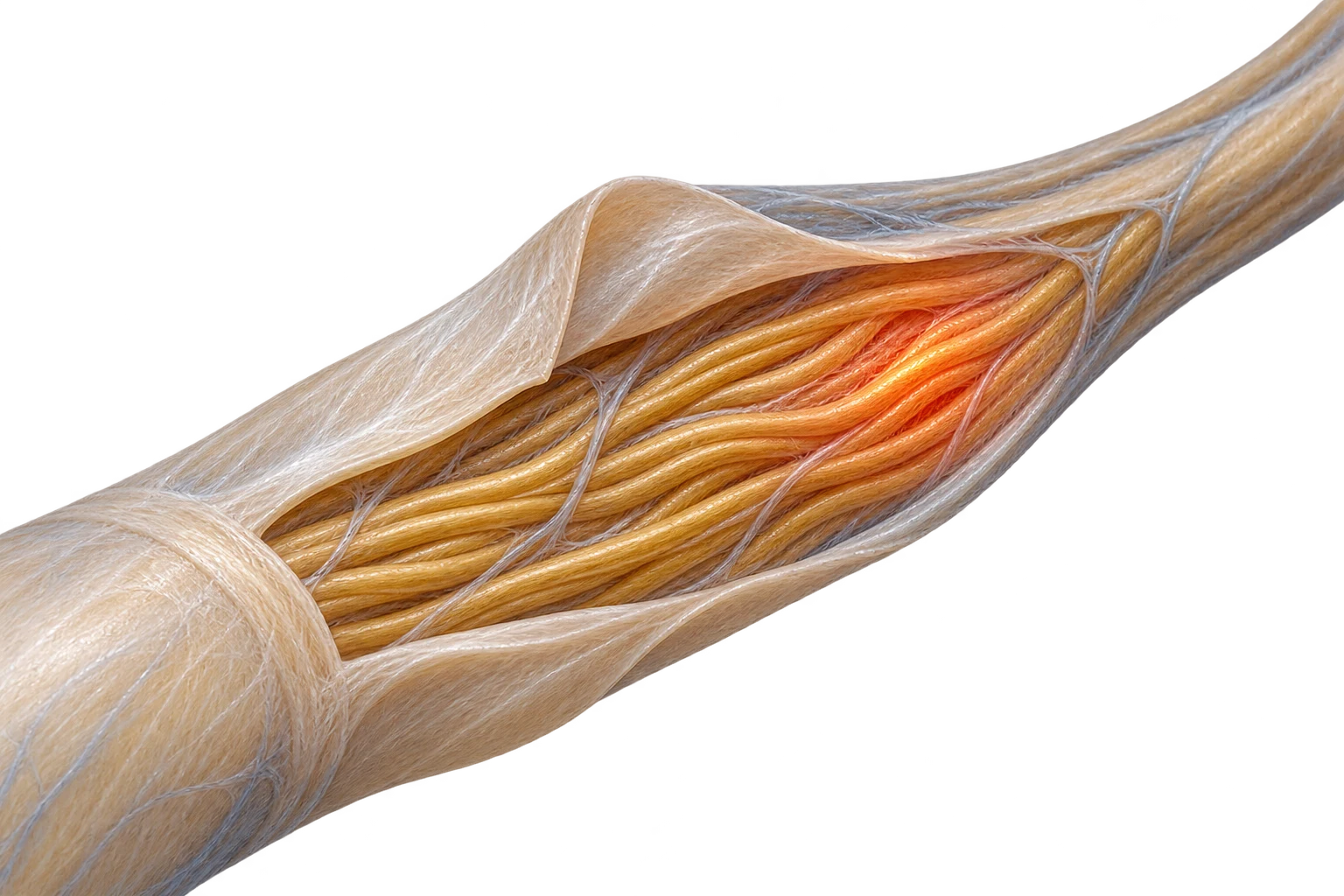
Conceptual cutaway of a peripheral nerve bundle with its protective sheath and individual nerve fibres.

A closer look / nerve fibres & protective sheath

Nerve fibresProtective sheath

Think of your peripheral nerves as the household electrical wiring of the body — insulated cables running from the spinal cord out to your hand, your foot, your face, carrying both sensation inward and movement commands outward. Wiring that is pinched under a door, frayed by heat, or corroded by damp stops working properly; it may short-circuit, spark, or simply go dead. Peripheral nerves behave in an almost identical way when they are compressed, cut, inflamed, or poisoned by chemicals — the signal becomes pain, numbness, tingling, or weakness, often all four together.

PainNumbnessTinglingWeakness

02EVERYDAY LIFE / OVERLAPPING CAUSES

Causes: how nerves get injured in real, everyday India

Nerve symptoms can have several overlapping causes. Explore the groups below, then discuss your own pattern with a clinician.

Scan the summaries. Open any cause for the original explanation.

Injury & procedures

2 causes
Trauma and road injuriesFalls and road injuries can stretch or damage a nerve.

FROM THE ORIGINAL ARTICLE

Hyderabad's roads, frankly, are unkind to nerves. Sudden braking at a speed breaker, a two-wheeler skid on a pothole, a fall while swerving to avoid an auto that has stopped without warning — these mechanisms stretch, crush or lacerate nerves around the shoulder, elbow, wrist and ankle. Brachial plexus stretch injuries after two-wheeler accidents are, sadly, something I see with real regularity.

Surgical and post-procedural causesA nerve close to a surgical site can be injured or irritated.

FROM THE ORIGINAL ARTICLE

Nerves can also be injured, entirely unintentionally, during surgery — a hernia repair nicking the ilioinguinal nerve, a knee replacement irritating the saphenous nerve, a mastectomy affecting the intercostobrachial nerve. This is nobody's fault; it is simply anatomy sitting close to the surgical field, and it is treatable.

Pressure & everyday life

3 causes
Entrapment: the desk, the phone, the steering wheelProlonged pressure at the wrist or elbow can trap a nerve.

FROM THE ORIGINAL ARTICLE

Here is where modern Indian life plays its part. Our IT professionals sit at screens for ten, twelve hours, wrists cocked over a keyboard — carpal tunnel syndrome. Long commutes gripping a two-wheeler handlebar or a steering wheel compress the ulnar nerve at the elbow. And I cannot count how many patients present with a numb, weak hand after falling asleep, exhausted, with an arm folded awkwardly under a pillow or across a chair — "Saturday night palsy," except in Hyderabad it happens on any night of an exhausting working week.

Posture, stress and the modern householdSustained posture and muscle tension can add to compression.

FROM THE ORIGINAL ARTICLE

I would be doing my patients a disservice if I didn't mention stress itself. Chronic muscular tension — from school-going children under relentless grade and rank pressure, from NEET and JEE aspirants chasing a rank rather than an education, from software employees hitting deadline after deadline, from parents managing both — tightens the very tunnels and canals nerves pass through. Pain, in this setting, becomes a household affair, not an individual one; I frequently see it in teenagers as much as in their working parents.

Named entrapment sites worth knowingEntrapment can also affect nerves around the thigh, buttock or ankle.

FROM THE ORIGINAL ARTICLE

Beyond carpal and cubital tunnel, a few other entrapments turn up regularly in an Indian clinic: meralgia paraesthetica — burning over the outer thigh from a trapped lateral cutaneous nerve, often in patients wearing tight waistbands or carrying weight around the abdomen; piriformis syndrome, mimicking sciatica but arising from a deep gluteal muscle trapping the sciatic nerve, common in those who sit cross-legged on the floor for long prayer or work sessions; and tarsal tunnel syndrome, an ankle-level entrapment that shows up as burning under the sole, frequently in those on their feet all day in ill-fitting footwear.

Health conditions & treatments

4 causes
Inflammatory and post-infective causesInflammation can make a nerve swell within a tight space.

FROM THE ORIGINAL ARTICLE

Nerves also become inflamed on their own — from autoimmune processes, from viral illness, from unexplained localised neuritis — swelling within their own tight sheath, rather like a swollen finger inside a ring that has become too small.

Chemotherapy, radiotherapy and drug-induced neuropathySome cancer treatments and medicines can affect nerves.

FROM THE ORIGINAL ARTICLE

Several chemotherapy agents (platinum compounds, taxanes, vinca alkaloids) are directly toxic to peripheral nerve fibres, producing a burning, glove-and-stocking neuropathy in hands and feet. Radiotherapy, months to years later, can cause fibrosis around nerve plexuses, particularly after breast or pelvic radiation. Certain long-term medications — isoniazid, some statins, prolonged metronidazole — carry their own neuropathy risk too.

Metabolic syndrome, diabetes and quiet damageDiabetes, thyroid problems and B12 deficiency can contribute.

FROM THE ORIGINAL ARTICLE

Diabetes remains, by far, the most common metabolic cause of peripheral neuropathy I see in Hyderabad, often compounded by borderline thyroid function and vitamin B12 deficiency in a population eating increasingly processed, delivery-app food. High sugar, over years, damages the small blood vessels that feed the nerve itself, starving it slowly.

Infections, shingles and autoimmune causesPain can persist after infections such as shingles.

FROM THE ORIGINAL ARTICLE

Nerve pain can also follow an infection long after the infection itself has resolved — post-herpetic neuralgia after a shingles episode is a classic, often severe example, and I see it fairly often in my older patients. HIV-related neuropathy and a handful of autoimmune neuropathies round off this category, each needing a slightly different approach.

Read the original causes introduction

The textbook causes of peripheral neuropathic pain are trauma, surgical injury, inflammation, entrapment, and toxic or metabolic insult. But in my clinic, these textbook categories arrive wearing very Indian clothes.

03LISTEN / EXAMINE / INVESTIGATE

Diagnosis: finding the guilty nerve

LISTEN / EXAMINE

Start with your story.

Your clinician asks where symptoms travel, what changes them, and whether numbness or weakness is present. Examination looks at sensation, movement and possible nerve irritation.

Read the original examination explanation

Diagnosis begins with a careful history and examination — where exactly does the pain radiate, what makes it worse, is there numbness or weakness alongside it. On examination, I am looking specifically for allodynia (pain triggered by a touch that shouldn't hurt at all), hyperalgesia (an exaggerated response to something that is mildly painful), and Tinel's sign — a tingling shock felt on tapping directly over a suspected entrapment point, which is often wonderfully diagnostic in itself. Simple validated tools such as the DN4 or LANSS questionnaires help confirm a neuropathic pattern, though in my Hyderabad practice I translate these into plain, practical language rather than clinical jargon.
INVESTIGATE / INTERPRET

Put the findings in context.

Selected nerve tests, ultrasound or blood tests may add information. Your history, examination and test findings are interpreted together; no single report tells the whole story.

Read the original investigation explanation

Nerve conduction studies and electromyography help confirm which nerve, and how severely, is affected. High-resolution ultrasound has, in the last decade, become invaluable too — it lets us see nerve swelling, entrapment, scarring or a neuroma directly, in real time, rather than inferring it indirectly. Blood tests for diabetes, B12, thyroid function and, where relevant, a careful review of drugs such as anti-tuberculosis medication, round off the metabolic screen. And I say this gently but firmly to many patients: a "normal" report does not mean nothing is wrong — neuropathic pain frequently hides from standard tests, which is exactly where clinical examination and diagnostic blocks earn their keep.

04TWO PURPOSES / ONE CONSIDERED PLAN

Diagnostic blocks versus therapeutic blocks

01 / HELP WITH ASSESSMENT

Diagnostic block

A small amount of local anaesthetic helps the team assess whether a suspected nerve contributes to your pain.

What to notice
The timing and pattern of any temporary relief.
How it is interpreted
Alongside your history, examination and other findings.

02 / PART OF TREATMENT

Therapeutic block

Medicine or a selected technique is used with the aim of reducing pain or irritation around a nerve.

What to discuss
The intended benefit, alternatives and possible risks.
What to expect
Benefit and duration vary; some people have no relief.

A positive response is one part of an assessment. It does not prove a diagnosis or predict a lasting result. Read the evidence

Read the original explanation and comparison table

This distinction confuses many patients, understandably, so let me be direct about it.

A diagnostic block uses a small volume of local anaesthetic placed precisely onto the suspected nerve. If your pain disappears, even briefly, we have confirmed the source with real confidence — think of it as switching off one circuit breaker to see which light goes out. A therapeutic block follows, once the diagnosis is confirmed, using medicines chosen for longer-lasting effect.

Diagnostic and therapeutic blocks: the source article’s comparison
FeatureDiagnostic BlockTherapeutic Block
PurposeConfirm the pain-generating nerveReduce inflammation, relieve entrapment, provide durable relief
Typical agentLocal anaesthetic aloneSteroid, saline (hydrodissection), botulinum toxin, or neurolytic agent
Duration of reliefHours (matches anaesthetic duration)Weeks to several months
GuidanceUltrasound, mandatory for accuracyUltrasound, mandatory for accuracy and safety
Repeat frequencyUsually once, occasionally twiceAs clinically indicated, spaced appropriately

05PRECISION / IN REAL TIME

Why ultrasound guidance changes everything

Ultrasound helps the clinician identify the nerve, nearby vessels and surrounding tissue, and observe needle placement and fluid spread. Imaging supports careful technique; it does not remove every risk.

Research & limitations

THE VISUAL EXPLANATION

Ultrasound-Guided Needle Approach to a Peripheral Nerve

ANATOMY ATLAS 03 VIEWS

Motion is off. Explore each view at your own pace.

ULTRASOUND GUIDANCE / TISSUE CUTAWAY
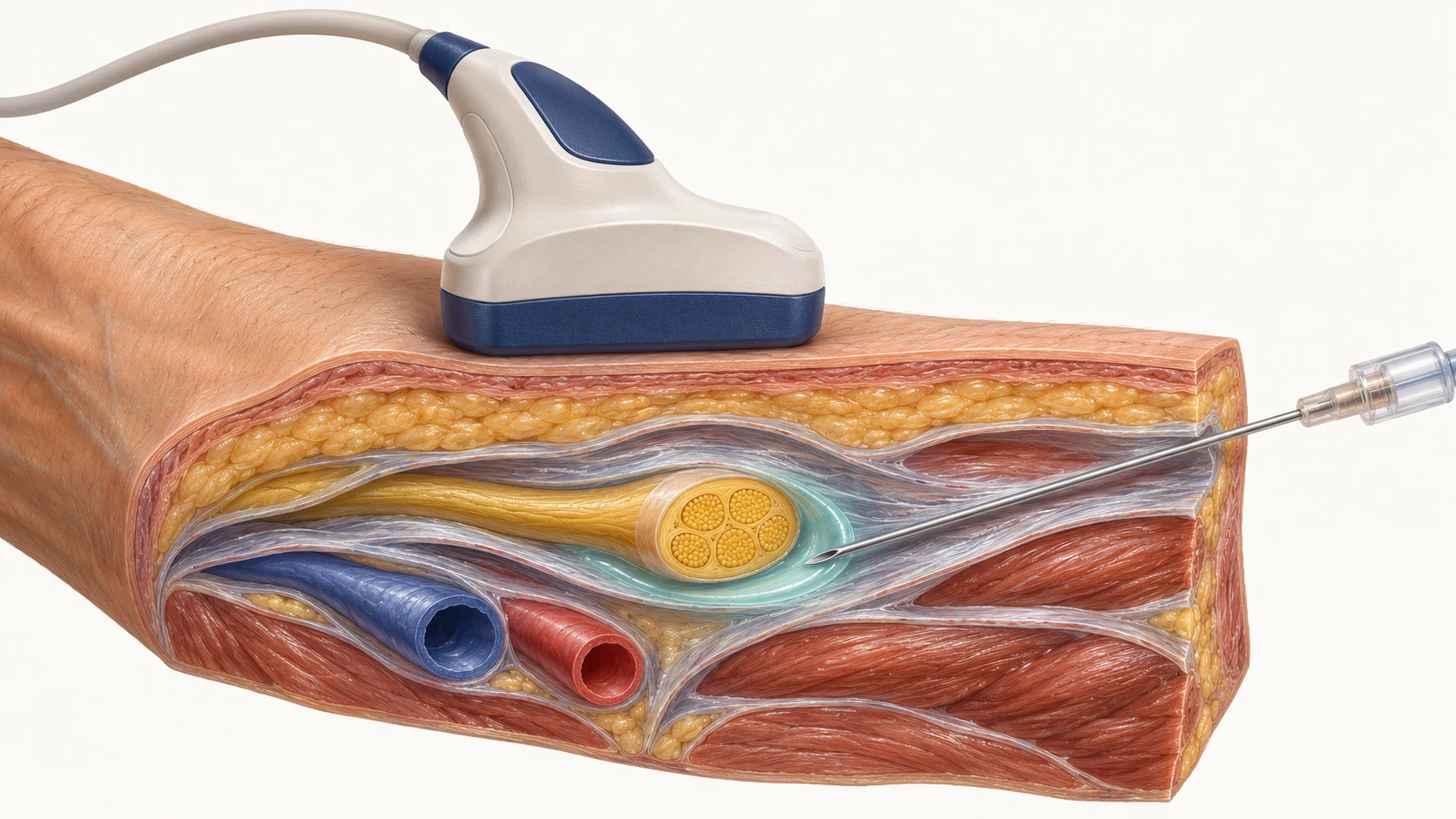
Conceptual tissue cutaway: a probe above the skin, a golden nerve, nearby red and blue vessels, and a needle tip in turquoise fluid outside the nerve.

Conceptual illustration · Not a real ultrasound scan

01 / SEE THE ANATOMY

A clearer view.
A considered approach.

The probe helps the clinician distinguish the nerve from the surrounding tissue and nearby blood vessels.

Sits above the skin to show the structures beneath it.

The golden bundle is the peripheral nerve, shown within its surrounding tissue.

The red and blue structures represent blood vessels beside the nerve.

Drag the divider, or focus it and use the arrow keys to reveal the fluid view.
Ultrasound-Guided Peripheral Nerve Block

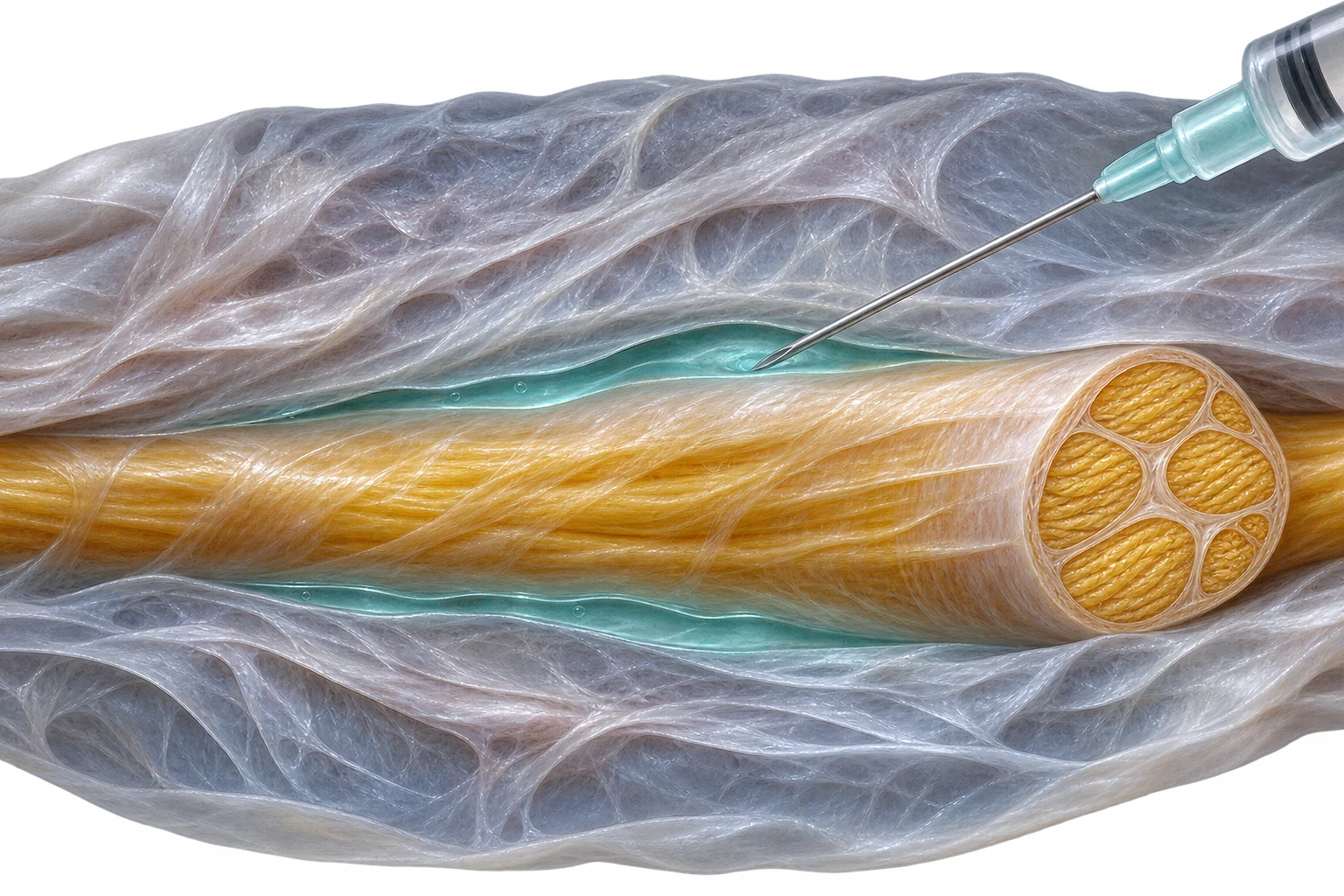
Real-time ultrasound allows the needle tip and the injectate spread to be watched continuously, keeping medicine around — never carelessly through — the nerve.

Read the complete visual description

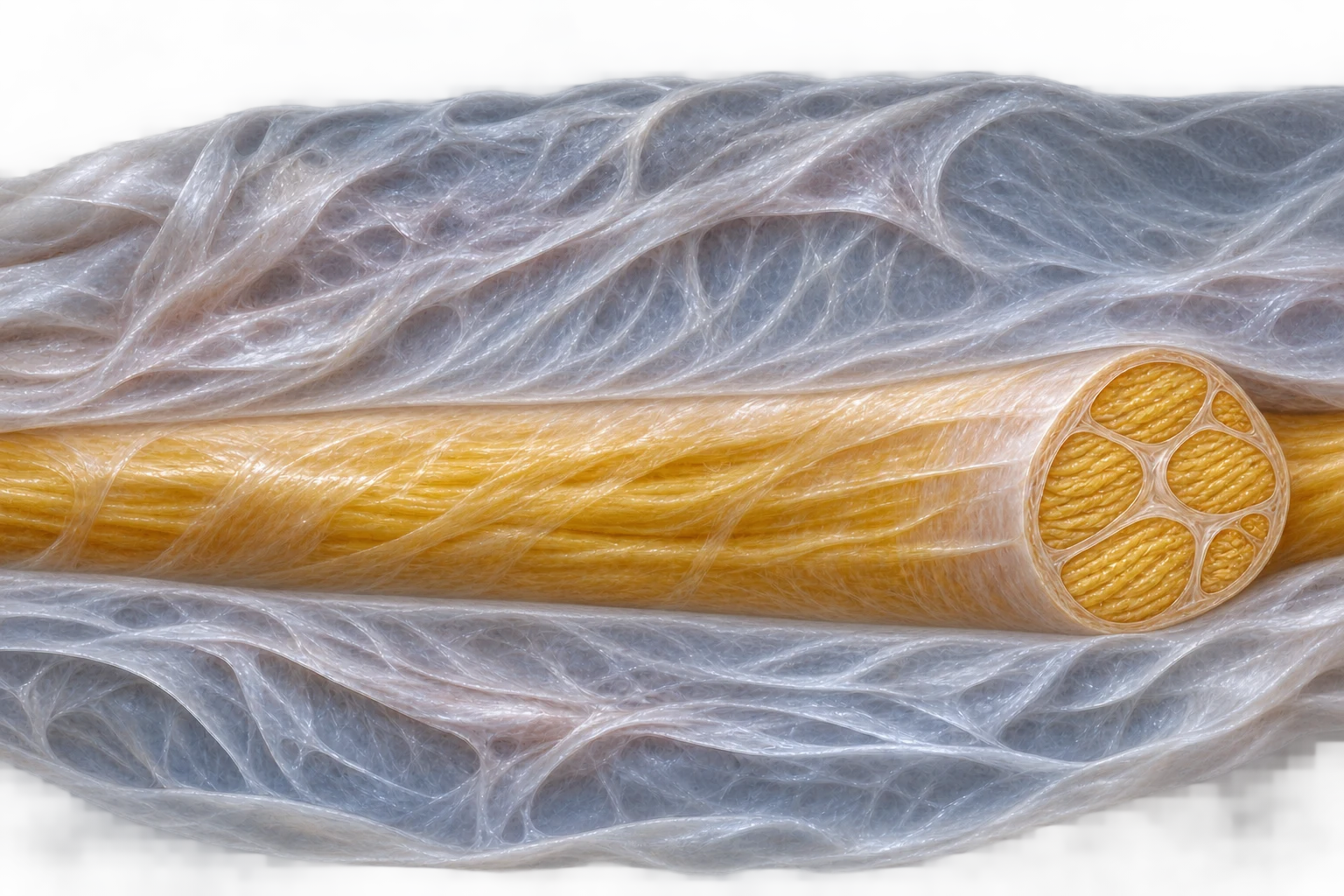
The first view identifies the ultrasound probe above the skin, the golden peripheral nerve and the nearby blood vessels. The second highlights the needle path and turquoise fluid outside the nerve sheath. The third magnifies a different, conceptual view of the nerve: a draggable comparison shows surrounding tissue close to it, and fluid separating that tissue from the intact nerve. The comparison illustrates a mechanism, not a predicted treatment result. There is no audio.

  • Ultrasound Probe
  • Nerve (entrapped)
  • Needle path
  • Injectate spreads around, not through, the nerve sheath

Additional visual context: ultrasound guidance and hydrodissection are related ideas; not every nerve block involves hydrodissection. Read the hydrodissection study

Read the original ultrasound explanation

Older techniques relied on surface landmarks and a sense of "feel" — a bit like trying to find a specific wire behind a wall using only a stud-finder and memory. Ultrasound is the torch that lets us actually see the wall's interior: the nerve, the surrounding vessels, muscles and fascial planes, all in real time, as the needle advances. This precision meaningfully reduces the risk of injecting into a vessel, avoids unnecessary needle passes, and allows the medicine to be deposited exactly where the nerve is compressed or inflamed, not simply somewhere nearby.

YOUR VISIT / FOUR MOMENTS

What actually happens during the procedure

The exact approach and observation time depend on the nerve, technique and your health.

  1. Position & map

    You are positioned for the target nerve. Ultrasound helps identify the nerve, nearby vessels and surrounding tissue.

  2. Clean & prepare

    The skin is cleaned and the equipment prepared before the needle is placed.

  3. Guide & observe

    The clinician guides the needle with imaging and watches the medicine spread around the nerve.

  4. Recover & review

    The team observes you afterwards and gives individual advice before you leave.

Read the author’s complete procedure account

You lie comfortably — supine, prone, or side-lying, depending on which nerve we are chasing. The skin is cleaned, sterile gel applied, and I use the probe to map the nerve, the neighbouring vessels, and any surrounding scar tissue before the needle ever goes in. The needle is then advanced under continuous, real-time vision, using either an in-plane approach (needle seen along its entire length) or an out-of-plane approach (needle seen as a single bright dot), whichever suits the target best. Before injecting, I always aspirate first — gently pulling back on the syringe to confirm we are not sitting inside a blood vessel — and only then is the medicine delivered, watching it spread and "cuff" cleanly around the nerve on screen. The whole procedure typically takes fifteen to thirty minutes, and you are observed for a short period afterwards before heading home.

06THE TREATMENT TOOLKIT

Drugs and techniques used in peripheral nerve blocks

Different aims, different considerations. Your clinician selects an approach with you.

  1. Inflammation

    Corticosteroids

    Aims to reduce inflammation around a selected nerve.

    Discuss expected benefit, steroid-related risks and your other health conditions.

    Research & limitations
    Read the original technique description

    Placed around an inflamed or entrapped nerve, steroid reduces local swelling and irritation, often providing weeks to months of relief and, in milder entrapments, allowing the nerve to genuinely settle.

  2. Tissue separation

    Saline hydrodissection

    Uses fluid to separate a nerve from surrounding tissue.

    The nerve, injectate and reason for entrapment matter; it is not suitable for every nerve pain problem.

    Research & limitations Explore the illustration
    Read the original technique description

    This is one of my favourite techniques to explain, because the concept is so visual. We inject sterile saline (sometimes with a small volume of local anaesthetic) around a nerve that has become stuck to surrounding scar tissue or fascia, gently separating — hydro-dissecting — the two, restoring the nerve's natural gliding movement. Rather like carefully working water between two pages of a book that have been stuck together by a spill.

  3. Selected muscle-related problems

    Botulinum toxin

    May be considered for selected painful muscle-entrapment syndromes.

    Evidence is condition-specific. Discuss the target, alternatives and potential weakness.

    Research & limitations
    Read the original technique description

    In select neuralgias and painful muscle-entrapment syndromes, botulinum toxin can reduce the surrounding muscular compression or dampen abnormal nerve firing, with effects lasting several months.

  4. Specialist selection

    Peripheral chemical neurolysis

    Chemical neurolysis intentionally alters nerve signalling in carefully selected cases.

    It differs from a temporary block. Discuss lasting effects, sensory or motor risks and alternatives.

    NHS information on phenol
    Read the original technique description

    For carefully selected, severe or cancer-related neuralgias, a neurolytic agent (such as phenol or alcohol) can be used to more permanently interrupt an identified pain-generating nerve — a decision taken thoughtfully, and usually only after diagnostic blocks have confirmed the target with certainty.

These are options discussed in the source article. Technique selection is individual.

07LOOKING AT THE WHOLE PICTURE

Breaking the pain cycle

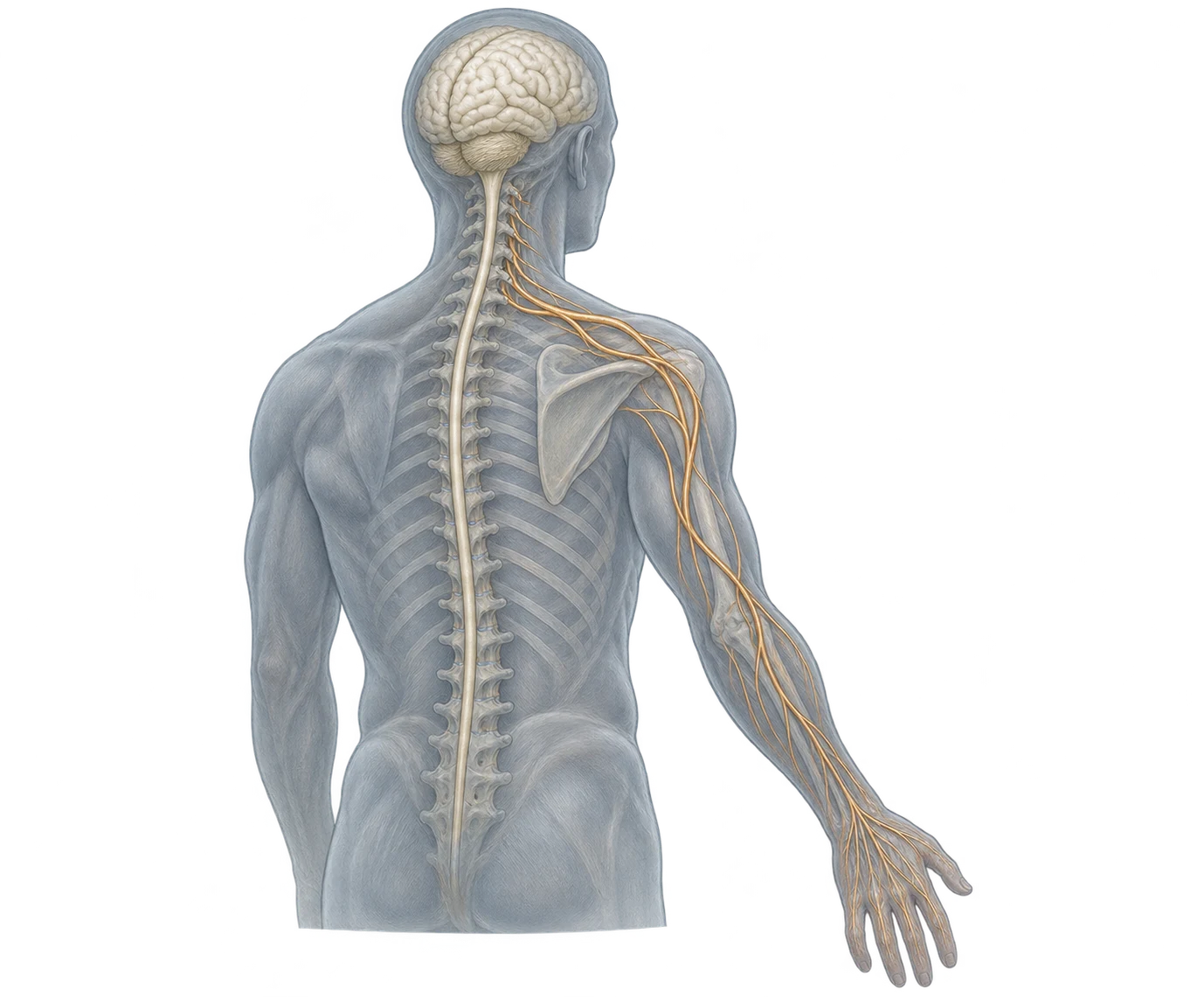
Conceptual upper-body anatomy showing the brain, spinal cord and golden peripheral nerves travelling from the neck into the arm and hand.
PERIPHERAL NERVES / SPINAL CORD / BRAINConceptual anatomy · not a diagnostic map

A CONNECTED SYSTEM

Pain can involve
more than one place.

  1. At the nerve

    Injury or irritation can generate ongoing signals.

  2. In the wider system

    Spinal cord and brain pathways can become more responsive to incoming signals.

  3. In your care plan

    A peripheral block may be one part of care alongside movement, medicines and support.

This is a possible mechanism of persistent pain, not a diagnosis that can be made from this illustration. A peripheral block is one possible part of care, with benefits and limitations to discuss.

Mechanism review · Woolf CJ · 2011
Read the original pain-cycle explanation and analogy

Chronic nerve pain is not simply "more of the same" pain lasting longer. Over time, ongoing nerve irritation can sensitise the spinal cord and brain itself, so that pain signals amplify, spread, and become self-sustaining, quite independent of how injured the original tissue still is. This is called central sensitisation, and it is precisely why early, accurate, well-targeted intervention matters so much — the sooner we interrupt the cycle, the less chance it has of becoming entrenched.

READ THE NUMBERS / IN CONTEXT

These are the original article’s illustrative figures, not IBAP outcome data or a prediction of your result.

Continue to the evidence
View the original article’s four figures

70–90%

Reported short-term relief with accurately placed diagnostic blocks*

6–12 wks

Typical relief window after therapeutic steroid block*

<30 min

Average procedure time, day-case

Low

Complication rate under real-time ultrasound guidance

*Ranges are illustrative of published series and vary by nerve, cause and patient factors — discussed individually in consultation.

08BEFORE YOUR VISIT

What to know before your procedure

  • Medicines & allergies

    Tell the team about blood thinners, allergies and bleeding disorders.

  • Your health & history

    Discuss your health and ask which food and medicine instructions apply to you.

  • Comfortable clothing

    Choose loose clothing that gives access to the area being treated.

  • The journey home

    Discuss travel arrangements and any expected limb numbness or weakness.

THE CONVERSATION / BEFORE CARE

Agree on expectations.

Explore the wider care plan

A diagnostic block is temporary by design. Treatment benefit varies, and a block may be used alongside medicines, movement and other care. Ask what a useful result would mean for you.

Read the original preparation advice and expectations

Come having eaten a light meal (fasting is usually not required for most peripheral blocks), continue your regular medicines unless specifically told otherwise, and do mention any blood thinners, allergies, or bleeding disorders beforehand — some anticoagulants need a dose adjustment or brief pause, and this decision must be made carefully, together with whoever prescribed them. Wear loose clothing that allows easy access to the area being treated, and bring someone to drive you home if a limb-related motor block is anticipated.

I also like to be honest about expectations before we start, because many of my patients have already seen a television advert or a YouTube reel promising a single injection that "cures" nerve pain permanently. A diagnostic block is exactly that — diagnostic, and short-lived by design. A therapeutic block aims for genuine, longer relief, but nerve pain is a circuit problem, not a single spot problem, and it usually improves in partnership with physiotherapy, posture correction and, where relevant, continued neuropathic medication, rather than through one sitting alone.

09AFTER YOUR PROCEDURE

What to expect afterwards: do's and don'ts

Your discharge instructions come first. This is a short reading guide to the article; your treating team’s advice is specific to you.

DO / SMALL, STEADY STEPS

Support your recovery

  • First 24–48 hours

    Rest the treated area gently; use a cold pack if sore. Keep the small dressing dry for the first day.

  • Keep your agreed plan

    Take medicines and attend follow-up as advised.

  • Keep a simple pain diary

    Note pain scores, triggers and sleep quality.

  • Build movement back gradually

    As pain eases, return to gentle movement and keep a regular sleep routine.

AVOID / CHECK BEFORE YOU ACT

Give your body time

  • Driving straight afterwards

    Do not drive immediately after the procedure or while a limb is numb or weak. Follow your discharge instructions.

  • Heat on the treatment day

    Avoid applying heat to the treated area that day.

  • Heavy activity immediately

    Hold off on heavy gym work, lifting and aggressive stretching straight afterwards.

  • Changing medicines on your own

    Do not stop or double your medicines without checking with your treating team.

Short summaries from the original article. Additional driving and emergency context: NHS patient information .

IN THE AUTHOR’S WORDSRead the full original do’s and don’ts

Do: rest the treated area gently for 24–48 hours, apply a cold pack if there is soreness, keep the small dressing dry for the first day, and follow up as advised to assess response. Continue any neuropathic medicines such as pregabalin or duloxetine unless we specifically agree to taper them — the block and the tablets very often work better together than either alone. Keep a simple pain diary noting scores, triggers and sleep quality; it genuinely helps me judge how well the block has worked and plan what comes next. Once pain eases, ease back into gentle movement gradually, and don't neglect basic sleep hygiene — a fixed routine, limited late-night screen time, and a short walk help consolidate the relief; temple visits and a film with friends are entirely fine, just mind long periods of unsupported sitting.

Don't: drive if the limb still feels numb or weak from local anaesthetic — this matters even more on our unpredictable roads with their sudden speed breakers — apply heat to the area on the day of the procedure, resume heavy gym work, lifting or aggressive stretching immediately, or stop or double your usual medicines on your own without checking with us first. And please don't ignore red flags: worsening swelling, progressive weakness, high fever, or breathing difficulty after any procedure should be reported immediately, not "waited out." Equally, don't lose heart if diagnostic relief fades quickly — that fading is expected, and useful information in itself.

A conversation about risks matters.

Ultrasound helps guide the procedure but does not remove every risk. Bleeding, infection, nerve injury and a reaction to local anaesthetic are possible; a block may also provide incomplete or no relief. Discuss your individual risks and discharge instructions with your clinician.

Additional patient information: Guy’s and St Thomas’ NHS Foundation Trust

10ONE PART OF A BIGGER PLAN

Nerve blocks as partners, not replacements, for other treatment

Illustrative scene of a couple taking a gentle walk along a garden path. This is not a patient testimonial or treatment outcome.
Everyday life / your goals guide the conversation.

YOUR GOALS / YOUR PLAN

A useful next step
in a wider plan.

A block may create an opportunity to work on movement and daily activities. Medicines, rehabilitation, sleep and support can each have a role, depending on your needs.

Read the author’s complete care-plan explanation

I want to be clear that a nerve block is never meant to stand alone. The best outcomes I see come from a genuinely multimodal plan: appropriate neuropathic medication where needed, the nerve block itself to open a window of reduced pain, physiotherapy and ergonomic correction to use that window well, and honest attention to sleep, stress and family support alongside it. Used this way — as one well-placed piece within a larger plan, rather than a one-time miracle — ultrasound-guided nerve blocks earn their place as one of the most useful tools I have.

Selected procedures
Appropriate medication
Movement & ergonomics
Sleep, stress & support
A closing thought

A closing thought

Chronic nerve pain, in my experience, is one of the most under-recognised, and yet one of the most precisely treatable, forms of pain we see in Hyderabad today — across IT corridors, school-going households, ageing knees on temple steps, and everything in between. Ultrasound has given us the ability to see what we could previously only guess at, and that, genuinely, changes outcomes.

11THE EVIDENCE / IN CONTEXT

Evidence table

The condition studied matters. Explore selected research and keep its limitations in view.

Selected published research, with the condition and limitations made explicit. These papers provide context; they do not validate every statement or figure in the original article.

Original bibliography
  1. Cochrane review · randomised trials

    Ultrasound guidance

    Adult arm and leg blocks for surgery

    Ultrasound improved surgical block adequacy and reduced the need for additional anaesthesia compared with other localisation methods.

    Keep in mindThese surgical studies do not establish the duration of relief for chronic nerve pain. Evidence quality varied by outcome.

    Lewis SR et al. · 2015Ultrasound guidance for upper and lower limb blocksDOI: 10.1002/14651858.CD006459.pub3
  2. Systematic review · 10 studies

    Hydrodissection

    Predominantly carpal tunnel syndrome

    The included studies reported improvements in symptoms and function with several injectates.

    Keep in mindNine studies concerned carpal tunnel and one ulnar neuropathy. Injectates and methods differed; results cannot be assumed for every nerve or for saline alone.

    Buntragulpoontawee M et al. · 2021The Effectiveness and Safety of Commonly Used Injectates for Ultrasound-Guided Hydrodissection Treatment of Peripheral Nerve Entrapment SyndromesDOI: 10.3389/fphar.2020.621150
  3. Meta-analysis

    Occipital nerve blocks

    Chronic migraine

    Limited evidence suggested short-term reductions in headache intensity and frequency with local anaesthetic blocks.

    Keep in mindAdding corticosteroid did not show additional benefit in this analysis. Chronic migraine findings do not establish the same effect for occipital neuralgia.

    Velásquez-Rimachi V et al. · 2022Greater occipital nerve block for chronic migraine patients: A meta-analysisDOI: 10.1111/ane.13634
  4. Systematic review · 7 studies

    Botulinum toxin

    Injection into the piriformis muscle

    The review found fair-quality evidence of a possible pain benefit in piriformis syndrome.

    Keep in mindStudies were small and heterogeneous. Functional benefit, ideal dose and guidance method remain uncertain; this is not evidence for every peripheral neuralgia.

    Koh MM & Tan YL · 2022Use of botulinum neurotoxin in the treatment of piriformis syndrome: A systematic reviewDOI: 10.1016/j.jcot.2022.101951
  5. Evidence review

    Diagnostic interpretation

    Several types of diagnostic block

    Diagnostic blocks can help identify an anatomical pain source, but their validity depends on the condition and method.

    Keep in mindFalse-positive responses and limited research affect interpretation. A response alone does not establish the underlying pathology or guarantee treatment success.

    Curatolo M & Bogduk N · 2010Diagnostic blocks for chronic painDOI: 10.1016/j.sjpain.2010.07.001
Read the original article’s evidence table
Study focus, condition and findings listed in the original article
Study focusNerve / ConditionKey finding
Ultrasound vs landmark-guided PNBMixed peripheral nervesHigher first-pass accuracy and lower vascular puncture with ultrasound guidance
Hydrodissection for entrapmentMedian, ulnar nerveImproved symptom scores at short and medium-term follow-up
Steroid perineural injectionOccipital neuralgiaSignificant reduction in headache frequency at 4–8 weeks
Botulinum toxin nerve-related painPiriformis / entrapment neuralgiaReduced pain scores lasting several months in responders
Diagnostic block accuracyVarious neuralgiasStrong correlation between block response and subsequent treatment success

This source table is a broad summary rather than a study-by-study critical appraisal. The selected papers above are additional context, not assumed citations for each original claim.

These research summaries provide additional reading for discussions with your care team.

YOUR QUESTIONS / ANSWERED

Frequently Asked Questions

From the original article by Dr Vijay Bhaskar Bandikatla.

Have a conversation

About the block

It is an injection placed under real-time ultrasound imaging, directly around or onto an affected peripheral nerve, to reduce inflammation, interrupt pain signalling, or confirm a diagnosis.

Explore the procedure

Relief & expectations

Recovery & safety

YOUR NEXT STEP

Struggling with nerve pain or neuralgia?

Speak with Dr Vijay Bhaskar Bandikatla about whether an ultrasound-guided peripheral nerve block is right for you.

Questions to bring to your consultation

  • Which nerve might be involved?
  • What could the block tell us?
  • How would it fit with my other care?
Book Appointment

Opens the enquiry form; no appointment is confirmed online.

Call Now
Clinic Locations

Clinic Locations

Banjara Hills

2nd Floor, 284/A, Road No. 12, above IDFC First Bank, near Omega Hospitals, MLA Colony, Banjara Hills, Hyderabad 500034

Get directions

Madeenaguda

Sy No. 2, 4th Floor, Plot No. 200, beside South India Shopping Mall, opp. Fortune Heights, Mythri Nagar, Madeenaguda, Hyderabad 500049

Get directions

SOURCE & READING

References

Original IBAP article

Original article by Dr Vijay Bhaskar Bandikatla. Original wording and references preserved. Illustrations are educational.

View all 12 source referencesAs listed in the original article
  1. Narouze S. Ultrasound-guided interventional procedures in pain management. Reg Anesth Pain Med.
  2. Griffin J, et al. Peripheral nerve injury: principles for repair and regeneration. Am J Sports Med.
  3. Cass SP. Ultrasound-guided nerve hydrodissection: what is it? Curr Sports Med Rep.
  4. Peer S, Bodner G. High-Resolution Sonography of the Peripheral Nervous System. Springer.
  5. Boon AJ, et al. Ultrasound-guided percutaneous nerve blocks for chronic pain. Muscle Nerve.
  6. Ristić D, et al. Botulinum toxin in peripheral nerve entrapment syndromes. Toxins.
  7. Colvin LA, et al. Chemotherapy-induced peripheral neuropathy: current status and future directions. Br J Anaesth.
  8. Tesfaye S, et al. Diabetic neuropathy: mechanisms and management. Diabetologia.
  9. Manchikanti L, et al. Diagnostic and therapeutic nerve blocks in chronic pain management. Pain Physician.
  10. Latremoliere A, Woolf CJ. Central sensitization: a generator of pain hypersensitivity. J Pain.
  11. Waldman SD. Atlas of Interventional Pain Management. Elsevier.
  12. Chan VW, et al. Ultrasound guidance improves success rate of peripheral nerve blockade. Can J Anaesth.