A slipped disc can cause pain in the lower back, along a leg or in both places. This guide helps you describe what changed, recognise urgent warning signs and understand the questions that shape your care.
Understand the anatomySee the relationship between the disc and a nearby nerve root.
Describe the patternNotice where symptoms travel and what daily tasks have changed.
Decide togetherBring your symptoms, function and priorities into the same conversation.
Contents 01 / 09Explore the anatomy
01Anatomy / guided comparison
Between two vertebrae.Close to a nerve.
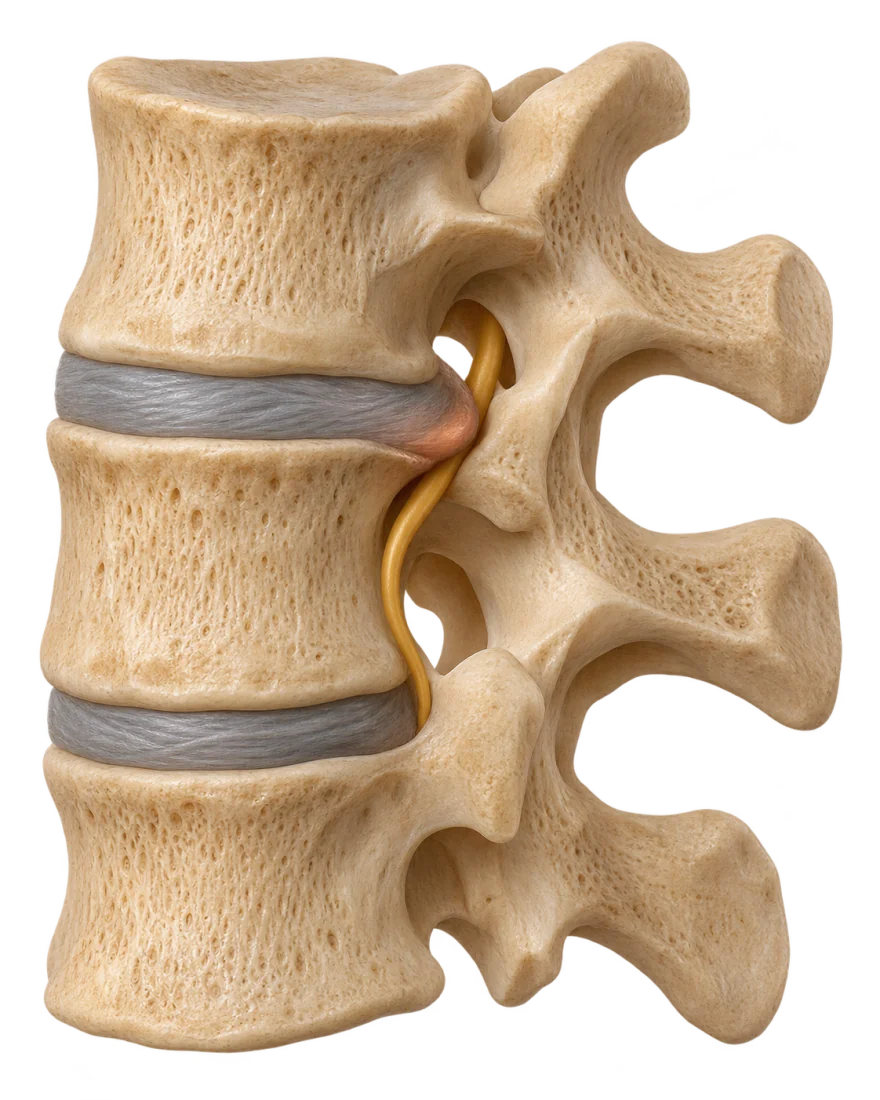
A disc sits between the bones of the spine. In a herniation, some disc material extends beyond its usual boundary and can irritate a nearby nerve root. These simplified views focus on the lower back.
Use the view buttons to compare.
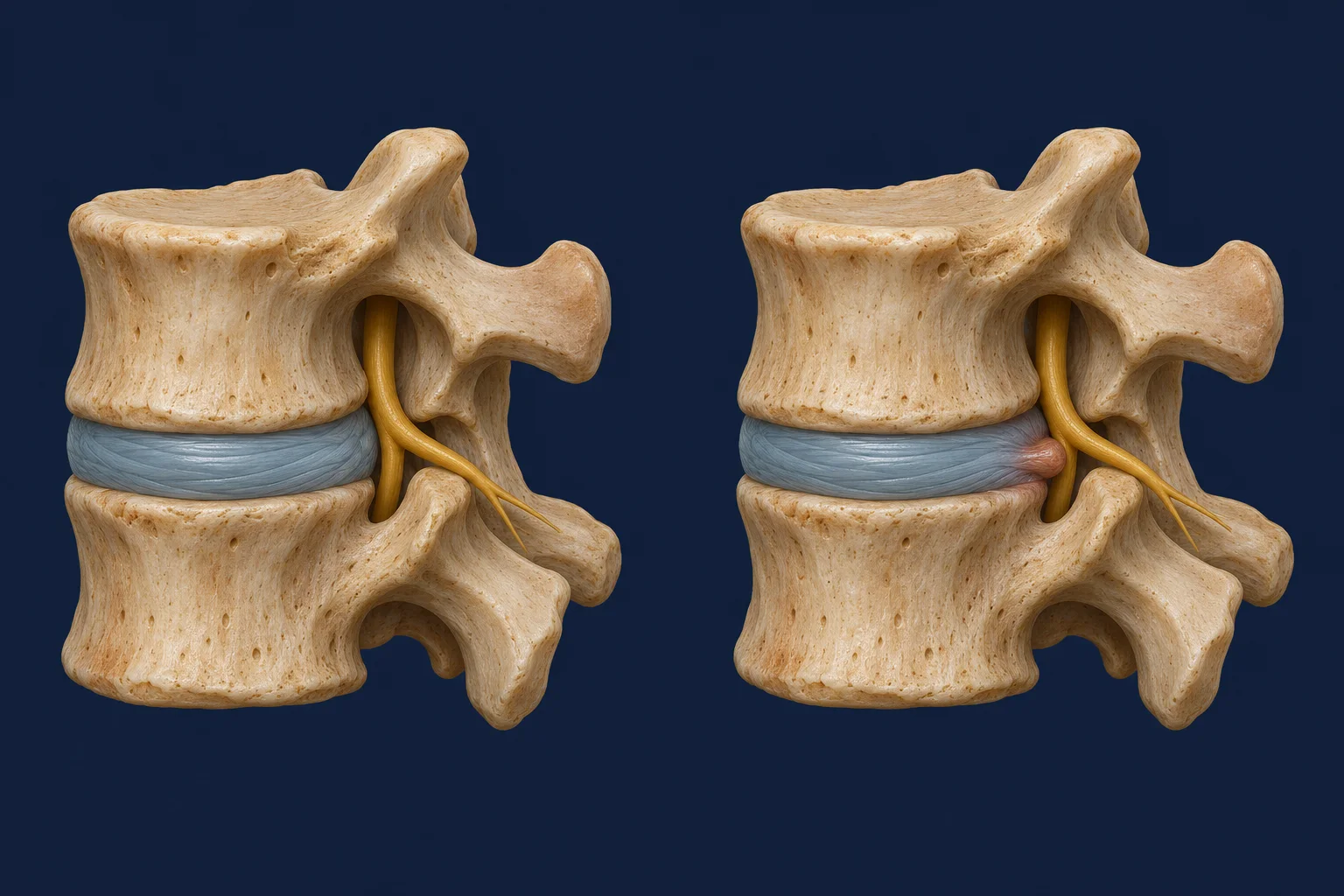
Typical disc outline. Two vertebrae separated by a blue-grey disc with a gold nerve nearby.
Disc material beyond the margin. Two vertebrae with copper-coloured disc material extending toward the nearby gold nerve root.
Selected view · 01
The disc sits between the bones.
The blue-grey disc sits between two vertebrae and helps them share load as you move.
The marker frames part of the reference disc.
Selected view · 02
Part of the disc extends past its edge.
The copper-coloured area shows disc material extending beyond its usual margin. A change like this can appear on a scan without causing symptoms.
The marker circles the small extension beside the nerve.
Selected view · 03
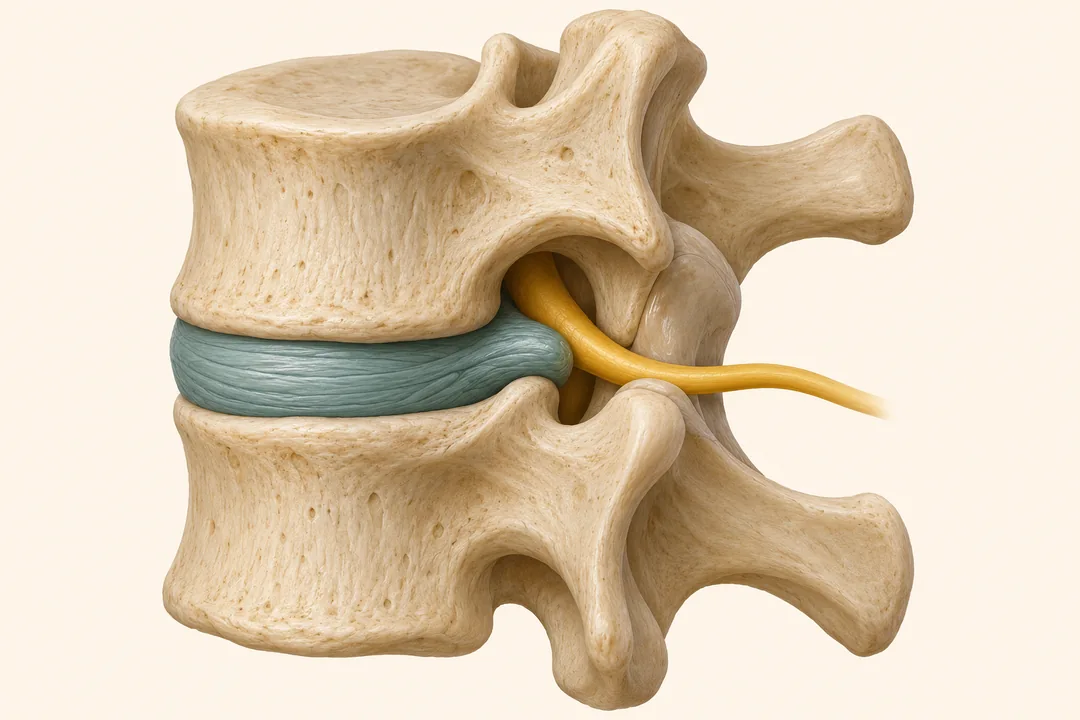
The nerve travels close to the disc.
A nearby nerve can be irritated or compressed. A clinician checks whether the location on a scan fits your symptoms and examination.
The marker points to the gold-coloured nerve near the disc.
Compare the disc margins up close
Typical margin
Disc material beyond the margin
Look for the small copper edge beside the gold nerve. Both crops come from the teaching models above.
Read all three explanations
Typical disc The blue-grey disc sits between two vertebrae and helps them share load as you move.
Disc margin The copper-coloured area shows disc material extending beyond its usual margin. A change like this can appear on a scan without causing symptoms.
Nearby nerve A nearby nerve can be irritated or compressed. A clinician checks whether the location on a scan fits your symptoms and examination.
02Symptoms / the pattern matters
Where does it begin?Where does it travel?
The location, timing and effect of symptoms help a clinician interpret the pattern. Back pain and leg symptoms can occur together, and each deserves its own description.
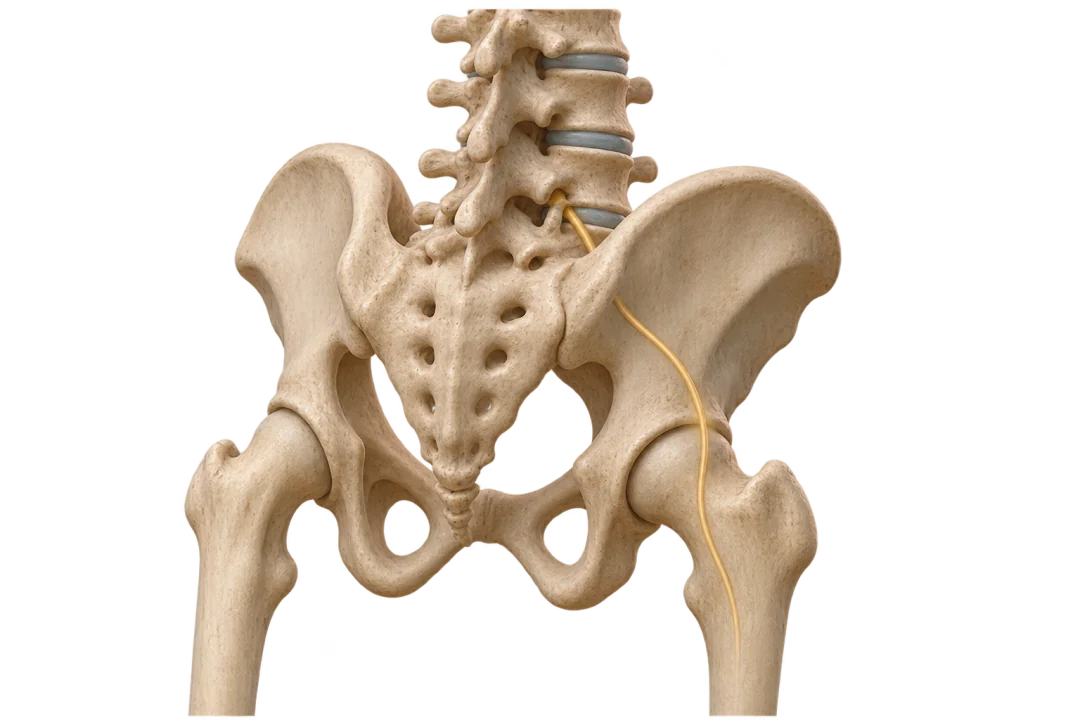
Lower back and upper leg context. The gold line represents a simplified nerve pathway.
01 / Lower back
Pain centred in the lower back
A lower back ache or difficulty bending can have several causes. Tell your clinician where it started, whether it stays in one place and which positions or tasks change it.
A question for your visitWhat feels different when I go from sitting to standing?
02 / Pain down a leg
Symptoms that travel down the leg
Sciatica can feel like a shooting or burning pain from the buttock along one leg. A disc herniation is one possible cause. Pay attention to which side it follows and the point it reaches.
A question for your visitDoes the pain reach my calf, foot or toes?
03 / Feeling and strength
Changes in sensation or strength
Tingling, numbness or weakness adds information beyond pain intensity. Tell your clinician if your foot catches or your walking changes. Check the urgent signs below if these changes are new or worsening.
Or go to the nearest emergency department. Arrange help getting there.
Seek prompt medical advice
Seek urgent medical advice for new or worsening weakness in one leg. Severe or rapidly worsening weakness needs emergency assessment.
Seek urgent medical advice for severe pain that starts suddenly or worsens quickly, or if you have back pain with fever, chills or feeling generally unwell.
Arrange an assessment if symptoms persist, interrupt everyday activities or occur with unexplained weight loss.
The visit starts with your account of the symptoms and an examination. Imaging becomes useful when it can answer a question that matters for the plan.
A simplified lumbar model shows the disc beside a nerve root. A clinician compares symptoms and examination findings with any imaging.
01
Describe onset, direction and function
Explain when the symptoms started, whether pain spreads down a leg and what has changed in walking, sitting or sleep. Bring relevant reports and your medicine list.
Tell the story
What detail would most help you understand this pattern?
A clinician may check how you move and walk, along with muscle strength, feeling and reflexes. Comparing these findings with your symptoms helps guide the next step.
Check the nerve
Which findings would change the urgency of the plan?
NICE advises against routine imaging in non-specialist care for low back pain with or without sciatica. A specialist may consider MRI when the result would change care, such as when planning treatment for persistent leg symptoms.
Many people improve without surgery. Discuss what you want to be able to do again, which options fit your health and which changes should bring the next review forward.
Compare purposes and limits
Movement and support
Purpose
Build towards an everyday activity you want to regain.
Limit
Activity and physiotherapy should fit your symptoms and function.
Medicines
Purpose
Discuss an option for symptom relief and when to review it.
Limit
Other medicines and health conditions can affect what is suitable.
Selected injections
Purpose
Consider symptom relief for selected cases of acute, severe sciatica.
Limit
Benefit is uncertain and may be short term.
Surgical opinion
Purpose
Assess whether relieving pressure on a nerve could help.
Limit
The decision depends on symptoms, imaging and response to prior care.
01 / Movement and support
Find a manageable starting point
Purpose
Build towards an everyday activity you want to regain.
Limit
Activity and physiotherapy should fit your symptoms and function.
Support can include staying active as able and a physiotherapy plan suited to your symptoms, function and priorities. NICE advises against traction for low back pain with or without sciatica.
A question for your visitWhat everyday activity would we use to track progress?
02 / Medicines
Discuss benefits and risks
Purpose
Discuss an option for symptom relief and when to review it.
Limit
Other medicines and health conditions can affect what is suitable.
Medicine decisions depend on your symptoms, other treatments and health conditions. Bring a list of prescriptions, supplements and allergies, and agree how long to try an option before reviewing it.
A question for your visitWhat are the risks for me, and when will we review it?
03 / Selected injections
Set a clear goal for relief
Purpose
Consider symptom relief for selected cases of acute, severe sciatica.
Limit
Benefit is uncertain and may be short term.
NICE says an epidural injection may be considered for acute, severe sciatica. A clinician can explain the likely benefit, uncertainty and risks and how any relief might support your wider plan.
A question for your visitWhat improvement would make this option worthwhile for me?
04 / Surgical opinion
Match the scan to the symptoms
Purpose
Assess whether relieving pressure on a nerve could help.
Limit
The decision depends on symptoms, imaging and response to prior care.
A surgical opinion may be useful when suitable non-surgical care has given too little improvement and the imaging findings fit the leg symptoms. A discectomy removes the portion of disc pressing on a nerve. Discuss benefits, risks and what recovery would involve.
A question for your visitWould surgery mainly aim to change my leg pain, my function or both?
06Evidence / shared decisions
What does the evidence say?What can it tell you?
The legacy article describes a range of treatments. The studies and guidance below help distinguish a scan finding, short-term symptom relief and longer-term recovery.
Leg pain may ease sooner in selected patients. The difference decreases over time.
01 / Imaging
A disc finding needs clinical context
A 2015 review found disc bulges and protrusions on scans of people without symptoms. The findings help explain why clinicians read the report alongside the location of your symptoms and examination findings.
A question to ask
Which part of my report fits the clinical findings?
A 2025 American Academy of Neurology review found that epidural steroids probably ease pain and disability in the short term for some people with nerve-root symptoms. The review found too little evidence to determine longer-term pain benefit.
A 2023 review of randomised trials found faster leg-pain relief after discectomy in selected adults with sciatica due to disc herniation. The difference decreased over time, and the certainty of the evidence was low or very low.
A question to ask
How should I weigh faster relief against risks and recovery time?
These fictional notes follow the same person through two ordinary days. The examples show how to record where symptoms go, what they change and what question you want to bring.
It describes disc material extending beyond its usual boundary. It can be painful when a nearby nerve is irritated, and it can also be present without symptoms.
02Can a slipped disc explain leg pain or tingling?
It is one possible explanation when a disc affects a nerve root in the lower spine. The pattern, strength and sensation help a clinician decide what fits.
Imaging is usually reserved for a clinical question that could change care. A clinician can explain whether your symptoms and examination make a scan useful.
Many people improve with time and suitable non-surgical care. A clinician can tailor a plan, review your progress and let you know which changes need faster assessment.
Seek emergency care for new numbness around the genitals or anus, difficulty passing urine, loss of bladder or bowel control, or back pain with new symptoms in both legs. Serious injury and new loss of feeling in a leg also warrant emergency assessment.
Systematic review and meta-analysis of randomised trials comparing surgery with non-surgical treatment for sciatica.
Read the complete original clinic article
This archive preserves the clinic’s source article, including its tables and references. It may contain earlier estimates, terminology and treatment claims. The patient guide above presents the current reading and decision-making context with separately linked guidance.