Loading illustration…
01 / Organs
The organs share space
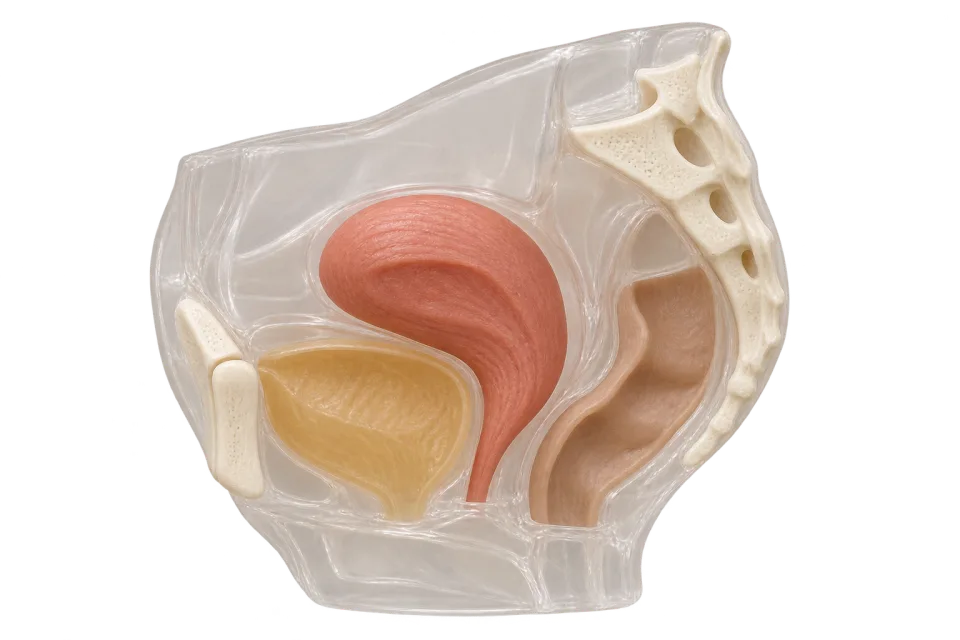
The picture shows a bladder, uterus and rectum close together. Pain from different organs can be felt in a similar place.
Mention timing around periods, urination or bowel movements.
PELVIS / PATIENT GUIDE
Pelvic pain can come from organs, muscles or nerves. Learn what patterns to notice, when to get help and what to bring to an assessment.
Article credits · Clinical review pending
See what sits close togetherExplore pelvic organs, the muscle floor and nearby nerve routes.
Describe the patternNotice timing, posture and changes with periods, bladder or bowel activity.
Know when to actUse the warning signs for changes that need prompt or emergency assessment.
01Anatomy / guided comparison
The bladder, bowel, pelvic floor and nerves share a small space. This model uses anatomy with a uterus. Bladder, muscle and nerve symptoms can occur across different pelvic anatomies.
Loading illustration…
01 / Organs
The picture shows a bladder, uterus and rectum close together. Pain from different organs can be felt in a similar place.
Mention timing around periods, urination or bowel movements.
Loading illustration…
02 / Muscle floor
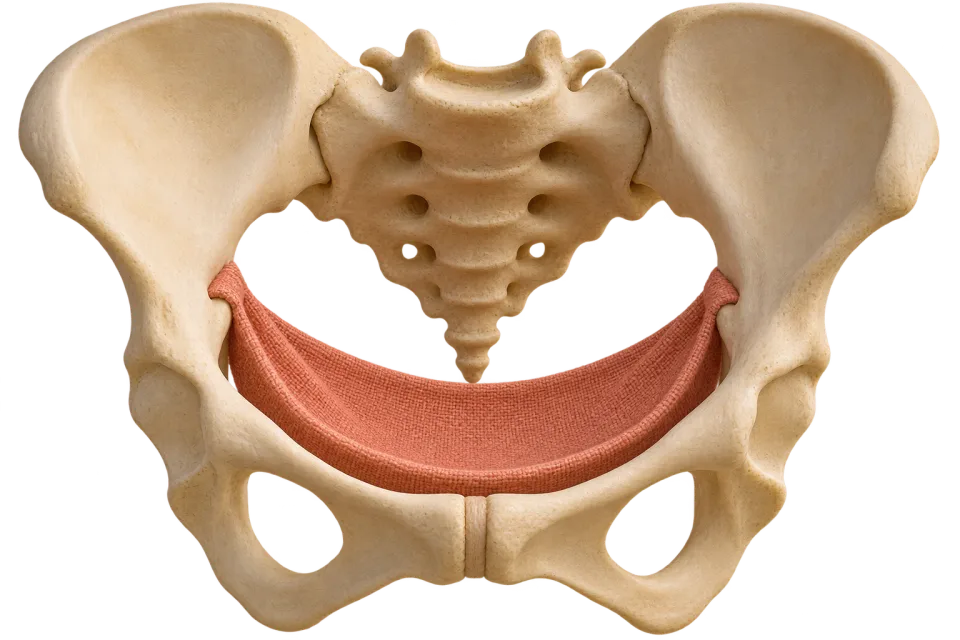
The pelvic floor is a layer of muscle that supports the organs. Where the muscles feel tender or struggle to relax can guide an assessment.
Mention how sitting, exercise or sex changes symptoms.
Loading illustration…
03 / Nerves
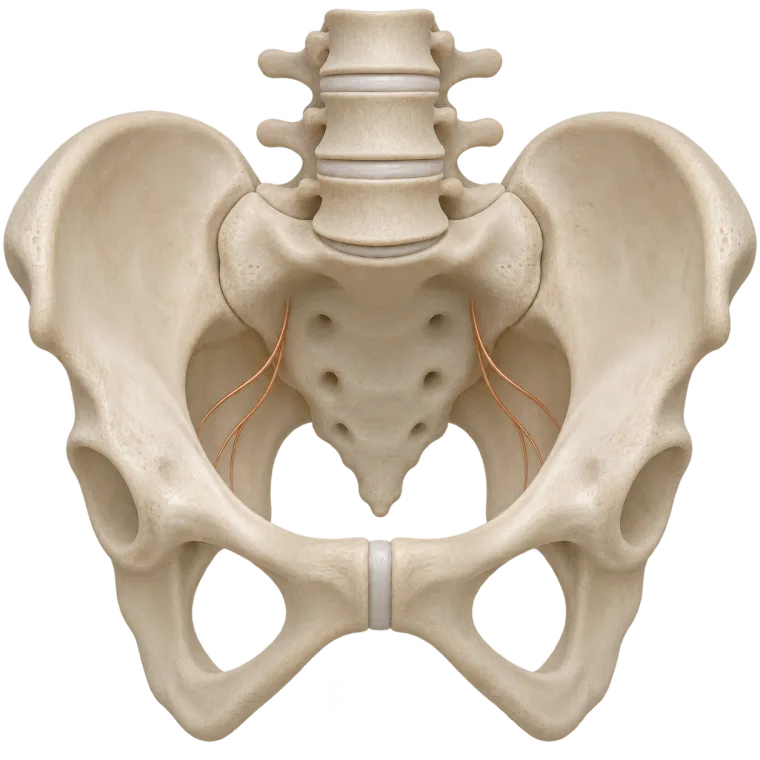
Pelvic nerves carry signals to and from the spinal cord. A clinician may also assess the back and hips when the pattern suggests a link.
Describe where pain travels and any burning or tingling.
02Symptoms / the pattern matters
Note when the pain began, what was happening and what made it better or worse. Similar patterns can have different causes, and several can coexist.
01 / Periods and bleeding
Describe whether pain starts before bleeding, continues between periods or comes with heavier bleeding. Endometriosis can cause recurring pain. Adenomyosis, which affects the muscle wall of the uterus, can also cause heavy or painful periods.
NICE NG73 · Endometriosis recommendationsNHS · AdenomyosisA question for your visitCould my bleeding and pain pattern guide a gynaecology assessment?
02 / Bladder and bowel
Mention changes as the bladder fills or after you urinate. Tell your clinician about burning, urgency, pain with bowel movements or changes in stool. Infections and other conditions can cause overlapping symptoms.
NHS · Pelvic pain and warning signsEAU · Chronic pelvic pain assessmentA question for your visitWhich bladder or bowel changes should I track?
03 / Sitting and movement
Note whether sitting, walking, exercise or sex changes the pain. Tell the clinician about burning, tingling, back or hip symptoms and previous pelvic surgery. These details guide the exam.
EAU · Chronic pelvic pain assessmentA question for your visitWould examining my pelvic floor, hips, back or nerves help?
03Warning signs / choose the right help
Pelvic pain can change quickly. Use these warning signs even if you have had pelvic pain before.
Or go to the nearest emergency department. Arrange help getting there.
For routine clinic enquiries
Request an appointment04Assessment / questions before tests
The first step is to understand how the pain behaves and which other symptoms travel with it. Your clinician can explain the reason for each exam or test.
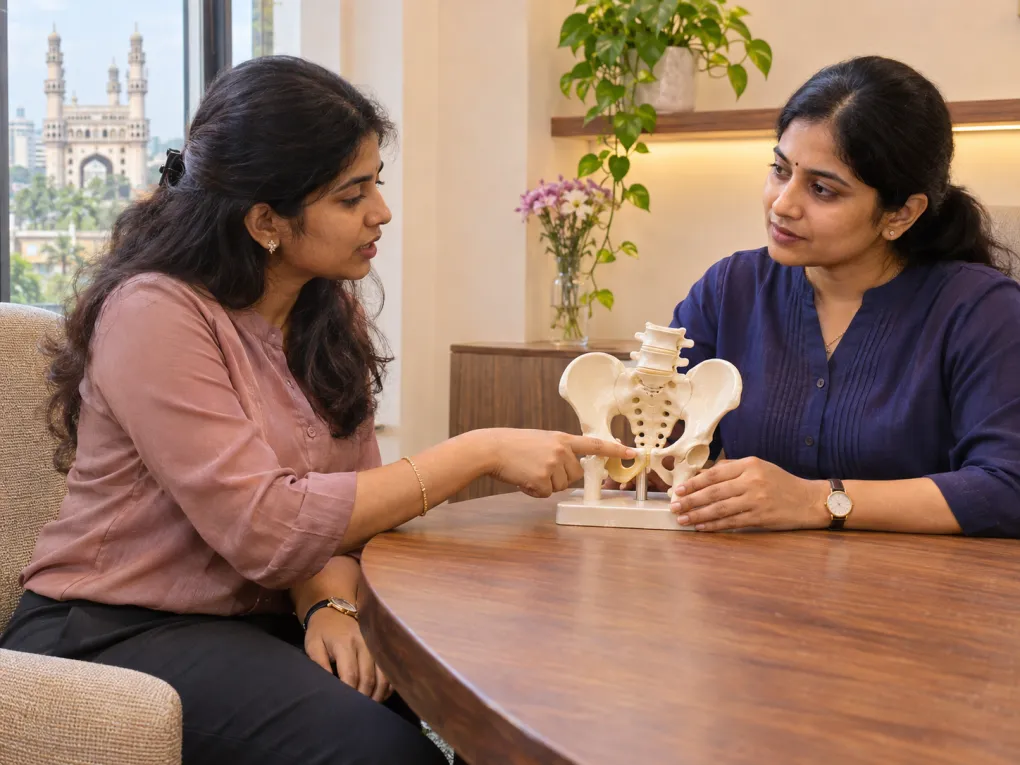
Describe the location, duration and effect on daily activities. Mention periods, pregnancy possibility, urination, bowel changes, sex, past surgery and prior treatments where relevant.
Depending on your symptoms, a clinician may assess your abdomen, back, hips or pelvic muscles. Before an intimate exam, ask what it involves, why it is being suggested and about a chaperone. You can ask to pause or stop.
What can this exam tell us, and what are my choices?
NICE NG73 · Endometriosis recommendationsEAU · Chronic pelvic pain assessmentA pregnancy test, urine test or pelvic ultrasound may be useful for different questions. When endometriosis is suspected, a normal ultrasound leaves that possibility open. Persistent symptoms may still warrant referral.
If the test is normal and pain persists, what happens next?
NICE NG73 · Endometriosis recommendationsRCOG · Pain or bleeding in early pregnancyEAU · Chronic pelvic pain assessment05Care / options and limits
Care usually starts with the cause or pattern found on assessment and the activities you want to get back to. A plan may involve more than one clinician.
01 / Care for the cause
Endometriosis and adenomyosis may need their own gynaecology plans. Urinary, bowel, hip and back symptoms may need different care. If pregnancy is a goal, discuss it early because it changes the suitability of some options.
NICE NG73 · Endometriosis recommendationsNHS · AdenomyosisEAU · Chronic pelvic pain assessmentA question for your visitWhich finding is this care meant to address?
02 / Pelvic physiotherapy
A specialist pelvic physiotherapist can assess whether relaxation, coordination, graded movement or strengthening fits. A muscle that struggles to relax may need a different approach from one that needs strengthening.
EAU · Chronic pelvic pain managementFitzGerald and colleagues · Pelvic physiotherapy trial, 2012A question for your visitHow would we tell if relaxation or strengthening fits my symptoms?
03 / Support daily activities
Pain education, rehabilitation and support for sleep or distress may be part of care. The team can help you agree on a realistic activity goal and review whether the plan makes daily life easier.
EAU · Chronic pelvic pain managementACOG · Chronic pelvic pain patient guideA question for your visitCan we choose one daily activity to measure at follow-up?
04 / Specialist procedures
A specialist may consider a pudendal nerve block for carefully assessed symptoms. Ask what it would add to a broader plan, the risks and alternatives, how long benefit might last and when the team would review it. Evidence for some invasive procedures in chronic non-cancer pain remains limited.
EAU · Chronic pelvic pain managementA question for your visitWhat result would change my treatment plan?
06Evidence / shared decisions
Guidelines and research studies answer different questions. Look at who was studied, how improvement was measured and what remains uncertain.
01 / Endometriosis guidance
The NICE guideline recommends a transvaginal scan for suspected endometriosis, or an abdominal scan if the internal scan is unsuitable or declined. Referral may still be appropriate if symptoms continue, recur or disrupt daily life.
What would make you refer me even after a normal scan?
02 / Pelvic therapy study
Among 81 women with painful bladder syndrome and pelvic-floor tenderness, 59% reported moderate or marked overall improvement with targeted manual therapy versus 26% with general massage at 12 weeks. Long-term benefit is uncertain.
Do my symptoms and exam match the study population?
03 / Procedure limits
A block may help clarify a finding or temporarily ease pain in selected cases. EAU guidance notes limited evidence for several invasive procedures in chronic non-cancer pain. Evidence for stimulation varies by condition and technique.
Which evidence matches the diagnosis and procedure we are discussing?
07Daily life / prepare for the visit
Record one or two clear episodes and an activity you want help with. Use the details that apply to you. Share sensitive information directly with your clinician.

Fictional visit notes
08Questions / find a starting point
Get emergency help for severe or worsening pelvic pain, or if it comes with heavy vaginal bleeding, fainting, shortness of breath or shoulder-tip pain. Sudden severe testicular pain also needs emergency care. Tell the emergency team if pregnancy is possible.
Yes. Causes can involve the bowel, bladder, muscles, nerves or reproductive organs. Which causes are most likely depends on your anatomy, health history and symptoms.
Yes. A normal scan can miss some endometriosis. Ongoing symptoms or changes that affect daily life can still warrant specialist assessment.
It can. In adenomyosis, tissue like the lining of the uterus is found in its muscle wall. Other conditions can cause similar symptoms. A clinician can advise how to investigate your pattern.
Ask a pelvic-health physiotherapist which approach fits. Some people need help relaxing or coordinating the muscles. Others may benefit from strengthening.
Bring what you noticed about timing, location, periods if relevant, urination, bowel habits and activities. List previous surgeries, tests and treatments. Share one concern you want to discuss.
09Sources / editorial accountability
This guide brings together the clinic’s original educational material and separately linked guidance.
Pelvic Pain · Published by IBAP Clinics
IBAP Clinics’ original article credits Dr Vijay Bhaskar Bandikatla and focuses on chronic pelvic pain in women. The archive retains the clinic’s wording, figures, interventional descriptions and references. This adaptation adds a broader symptom guide with separately linked clinical sources.
Go to the original article archiveAdapted for IBAP Clinics with AI assistance from OpenAI Codex.
The adaptation reorganises the original article for patients and adds educational illustrations, examples and separately linked clinical guidance.

Clinic physician profile
Pain physician and founder, IBAP Clinics
Read the physician’s profileClinical review pendingClinician review of the adapted copy and illustrations is awaiting confirmation.
Editorial update
Common causes across different pelvic anatomies and symptoms that need prompt or emergency assessment.
When to seek immediate help and what an early pregnancy assessment may involve.
Sudden severe pain and ovarian complications that may require emergency evaluation.
Emergency guidance for sudden severe pain and signs of testicular torsion.
Symptoms, ultrasound, referral and shared treatment decisions, including the 2024 diagnostic updates.
Heavy or painful periods and assessment of symptoms related to the muscular wall of the uterus.
History, examination and investigations tailored to the person and the suspected cause.
Combined care, specialist physiotherapy and limits of evidence for selected pain procedures.
Evaluation of chronic pelvic pain and treatment options discussed with a multidisciplinary team.
A randomised trial in 81 women with painful bladder syndrome and pelvic-floor tenderness.
This archive preserves the clinic’s source article, including its tables and references. It may contain earlier estimates, terminology and treatment claims. The patient guide above presents the current reading and decision-making context with separately linked guidance.
Original article destinationEducational content for a clinical conversation. Illustrations simplify anatomy. Original patient stories describe individual experiences.