Helpline :
9807 55 6789
-
Call Us Now: 9807 55 6789Call Us Now: 9807 55 6789
Targeted, fluoroscopy-guided injections to calm inflamed spinal nerves — without surgery
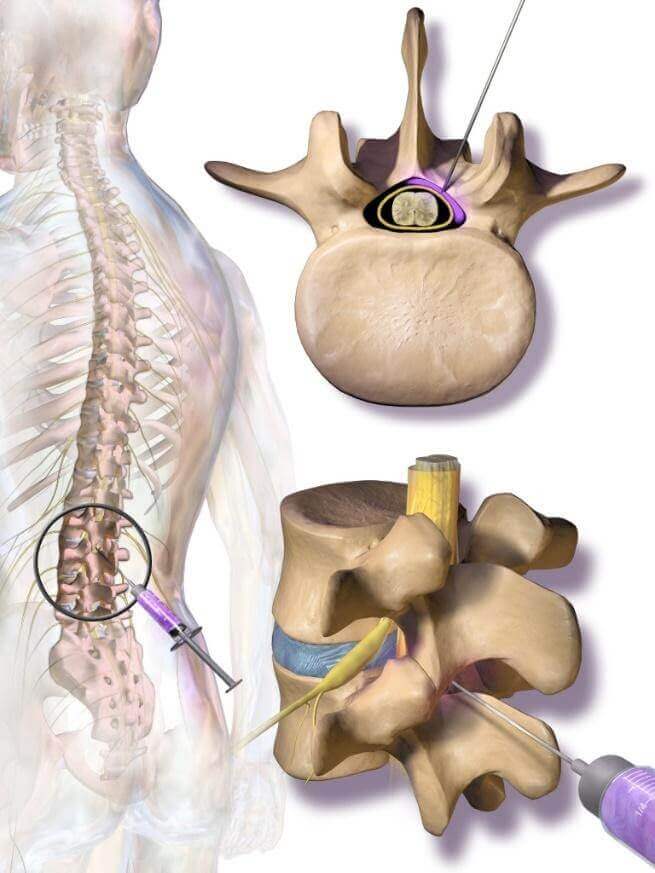
An epidural steroid injection — or ESI — is a precisely targeted injection of anti-inflammatory medication into the epidural space. That is the narrow potential space that surrounds the spinal cord and the nerve roots branching off it. Using a fine needle guided by live X-ray imaging, the aim is to calm the inflammation around irritated nerve tissue, reduce the chemical soup of pain mediators that a damaged disc releases, and gently create more room for the compressed nerve.
Think of an inflamed nerve root the way you might think of a swollen ankle after a bad pothole encounter on the roads around Banjara Hills — the swelling itself causes much of the pain and disability, not just the original injury. An ESI, in that sense, is targeted "local firefighting." It does not rebuild the disc, but it turns down the fire enough for you to heal, move, and eventually strengthen.
In my practice at IBAP Clinics, these are performed as day-care ambulatory procedures. Most patients are assessed, treated, monitored, and back home within three to four hours. The injection itself rarely takes more than thirty minutes.
Fig 1. The five main epidural injection approaches and the spinal levels they target — all performed under fluoroscopic X-ray guidance at IBAP Clinics.
Epidural steroid injections are used for a range of nerve-related spinal conditions. Internally, these link to our condition hub pages:
In fifteen-plus years of treating patients in both the UK and Hyderabad, I have noticed something particular about the Indian experience of back and leg pain. The suffering is real, it is often severe — and yet it is remarkably easy to dismiss. A software engineer in HITEC City who spends ten hours hunched over a screen, then fights through potholes on a two-hour commute each way, then sleeps on a mattress that gave up its support years ago — that person's spine is under extraordinary load. When they finally come to me, they are often told by someone, somewhere: "It is just stress," or "It will pass." It usually does not just pass. And ignoring pain does not make it smaller; it makes the person smaller. The goal of an epidural steroid injection is not to mask pain — it is to restore enough comfort that the patient can begin to rebuild their body and their life.
There is a great deal of confusion in India about this, and I want to address it clearly. When people hear "epidural," they often think of labour epidurals — the ones administered during childbirth to produce dense numbness, or surgical epidurals used in orthopaedic theatres. Those are fundamentally different animals from what we do in a pain clinic.
A labour or surgical epidural delivers large volumes of concentrated local anaesthetic to numb everything — that is the whole point. For chronic pain management, that approach is not appropriate. Routine anaesthetic epidurals purely for numbness are not advised for pain procedures. What we use instead is a small, targeted volume of medication — primarily anti-inflammatory steroid, combined with a modest amount of local anaesthetic and other agents — delivered under real-time X-ray guidance, to the precise location where the nerve is being irritated.
The goal of a pain-procedure epidural is selective anti-inflammation — not wholesale numbness. Motor function is preserved, you can walk shortly after, and the medication targets the root of the problem rather than temporarily switching off all sensation. This precision is what makes fluoroscopic guidance non-negotiable.
Choosing the right approach is like choosing the right route into a traffic-jammed city — different entry points reach different destinations. The choice depends on your MRI findings, your symptoms, and the anatomy of your spine.
Via the sacral hiatus at the base of the spine. Excellent reach across multiple lower lumbar and sacral nerve roots. Especially useful in multi-level disc disease, spinal stenosis, and post-surgical scarring where the epidural space may be disrupted higher up.
Needle introduced between the bony laminae in the lower back. Provides good spread across several lumbar nerve roots. Often the first-choice approach for diffuse lower-back and bilateral leg symptoms.
Highly targeted — the needle passes through the neural foramen directly alongside one specific nerve root. The approach of choice when MRI shows a single-level disc prolapse pressing on one identifiable nerve. Maximum precision, minimum medication volume.
For neck, shoulder, and arm pain arising from cervical disc disease or foraminal stenosis. Performed with careful dosing and imaging because of proximity to the cervical cord. Highly effective when indicated, but requires specialist expertise.
Less common, but indicated for mid-back, chest-wall, or abdominal belt-like pain arising from thoracic disc disease or nerve root irritation. Requires particular attention to imaging and positioning given the curvature of the thoracic spine.
This question comes up regularly, and I understand why — ultrasound has become very visible in pain medicine, and rightly so for many peripheral procedures. But for spinal epidural injections, the evidence is clear and the medicolegal standard is equally so: fluoroscopy with contrast confirmation is the primary imaging modality.
Fluoroscopy provides real-time X-ray visualisation. This means I can see exactly where the needle tip is positioned within the bony architecture of the spine, inject a small amount of contrast dye to confirm that medication will spread into the correct epidural compartment rather than into a blood vessel or soft tissue, and document the procedure for the medical record. There is no equivalent surrogate for this in spinal injections.
Ultrasound is extremely useful as an adjunct — for visualising soft-tissue planes, planning needle trajectory, and reducing radiation dose — and is well-established for peripheral nerve and joint injections. For deep spinal structures, however, it cannot provide the bony landmark confirmation and contrast spread documentation that fluoroscopy affords. At IBAP Clinics, every spinal epidural injection is performed under fluoroscopic guidance as standard.
| Feature | Fluoroscopy (X-ray) | Ultrasound |
|---|---|---|
| Bony landmark visualisation | Excellent | Limited in deep spine |
| Contrast spread confirmation | Yes — essential safety step | Not applicable |
| Medicolegal standard for spine ESI | Gold standard | Not yet established |
| Soft-tissue visualisation | Limited | Excellent |
| Radiation exposure | Small dose (minimised with technique) | None |
| Best use at IBAP Clinics | Primary guidance for all spinal ESI | Adjunct · peripheral nerve blocks |
This is one of the areas where a pain-specialist epidural differs most meaningfully from a simple anaesthetic one. The medication cocktail is not one-size-fits-all; it is composed based on your specific situation, the spinal level being targeted, and your medical history.
Triamcinolone, methylprednisolone — longer-lasting local effect. Used with strict safety protocols; generally avoided in cervical transforaminal due to particle emboli risk.
Dexamethasone — preferred near delicate cervical and thoracic vessels. Slightly shorter duration but an excellent safety profile in high-risk anatomical locations.
Lignocaine or bupivacaine in small amounts. Provides immediate relief and reduces nerve irritation during the procedure itself. The analgesic effect lasts hours; the steroid takes over thereafter.
Normal saline mechanically separates adhesions, opens restricted spaces, and improves medication spread. Particularly useful in post-surgical cases where the epidural space may be fibrosed.
An enzyme that breaks down hyaluronic acid in scar tissue. Helps penetrate dense epidural fibrosis — a practical game-changer for failed back surgery patients where conventional spread is blocked.
| Property | Particulate (e.g., triamcinolone) | Non-Particulate (e.g., dexamethasone) |
|---|---|---|
| Duration of effect | Longer (weeks to months typically) | Slightly shorter but still clinically useful |
| Particle size risk | Relevant — emboli risk if intra-arterial | No particle risk — soluble |
| Preferred in cervical / thoracic transforaminal | Used with caution only | Preferred choice |
| Preferred in caudal / lumbar interlaminar | Often used — strong evidence base | Also appropriate |
Not everyone with back pain needs an epidural injection, and I want to be clear about that. Many patients do very well with physiotherapy, medication optimisation, and lifestyle modification. But if you are the person who has tried all of this conscientiously — done the exercises, taken the medication, seen the physio — and you still cannot sleep through the night because your leg is on fire, then an ESI is very much worth discussing.
You may be a good candidate if:
The following may require a different approach or more careful planning — these decisions are always made individually:
Your pain consultant will review your MRI, clinical history, and current medications. Blood thinners and certain antiplatelet drugs may need adjustment several days in advance following our standard protocol. You will sign a detailed informed consent form. Fasting may be required for a short period if sedation is planned — your team will advise you specifically.
Most lumbar and caudal injections are done with you lying face down on the X-ray table. Cervical injections are done lying on your side or sitting, depending on the approach. The skin is cleaned thoroughly with antiseptic solution. A small amount of local anaesthetic numbs the skin — the initial sting of this is the most uncomfortable part for many patients.
Under live X-ray guidance, a fine needle is advanced to the target epidural space. Contrast dye is injected to confirm correct placement — watching the dye spread in the correct pattern tells us the needle is exactly where it needs to be. This is the step that makes fluoroscopy non-negotiable: we are not estimating, we are seeing.
The steroid mixture — along with local anaesthetic, saline, and hyaluronidase if needed — is slowly injected. You may feel a sensation of pressure or warmth. The needle is removed and a small dressing applied. The procedure itself takes fifteen to thirty minutes.
You are monitored for thirty to sixty minutes in the recovery area. Your vital signs are checked. You may feel some temporary heaviness or numbness in the legs or arms from the local anaesthetic — this is expected and passes within a few hours. Most patients go home the same day with written discharge instructions and a physiotherapy plan.
The vast majority of patients tolerate epidural steroid injections extremely well. Serious complications are genuinely rare when the procedure is performed by a trained pain specialist using strict imaging guidance and sterile technique. I say this not to dismiss the risks — I believe in full informed consent — but to contextualise them accurately, because excessive focus on rare complications causes people to forgo treatments that could meaningfully change their lives.
Common, short-term effects that most patients experience or may notice:
Rare but important risks — discussed fully during consent — include: infection, bleeding, nerve injury, allergic reaction to contrast or medications, and very rare vascular events, particularly in cervical transforaminal procedures. These are uncommon when strict protocols are followed, but they are real, and I want every patient to understand them before proceeding.
The injection opens a window of opportunity. What you do with that window matters enormously. I tell every patient the same thing: the injection can reduce your pain enough to move, but it is the movement that provides the lasting benefit. Rehabilitation is not optional — it is the second half of the treatment.
| Phase | Timeframe | Focus | Key Activities |
|---|---|---|---|
| Phase 0 | Days 1–2 | Rest and recovery | Rest, cold packs, simple oral analgesia, avoid all new exercise |
| Phase 1 | Days 3–21 | Gentle mobilisation | Flat-surface walking (increasing distance), gentle stretching, pain-free range-of-motion, posture education, isometric core activation, ergonomics review |
| Phase 2 | Weeks 3–6 | Progressive strengthening | Structured core strengthening, hip and shoulder-girdle work, supervised weight training with spine-safe technique, progressive load increase |
| Phase 3 | Week 6 onwards | Conditioning and function | Agility training, balance and proprioception work, endurance activities (swimming, cycling, brisk walking), sport-specific drills, return-to-work conditioning |
For the IT professional who wants to return to the gym, the housewife managing school runs and kitchen duties, or the teenager whose back pain is affecting exam preparation — the phases above apply in principle to all of you, adapted to your goals and starting fitness level. Progress is not linear; some days are harder than others. The direction, though, should always be forward.
Your prescribed neuropathic agents, muscle relaxants, and analgesics should be continued as advised. Your pain consultant will review and taper these over time based on your response to the injection and your rehabilitation progress — do not adjust or stop medications independently.
Mild soreness and a transient increase in pain for one to two days after the procedure is entirely expected. The following, however, require prompt medical attention:
Many patients notice improvement within 24–72 hours, largely from the local anaesthetic component providing early relief and the steroid beginning its anti-inflammatory work. For others, maximum benefit arrives over one to two weeks as the steroid takes full effect. Some patients may not experience significant relief from a single injection and may need a repeat injection or alternative approach — realistic expectation-setting is something I prioritise at the initial consultation.
A labour or anaesthetic epidural delivers a large volume of concentrated local anaesthetic to produce dense numbness — that is its purpose for surgery or childbirth. A pain-specialist epidural is a much smaller, precisely targeted injection of anti-inflammatory medication under fluoroscopic X-ray guidance. It is designed to reduce nerve inflammation, not numb everything. Motor function is preserved, allowing you to mobilise shortly after. The two are fundamentally different in purpose, volume, technique, and outcome.
Fluoroscopy with contrast confirmation is the medicolegal gold standard for spinal epidural injections, and we use it for every procedure at IBAP Clinics. It allows us to see bony anatomy in real time, confirm correct needle placement with contrast dye, and document the procedure. Ultrasound has excellent applications in peripheral nerve and joint injections but cannot provide the same depth of visualisation or the contrast documentation that fluoroscopy affords for deep spinal targets. The two are complementary tools, not interchangeable ones for this specific procedure.
Most clinical guidelines recommend a limit on steroid-containing injections per spinal region per year, primarily to manage cumulative steroid exposure and its effects on blood sugar, bone density, and adrenal function. The exact number depends on your response, your medical history, the steroid used, and the spinal level. Your pain consultant will plan this individually and space injections appropriately. Between injections, the focus is always on maximising rehabilitation to extend the benefit of each intervention.
An epidural steroid injection addresses the inflammatory environment around the irritated nerve — it is not a disc repair procedure. It does not rebuild or rehydrate a degenerated disc. However, by substantially reducing nerve inflammation and pain, it creates the conditions in which physiotherapy-led rehabilitation becomes possible. Many patients find that consistent strengthening after an ESI dramatically reduces their pain in the long term and, in selected cases, allows them to avoid or delay surgery. The injection and the rehabilitation are both essential parts of the plan.
The initial skin numbing injection is typically the most uncomfortable moment — a brief sting. As the needle advances toward the epidural space, most patients feel a sensation of pressure rather than sharp pain. If local anaesthetic is working well, discomfort is minimal. A small number of patients feel a transient ache or tingling as the medication spreads, which settles quickly. The overwhelming majority of patients describe the procedure as manageable and are surprised that it was more comfortable than they anticipated. We use gentle technique, and patient comfort is something we actively manage throughout.
Yes — please arrange for a responsible adult to accompany you and take you home, particularly if sedation is planned or you live alone. Even without sedation, your reflexes and concentration may be slightly reduced for a few hours from the local anaesthetic component. Plan to be with us for approximately three to four hours in total, including pre-procedure assessment, the procedure itself (fifteen to thirty minutes), and post-procedure monitoring. You will leave with written instructions, an emergency contact number, and a physiotherapy referral if not already in place.
Book a consultation with Dr Vijay Bhaskar Bandikatla at IBAP Clinics, Hyderabad. We will review your MRI, assess your symptoms, and create a personalised pain management plan — surgical or non-surgical.
2nd Floor, 284/A, Road No. 12,
Above IDFC First Bank, near Omega Hospitals,
MLA Colony, Banjara Hills,
Hyderabad, Telangana 500034
Hours: Mon–Sat 9:00 am – 7:00 pm
Sun: By prior appointment
Sy No. 2, 4th Floor, Plot No. 200,
Beside South India Shopping Mall,
Opp. Fortune Heights, Mythri Nagar,
Madeenaguda, Hyderabad, Telangana 500049
Hours: Mon–Sat 9:00 am – 7:00 pm
Sun: By prior appointment
This article is intended for general information and patient education only. It does not constitute medical advice, replace a face-to-face consultation, or substitute for a physical examination and personalised assessment by a qualified healthcare professional. Every patient's situation is unique, and treatment decisions should always be made in the context of individual clinical history, imaging, and risk factors. If you are experiencing severe, worsening, or new neurological symptoms — including weakness, loss of bladder or bowel control, or rapidly increasing pain — please seek medical attention promptly. Indo British Advanced Pain Clinics · Vijay Advanced Pain Clinics Pvt. Ltd. · Hyderabad, India.
EXCELLENTTrustindex verifies that the original source of the review is Google. Good pain relief with treatmentPosted on GoogleTrustindex verifies that the original source of the review is Google. Best for pain reliefPosted on GoogleTrustindex verifies that the original source of the review is Google. बहुत अच्छा लगा हमें ये ट्रिटमेंट करा के अच्छे डॉक्टर और अच्छे स्टाफ हैं और काम पैसे में अच्छा अच्छा ट्रिटमेंट होता हैPosted on GoogleTrustindex verifies that the original source of the review is Google. Very nice, good and helpful staf, overall good experiencePosted on GoogleTrustindex verifies that the original source of the review is Google. Very good doctors and good tritment Thank you doctorPosted on GoogleTrustindex verifies that the original source of the review is Google. One of the best clinic for the relief of back painPosted on GoogleTrustindex verifies that the original source of the review is Google. Very good treatment indo british clinic for every pain reliefPosted on GoogleTrustindex verifies that the original source of the review is Google. I have visited indo british pain clinic this is superb clinic for pain relief that's why I have given 5 start rating to this clinic ...Posted on GoogleTrustindex verifies that the original source of the review is Google. My name is Raja Sekhar Reddy Tummuri from kakinada city My father was suffering nervous pain from last 3 years … I have decided to join with this op … Now everything fine after treatment done from DR. vijay sir … Wonderful service received from INDO British advanced pain clinic Hospitals in Hyderabad @ Banjara Hills road no 12.. Each and every staff response , concern , support & everything it’s too good Thank you so much … Special thanks to Mr. DR. Vijay bhaskar Bandi Katla …👏🏻👏🏻👏🏻👏🏻🙏🙏Verified by TrustindexTrustindex verified badge is the Universal Symbol of Trust. Only the greatest companies can get the verified badge who has a review score above 4.5, based on customer reviews over the past 12 months. Read more

Founder & Interventional Pain Specialist — IBAP Clinics, Hyderabad
MBBS · DA · FRCA (London) · FFPMRCA (Pain Medicine, UK) · MBA (Hospital Management)
CCT (Anaesthesia & Pain Medicine, UK) · Advanced Pain Training (Cambridge University Hospitals)
DDSMed Sports Medicine (Chicago) · Fellowship in Neuromodulation & Advanced Pain (London)
Dr Vijay brings over 15 years of postgraduate training across the United Kingdom’s most prestigious institutions — including the Royal College of Anaesthetists, Cambridge University Hospitals, and a dedicated neuromodulation fellowship in London — to his practice in Hyderabad. He is one of very few clinicians in India trained to the level of FFPMRCA — the Faculty of Pain Medicine of the Royal College of Anaesthetists — the highest qualification in pain medicine available in the UK.
His specialist expertise spans the full spectrum of knee pain management: from precision PRP and BMAC injections to cooled radiofrequency genicular nerve ablation, intrathecal drug delivery, and spinal cord stimulation for refractory pain states. He manages cases ranging from the weekend cricketer’s torn meniscus to the elderly cardiac patient with end-stage OA who has been told there are no further options.
Home » Procedures » Epidural Spinal Injections
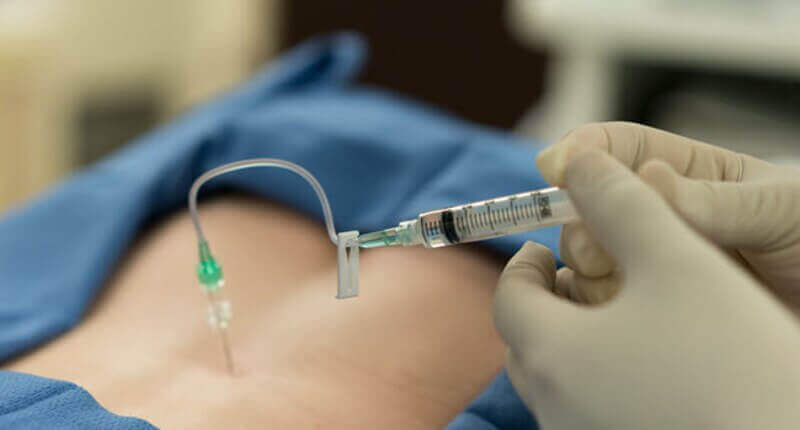
In our pain clinic, we provide pain relief so you can regain your identity.
Banjara Hills
2nd Floor, 284/A, Road No. 12, above IDFC First Bank, near Omega hospitals, MLA Colony, Banjara Hills, Hyderabad, Telangana 500034.

Indo-British Advanced Pain Clinic © 2026. All Rights Reserved. Designed & Developed By Adroit
WhatsApp us