Helpline :
9807 55 6789
-
Call Us Now: 9807 55 6789Call Us Now: 9807 55 6789
From a physician trained at Guy’s & St Thomas’ London, one of the world’s highest-volume SCS centres, and with years of implant experience as a senior consultant in Bradford — a confident, evidence-led guide to SCS for failed back surgery, CRPS and refractory angina, tailored to Indian patients.
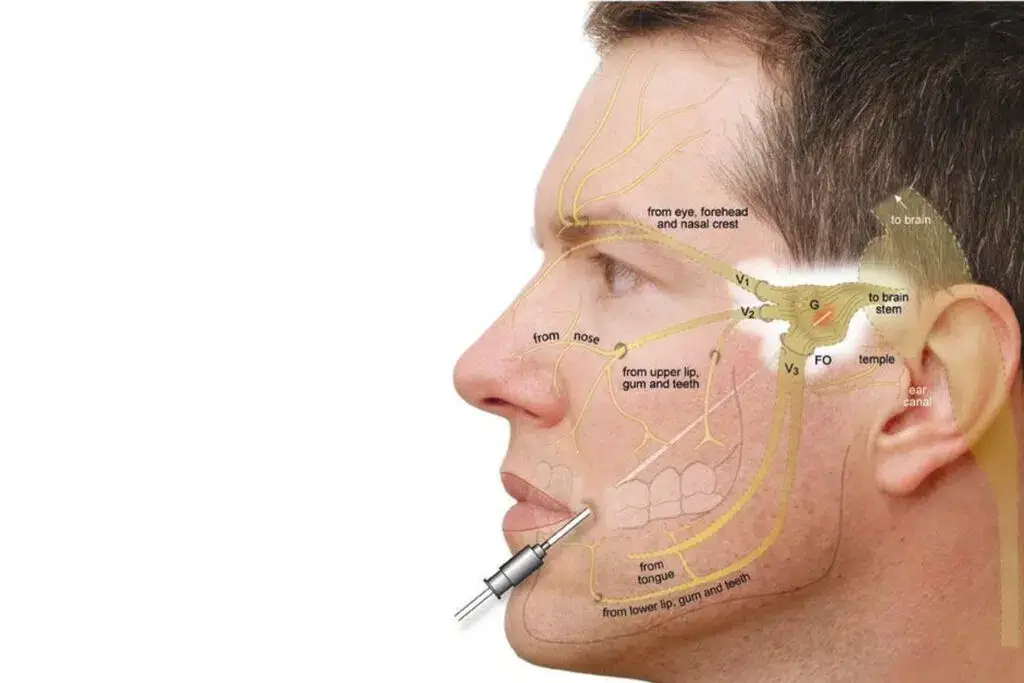
I've sat across the table from a great many patients, after two back surgeries and years of tablets, and I can say this with real confidence, built on training and hands-on numbers, not just textbooks — spinal cord stimulation works, and works well, when the right patient is chosen and the programming is done properly. During my fellowship at Guy's & St Thomas' Hospital, London, under Dr Adnan Al-Kaisy — one of the highest-volume SCS centres anywhere in the world — I saw, week after week, just how transformative this therapy can be for patients who had genuinely run out of other options. Later, as a senior consultant in Bradford, I personally implanted a considerable number of these devices, with results that consistently matched or bettered what the trials predicted. That experience is exactly what I bring to my patients here in Hyderabad — evidence-led, technically precise, and delivered with the honesty that good outcomes actually demand.
Neuromodulation is not a therapy you learn from a weekend workshop. It's built on volume, mentorship, and years of watching what works and what doesn't across hundreds of cases. My own training sits at the very top of that ladder.
I say this not to boast, but because patients considering a ₹10–20 lakh commitment deserve to know exactly whose hands and whose judgement they're trusting. This is precisely the depth of experience I bring to every SCS trial and implant at IBAP Clinics.
In plain terms, SCS is a small device, not unlike a cardiac pacemaker in concept, that sends mild electrical pulses to the spinal cord through thin leads placed in the epidural space. These pulses interrupt or modify the pain signal before it fully registers in the brain. We are not cutting anything, not removing a disc, not fusing a vertebra. We are, in a sense, re-tuning how the spinal cord processes pain information — a gate, if you like, that we learn to keep half-closed.
Randomised trials and long-term registries have shown that appropriately chosen patients get meaningful reductions in pain intensity, better function and, quite often, lower dependence on opioids compared with continuing conventional medical management alone. That word "appropriately" is doing a lot of work in that sentence, and we'll come back to it.
SCS isn't for every stiff back or the occasional sciatica twinge after a long drive to office. It's reserved for specific, often stubborn pain conditions where the reasonable conservative and interventional options have already been given a fair trial. In my clinics I see this most often in:
Across well-selected cohorts, responder rates (defined as at least fifty percent pain reduction) typically run from about fifty to eighty percent, rising further with newer waveforms. That's a solid range, and I say this to patients plainly: this is a strong, well-evidenced tool, and we select carefully so that most of my patients land well within it.
India's chronic pain burden has its own particular flavour. Long sitting hours for our IT and software colleagues, hunched over two monitors from nine in the morning sometimes till midnight during a release cycle. Commutes over roads that seem designed by someone with a grudge — potholes, speed breakers every hundred metres, the same jolt through the spine, day after day, year after year. Add to that the poor sleeping postures many of us grew up with, thin mattresses, pillows too high or too flat, sleeping half-sitting in front of the TV after a long day, and you have a population primed for chronic mechanical and neuropathic pain well before their fiftieth birthday.
And it isn't only the physical load. A software employee in Gachibowli or Hitec City is often also a parent worrying about a teenager's board exam ranks, a spouse managing an ageing parent's diabetes, and a son or daughter expected to visit the family temple on Saturday and sit through a three-hour film on Sunday — rest, such as it is, sandwiched between obligations rather than genuinely restorative. Stress doesn't stay in the mind; it sits in the shoulders, the low back, and it amplifies whatever pain circuit is already irritated. I say this to families often — the device we're discussing modifies a signal, it doesn't switch off a stressful life, and both need attention together.
Within that context, SCS offers a few genuine, specific advantages:
We should also be honest that for plain, non-specific low back pain without clear neuropathic features, some high-quality reviews have questioned sustained benefit over placebo and good conventional care. So in India, where device enthusiasm can run ahead of evidence, we hold the line on careful selection.
This word gets used loosely, so let me be precise about it. In clinical research, a patient is classed as a responder if they achieve at least a 50% reduction in their pain intensity score, usually measured on the Numeric Rating Scale (NRS), compared with their baseline pain before the procedure. But that single number was never meant to tell the whole story, and beyond pain intensity we also look closely at:
| Outcome Metric | Reported Success Rate / Improvement |
|---|---|
| Pain reduction (≥50%) | 50% – 80% of patients |
| Opioid dependency | 60% – 90% of patients reduce or stop usage |
| Return to work | ~75% of patients in certain cohorts |
| Trial-to-implant ratio | 85% – 93% (with advanced waveforms) |
| RCTs and registries in refractory angina | Significant reduction in anginal episodes, improved exercise tolerance and quality of life in patients with no further revascularisation options |
Note: individual results vary a great deal depending on how long the pain has been present before the procedure. The evidence consistently points one way — earlier intervention, before pain becomes a permanent, ingrained feature of the nervous system, leads to better long-term outcomes. This is one more reason I discourage patients from "waiting it out" for years before considering neuromodulation seriously.
SCS is strongest, by the evidence, for neuropathic pain conditions like FBSS, CRPS and refractory angina — and weakest for plain mechanical low back pain. The condition matters more than the device, and timing matters more than most patients realise.
As a clinician, I often see patients who technically fall just below that 50% responder mark, and yet are profoundly happier with their lives. Why? Because functional improvement — walking the children to school, sitting through a full working day, sleeping through the night — often outweighs the pure pain number on a chart.
| Feature | Conventional SCS | High-Frequency (10 kHz) |
|---|---|---|
| Paraesthesia | Often creates a "tingling" sensation | Paraesthesia-free (often preferred) |
| Responder rate | ~50% | ~70% – 80% |
| Back pain relief | Variable | Highly effective for refractory back pain |
| Patient preference | Variable | Generally higher, due to lack of tingling |
These numbers are more nuanced than a single row of percentages can really capture — waveform choice is only one variable among several, and I weigh it against the specific pain generator, the patient's lifestyle, and what a trial phase actually shows in real life, not just what a table predicts.
Older SCS produced a tingling or buzzing sensation, paraesthesia, over the painful area — reassuring to some patients, mildly irritating to others, particularly at night. Newer platforms have moved past this considerably.
| Waveform | Sensation | Best Suited For |
|---|---|---|
| Traditional tonic | Noticeable paraesthesia | Patients who find the tingling reassuring |
| High-frequency (10 kHz) | Paraesthesia-free | Chronic neuropathic low back and leg pain |
| Burst stimulation | Minimal to none | Sensory and affective components of pain |
| Closed-loop / ECAP-sensing | Adaptive, posture-responsive | Patients with positional variation in relief |
These are entering India slowly, mostly at select higher-budget centres, and I tell patients plainly: newer technology can improve comfort and give us more programming flexibility, it does not change the underlying principle. Modulation, not magic, whichever waveform we choose.
This is one area where the technology fits our reality rather well. A patient travelling from Warangal or Karimnagar to Hyderabad for a five-minute programming tweak loses a full day, sometimes two, plus the bus or train fare, plus a day's wages if they're daily-wage or shift-based. Remote or app-assisted adjustment — once cleared by the clinical team — genuinely reduces that burden. Device usage and battery data can be monitored from a distance too, catching problems early rather than after months of silent under-treatment. For a country where distance and traffic eat into healthcare access more than most people admit, this isn't a luxury feature, it's practical medicine.
Cost and insurance. Indian pricing is considerably lower than Western markets but still substantial — commonly ₹10–20 lakh depending on device, hospital and city. Some private policies cover neuromodulation for specific diagnoses; others quietly exclude chronic pain devices altogether. I insist on a written pre-authorisation check before any trial, because a family shocked by a rejected claim after implantation is a conversation I'd rather not have.
Undue expectations. Social media and, frankly, some marketing material frame SCS as a permanent cure for "any" back pain. It isn't. If obesity, untreated low mood, unrealistic workloads, or a complete absence of rehabilitation remain unaddressed, the device works with one hand tied behind its back.
Busy, layered lives. Our patients aren't just managing pain — tight EMIs, joint-family obligations, temple visits that are as much social duty as spiritual comfort for our older and middle-aged patients, a movie on Sunday that's the only real "switching off" some households get all week. If these stressors and triggers aren't acknowledged, even a well-programmed device sits under strain.
Follow-up inertia. Feeling better, understandably, tempts people to skip device checks and physiotherapy — "all settled now, doctor." If programming drifts from optimal over months, benefit fades quietly, and by the time someone returns, we're troubleshooting rather than fine-tuning.
| Reasonable Expectation | Not a Realistic Expectation |
|---|---|
| 40–60% average pain reduction in responders | Guaranteed complete cure of all pain, permanently |
| Fewer, less severe flare-ups | Zero future pain episodes regardless of posture or weight |
| Longer sitting, standing, walking tolerance | Solution to untreated depression or severe structural instability alone |
| Possible reduction in strong medication use, supervised | A device that never needs maintenance or reprogramming |
Like any invasive or semi-invasive procedure, there are risks worth naming plainly rather than glossing over: lead migration or fracture requiring reprogramming or revision; infection at the pocket or epidural space, occasionally needing device removal; hardware discomfort in thin patients; rare but serious complications such as epidural haematoma or neurological injury with experienced teams keeping these uncommon; and, sometimes, simply insufficient relief even after an adequate trial. Batteries need eventual replacement, and technology moves fast enough that a device fitted today may sit alongside newer platforms in a few years' time. I ask families to see this as an evolving relationship with the therapy, not a one-time fix-and-forget gadget.
Before permanent implantation, we place temporary leads connected to an external generator for several days, while the patient goes about ordinary activities — walking to the kitchen, sitting through a work call, climbing a flight of stairs. We track pain scores, function, sleep, mood, side effects. Only if a predefined improvement threshold, commonly at least fifty percent with functional gain, is reached and the patient feels genuinely comfortable, do we proceed to full implantation. In India, where this represents a serious financial and emotional commitment for most families, that test drive isn't optional politeness — it's what justifies the decision with real, lived evidence rather than a brochure promise.
I want to say something plainly here, because I feel it strongly. Understanding pain, rather than dismissing it, is not a soft add-on to treatment — it is treatment. Too many of our patients arrive carrying guilt, as though needing help for pain makes them weak; some carry the extra weight of relatives who've decided the pain is "in the mind," or worse, exaggerated for attention. None of that is fair, and none of it is medically accurate.
Research on physician communication increasingly, and consistently, shows that empathic, honest conversation improves satisfaction, improves adherence to therapy, and — this is the part that surprises people — even improves perceived pain outcomes. It isn't a nice-to-have. It's part of the mechanism.
So when I sit with a patient, I try to hold three things at once: validate that the suffering is real and physiological, not manufactured; explain the evidence in ordinary language rather than hiding behind Latin terms and acronyms; and involve the family, because a spouse or a parent who understands neuromodulation as one part of a wider care plan — alongside sleep, posture, weight, mental health — becomes an ally rather than a sceptic standing at the door.
Empathic, transparent communication is not just bedside manner — evidence links it to better adherence and better reported outcomes. It belongs in the treatment plan, not outside it.
No, not in the way people fear. The trial and the permanent implant are both done under local anaesthesia with sedation, so discomfort during the procedure is minimal, and most patients go home the same day or after one night's observation.
Costs typically fall between roughly ₹10 and ₹20 lakh, depending on the device, the hospital and the city, though the trial phase itself is considerably less expensive and lets you test benefit before committing to the full cost.
It varies a great deal by insurer and policy. Some plans do cover neuromodulation for specific diagnoses, others exclude chronic pain devices altogether, so we always recommend a written pre-authorisation check before proceeding.
Most well-selected patients see a meaningful reduction, often forty to sixty percent, along with better function and sleep — but complete elimination of all pain isn't the honest, realistic goal, and I'd rather say that upfront.
Temporary leads are placed and connected to an external generator for several days while you go about normal activities, so we can measure real benefit before deciding on the permanent device together.
Yes — failed back surgery syndrome is one of the strongest, best-evidenced indications for SCS, particularly once the structural problem itself has already been reasonably addressed surgically.
Yes. For patients with disabling chest pain despite optimal medical therapy, who are not candidates for further bypass or angioplasty, SCS is a well-established option that improves blood flow distribution to the heart muscle and reduces anginal pain — it's one of the longest-standing applications of this therapy.
Many modern systems do allow certain adjustments remotely, once cleared by your clinical team, which meaningfully reduces the need for repeated long-distance travel for routine tweaks.
Book a consultation with Dr Vijay Bhaskar Bandikatla to discuss whether you're a suitable candidate, what a trial phase would involve, and what it would realistically cost.
2nd Floor, 284/A, Road No. 12, above IDFC First Bank, near Omega Hospitals, MLA Colony, Banjara Hills, Hyderabad 500034
Sy No. 2, 4th Floor, Plot No. 200, beside South India Shopping Mall, opp. Fortune Heights, Mythri Nagar, Madeenaguda, Hyderabad 500049
Banjara Hills
2nd Floor, 284/A, Road No. 12, above IDFC First Bank, near Omega hospitals, MLA Colony, Banjara Hills, Hyderabad, Telangana 500034.

Indo-British Advanced Pain Clinic © 2026. All Rights Reserved. Designed & Developed By Adroit
WhatsApp us