Helpline :
9807 55 6789
-
Call Us Now: 9807 55 6789Call Us Now: 9807 55 6789
There is something quietly profound about the idea that the very tissue we have long dismissed — the fat we try so hard to lose — carries within it an extraordinary reservoir of healing cells. Every cubic centimetre of adipose tissue holds, on average, 500 times more mesenchymal stem cells than the same volume of bone marrow. That single fact changed regenerative medicine. And it is why, at IBAP Clinics, we have incorporated Nanofat therapy into our toolkit for joint, tendon and ligament conditions — and most meaningfully, in our work with avascular necrosis of the hip and other bones.
Let me explain what Nanofat actually is, what it contains, how it is prepared and administered — and who stands to benefit. I want to do this properly, because there is a great deal of marketing noise around "stem cell therapy" in India right now, and patients deserve honesty about what the evidence shows and where the boundaries of regulation sit.
Adipose tissue is not merely an energy store. It is a highly complex, metabolically active connective tissue that contains — in addition to fat cells (adipocytes) — a rich scaffold of supporting cells known collectively as the stromal vascular fraction (SVF). Think of adipose tissue as a city, with adipocytes as the large apartment blocks, and the SVF as the infrastructure — the plumbing, electricians, engineers and repair crews that keep the whole system alive.
Within that SVF, the cell types of greatest clinical interest are:
When fat is harvested via small-bore liposuction, the initial product is called microfat. This contains intact adipocytes, SVF cells, connective tissue and oil — and it is too viscous for fine-needle intra-articular or intradermal injection. It is suitable for larger-volume applications such as volumetric joint cushioning or fat grafting in facial aesthetics.
Nanofat is what you get when microfat is mechanically emulsified — passed repeatedly through small pores (typically 0.5–1 mm) and then filtered through a fine mesh. This process:
The result is an injectable, cell-rich biological fluid derived entirely from your own body. No culture medium. No expansion in a laboratory. No chemical additives. That distinction — mechanical separation rather than chemical or culture-based manipulation — is both biologically important and legally significant.

If MSCs are the headline act in the regenerative medicine story, pericytes are the quietly indispensable supporting cast that most clinicians still overlook. Pericytes are perivascular cells — they wrap around the walls of capillaries and small venules. For decades they were largely ignored as mere structural supports for blood vessels. Then came the work of Crisan, Péault and colleagues (2008), published in Cell Stem Cell, which demonstrated convincingly that pericytes are the native in-vivo precursors of MSCs — essentially that MSCs, as isolated in the laboratory, are in fact the tissue-culture counterpart of pericytes in the living body.
This matters enormously for Nanofat. Adipose tissue is extraordinarily vascular, and therefore extraordinarily rich in pericytes. When Nanofat is injected into a damaged joint or tendon, pericytes do several things simultaneously: they home to sites of injury via chemotactic signals, they differentiate into repair cells appropriate to the local microenvironment, they secrete anti-inflammatory cytokines (particularly IL-10, TGF-β), and they stimulate angiogenesis — the growth of new capillaries that is so essential for healing.
The entire process is performed in a single session, at our clinic, with the patient awake and comfortable. Here is a step-by-step description of what to expect.
Assessment and consent. We begin with a thorough clinical assessment — imaging review, functional scoring, and a frank conversation about what we expect regenerative therapy to achieve and what it will not. Informed consent is obtained, covering the harvest, the processing and the injection. There are no hidden steps.
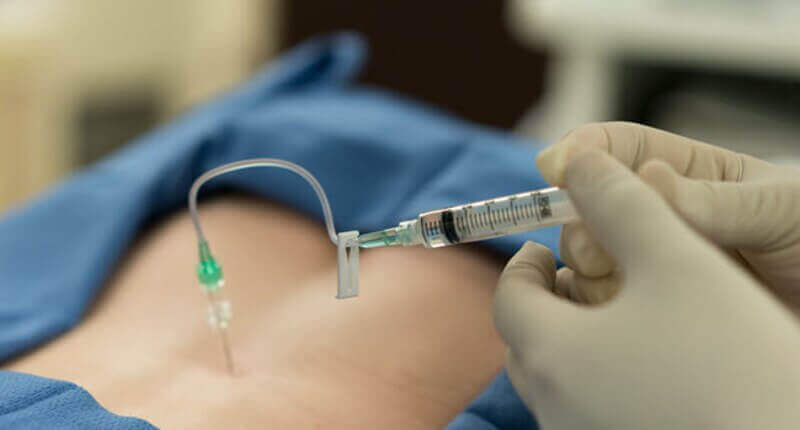
Preparation. You are positioned for the harvest, most commonly from the periumbilical abdomen. The area is cleaned and local anaesthetic (lignocaine with adrenaline in tumescent solution) is infiltrated into the subcutaneous fat. This is the only significant discomfort of the entire procedure — and it is well tolerated.
Mini-liposuction. Using a 3 mm blunt-tip cannula and gentle syringe aspiration, between 30–100 ml of fat is harvested. The volume depends on what is needed. The harvest is done with negative pressure — no electric pumps, no thermal energy — to preserve cell viability.
Bedside processing. The fat is washed to remove blood and tumescent fluid, then mechanically emulsified by passing it between two syringes through connectors of progressively smaller bore. This is repeated until the mixture is sufficiently fine, then filtered through a 500-micron mesh. The result — Nanofat — is typically ready within 20–30 minutes.
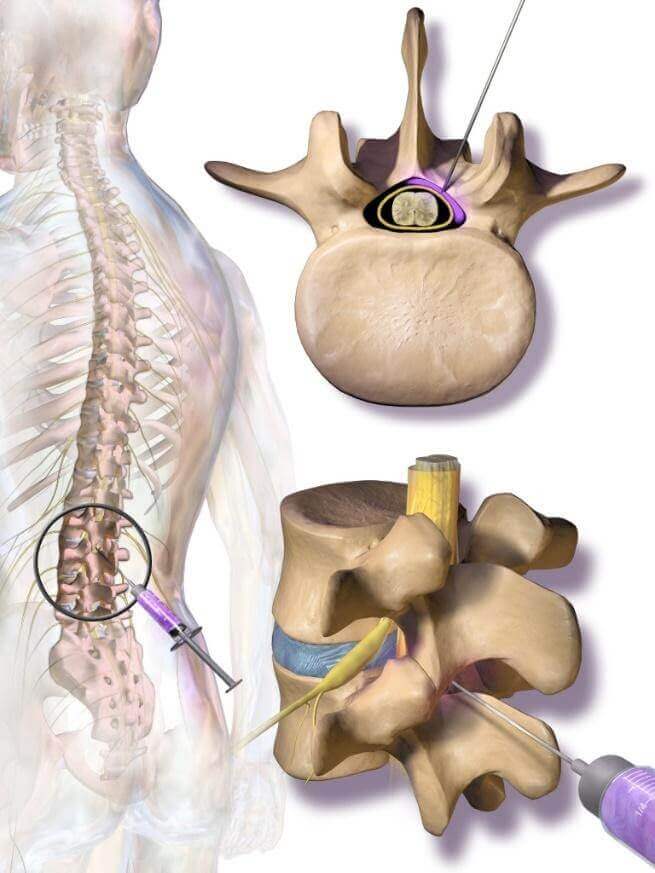
Injection under image guidance. We inject under fluoroscopic or ultrasound guidance. For intra-articular work — hip, knee, shoulder — fluoroscopy confirms needle placement in the joint space. For tendons and ligaments, dynamic ultrasound allows us to see the needle tip in real time and place the material exactly where the tissue damage is. Accuracy here is non-negotiable. Blind injections of regenerative biologics are, in my view, not acceptable clinical practice.
Recovery. The harvest site has a small dressing and is mildly sore for 2–3 days. The injected area may ache for 1–2 weeks as the biological response begins. We advise protected weight-bearing for joint procedures and physiotherapy commencing at 2–3 weeks.
I want to spend some time here because AVN is a condition that sits very close to my clinical heart. We see a significant number of AVN patients at IBAP Clinics, and what strikes me repeatedly is how late they are referred. By the time many patients arrive — having been told "only joint replacement will fix this" — we are already managing Ficat Stage III or IV, where the femoral head has collapsed. At that stage, our options are genuinely limited.
But for Stage I and Stage II AVN, the biology of regenerative medicine is a rational, scientifically supported intervention. The primary pathology in AVN is vascular — ischaemia leading to osteonecrosis. If we can restore blood supply, stimulate osteoprogenitor activity, and reduce the inflammatory cycle that accelerates collapse, we change the natural history. That is not a marketing claim. That is the mechanistic logic underpinning the combination of:
The pharmacological component is, frankly, underemphasised in most regenerative medicine discussions. At IBAP Clinics, our outcomes in AVN have been meaningfully better, I believe, because we treat the whole biology — not just inject and hope. We have had patients come to us scheduled for total hip replacement within three months, who, at twelve months following our biological cocktail protocol, have returned to near-normal function with preserved femoral head architecture on MRI.
| Condition | Evidence Level | Typical Improvement | Combine With |
|---|---|---|---|
| Avascular Necrosis (hip, knee, shoulder) — Stage I–II | Level II–III (prospective series) | 60–80% functional improvement | BMAC + PRP + pharmacological |
| Osteoarthritis (knee, hip, shoulder) — early/moderate | Level I–II (RCTs, meta-analyses) | Significant pain reduction; functional gain | PRP ± HA |
| Rotator Cuff Tendinopathy / Partial Tear | Level II–III | Good in partial tears; modest in full-thickness | PRP + physiotherapy |
| Lateral Epicondylitis / Achilles Tendinopathy | Level II | Comparable or superior to corticosteroid | PRP |
| Plantar Fasciitis (recalcitrant) | Level II–III | Moderate; useful after PRP non-response | PRP ± shockwave |
| Ligament Laxity / Partial Tears | Level III | Moderate; adjunct to rehabilitation | Physiotherapy |
| Muscle Tears / Intramuscular Fibrosis | Level III | Emerging evidence; promising in chronic tears | Physiotherapy + PRP |
| Discogenic Low Back Pain | Level III (pilot studies) | Early positive signals; not standard of care | Intradiscal PRP |
| Feature | Nanofat | PRP | BMAC | Exosomes |
|---|---|---|---|---|
| Source | Adipose tissue (fat) | Peripheral blood | Bone marrow (iliac crest) | Donor/allogenic (India: grey area) |
| Contains living MSCs | Yes — MSCs, pericytes | No | Yes — osteogenic MSCs | No (cell-derived vesicles) |
| Growth factors | Rich — VEGF, HGF, IGF-1 | High — PDGF, TGF-β, EGF | Moderate | Concentrated signalling molecules |
| Harvest discomfort | Moderate (local anaesthetic) | Minimal (venepuncture) | Moderate-high (bone marrow) | None (pre-prepared) |
| Volume of material | Moderate (3–10 ml injectable) | 3–8 ml | 5–10 ml concentrate | 1–2 ml vial |
| Legal/regulatory India | Same-day autologous: permissible | Established, permissible | Same-day autologous: permissible | Not yet regulated; exercise caution |
| Best combined with | PRP, BMAC, pharmacological | Nanofat, HA, BMAC | Nanofat, PRP | Research setting only (India) |
This is a topic I feel strongly about, because confusion in this space has harmed patients. Let me be clear about what is and is not permissible under current Indian regulation.
The CDSCO (Central Drugs Standard Control Organisation) and ICMR (Indian Council of Medical Research) have jointly issued guidelines (2019, updated 2022) governing stem cell research and therapy. The key distinction is between minimally manipulated and more-than-minimally-manipulated cells.
Nanofat — as we prepare it at IBAP Clinics — falls within the permissible category when it is: (1) autologous (from the same patient), (2) prepared and re-administered in the same surgical procedure, (3) subject to mechanical processing only (no chemical reagents, no in-vitro culture, no cryopreservation for later use), and (4) used in a homologous manner (fat-derived cells into musculoskeletal tissue — a biologically related target).
What is not permissible without approved clinical trial registration (CTRI) is: culture-expanded adipose MSCs, allogeneic (donor) stem cells, or the use of chemical agents to expand or isolate cell populations outside a licensed facility. I mention this because I have seen clinics in India offering "cultured stem cell therapy" or "exosome therapy from donor sources" without any CTRI registration — which is both legally questionable and, frankly, ethically concerning.
At IBAP Clinics, we operate within the regulatory framework. We do not offer therapies that have not cleared the appropriate legal and ethical thresholds.
I will give you an honest answer rather than a promotional one, because I think patients deserve that.
Nanofat is not a magic cure. It is a powerful adjunct to a comprehensive treatment plan. For patients with early-to-moderate joint degeneration, tendinopathy, or ligament injury who have not responded adequately to conventional therapy, the realistic expectation is:
For AVN in particular, our combination protocol has produced outcomes I find genuinely encouraging — particularly in patients who commit to the full pharmacological protocol alongside the biological injections. I want to be cautious about citing individual case outcomes, because good science demands population-level data, and we are working towards publishing our series. What I can say is that early-stage AVN, treated comprehensively, can have its natural history materially altered.
Book a regenerative medicine consultation at IBAP Clinics, Hyderabad. Dr Vijay and the team will review your imaging, explain your options honestly, and design a protocol appropriate for your condition and stage.