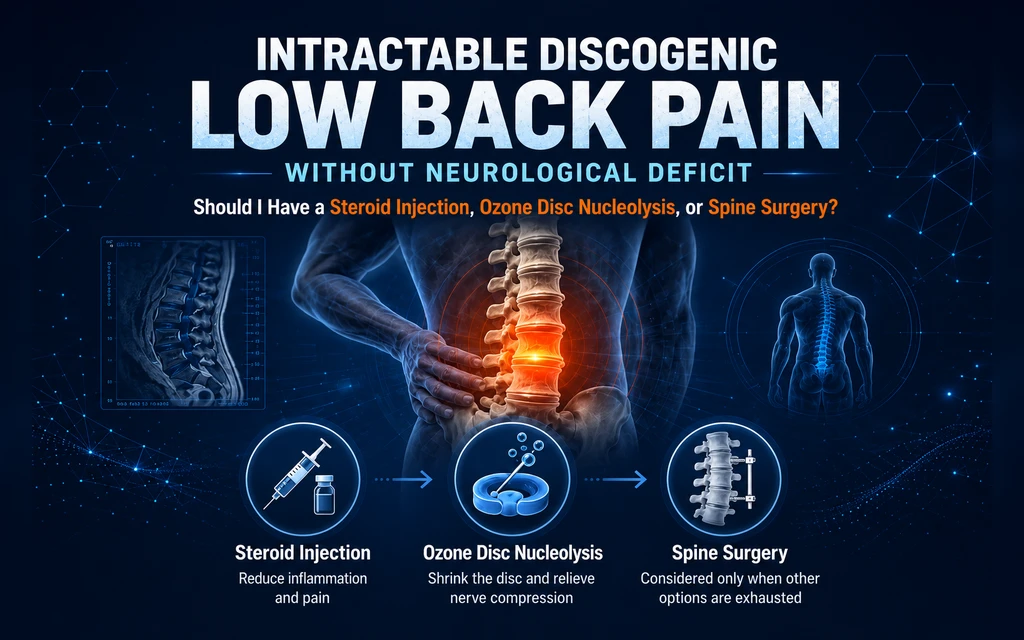
Intractable Discogenic Low Back Pain Without Neurological Deficit — Should I Have a Steroid Injection, Ozone Disc Nucleolysis, or Spine Surgery?
Home » Pelvic-Pain-Relaxation vs. Strengthening
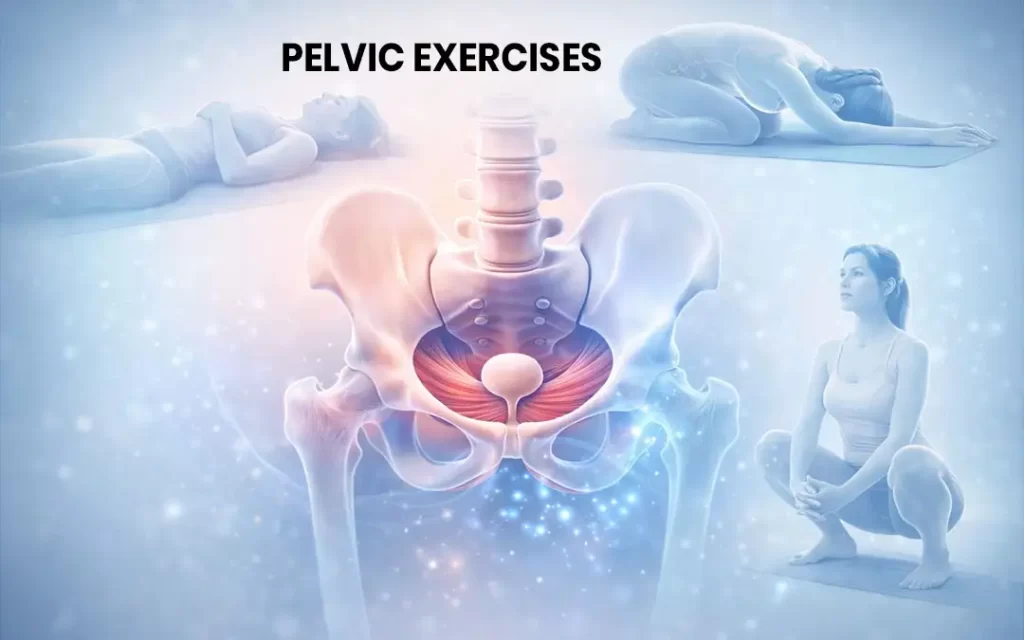
This guide is designed to help you navigate the often-confusing world of pelvic health. When you are in pain, the natural instinct is to “squeeze” or protect the area, but for chronic pelvic pain, that is often the opposite of what your body needs.
Below is a step-by-step breakdown of how to use Down-Training (Relaxation) versus Up-Training (Kegels), and how to perform the essential movements for relief.
“Summery (TL;DR):
Pelvic floor health is about balance — muscles should be strong, but also able to fully relax. Chronic pelvic pain is often caused by overly tight pelvic muscles, so relaxation exercises like diaphragmatic breathing, Child’s Pose, Happy Baby Pose, and deep squats should come before strengthening exercises. Kegels are helpful mainly for weakness, leaking, or loss of support, but doing them on an already tight pelvic floor can worsen pain. The goal is to restore normal muscle function, flexibility, and control without increasing tension. “
The pelvic floor is a muscular hammock. To function correctly, it must be a “Goldilocks” muscle: not too weak, but not too tight.
Pain Specialist Note: If you have chronic pain, start with relaxation. Doing Kegels on an already tight pelvic floor is like trying to lift weights with a muscle that is already cramping—it will likely increase your pain.
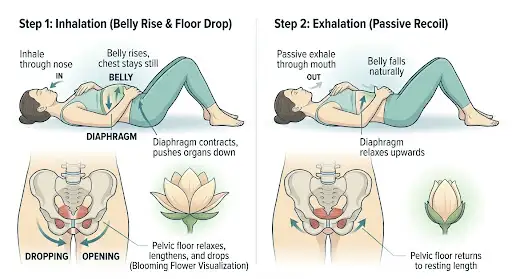
Before you move, you must breathe. Your diaphragm and pelvic floor move together like a piston.
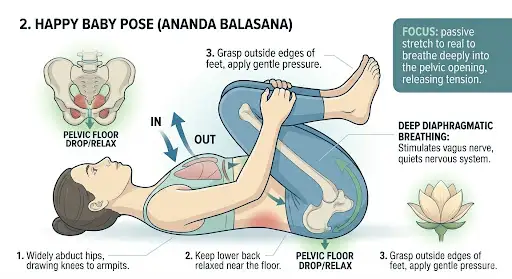
Once you’ve mastered the breath, add a gentle external stretch.
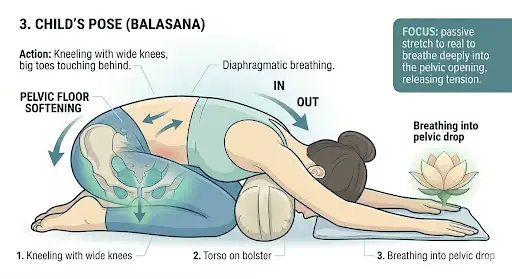
This pose allows the pelvic floor to relax completely without having to fight gravity.
This is the most advanced relaxation pose, using gravity to help the muscles drop.
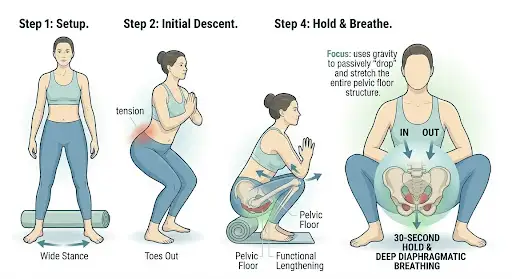
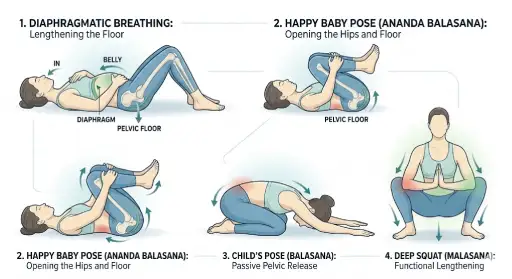
Only once your pain is managed and your muscles can relax should you focus on isolated strengthening.
| Feature | Kegel Exercises | General Pelvic Exercises |
|---|---|---|
| Focus | Isolated contraction (squeezing). | Integration of hips, glutes, and core. |
| Goal | Raw muscle strength. | Flexibility and "functional" movement. |
| Example | Squeezing to stop urine flow. | Squats, Happy Baby, or Child's Pose. |
If your pain has subsided but you feel a lack of support or control, you can begin gentle “Up-Training.”
| If you feel... | Use this Method | Primary Exercise |
|---|---|---|
| Sharp or Deep Pelvic Pain | Down-Training (Relaxation) | Diaphragmatic Breathing / Child's Pose |
| Heaviness / Pressure | Down-Training (Length) | Deep Squat / Happy Baby |
| Leaking / Incontinence | Up-Training (Strength) | Isolated Kegels (with full release) |

MBBS, DA, FRCA (UK), FFPMRCA (Pain Medicine, RCOA, UK)
CCT (Anesthesiology And Pain Management)
Neuromodulation & Advanced Pain Research Fellowship (London), MBA (HM)
Join our mailing list to get updates about our services and procedures or any events and discounts.
Banjara Hills
2nd Floor, 284/A, Road No. 12, above IDFC First Bank, near Omega hospitals, MLA Colony, Banjara Hills, Hyderabad, Telangana 500034.

Indo-British Advanced Pain Clinic © 2026. All Rights Reserved. Designed & Developed By Adroit
WhatsApp us